
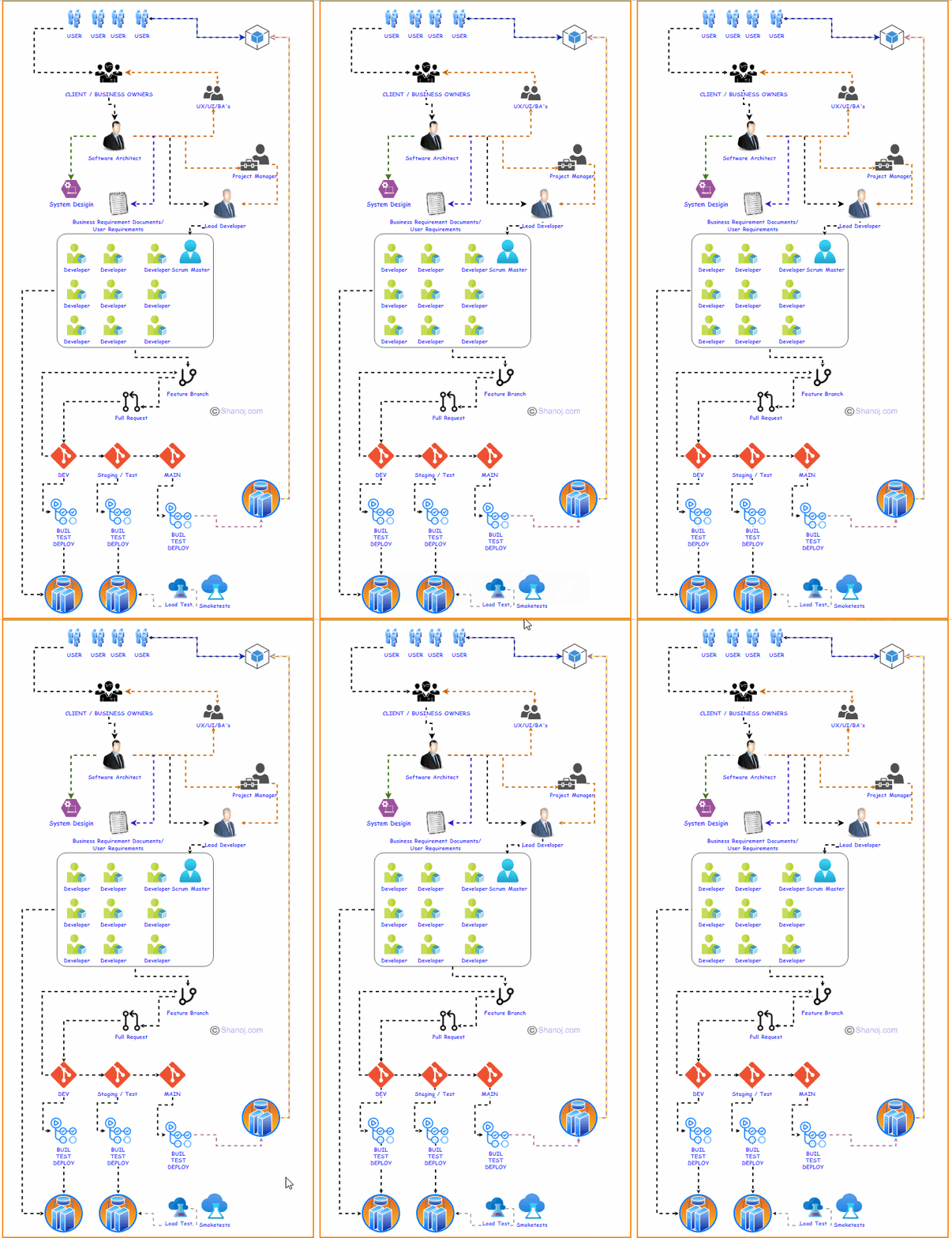
Enterprise software development is a dynamic and intricate field at the heart of modern business operations. This comprehensive guide explores the various aspects of enterprise software development, offering insights into how development teams collaborate, code, integrate, build, test, and deploy applications. Whether you’re an experienced developer or new to this domain, understanding the nuances of enterprise software development is crucial for achieving success.
1. The Team Structure
- Team Composition: A typical development team comprises developers, a Scrum Master (if using Agile methodology), a project manager, software architects, and often, designers or UX/UI experts.
- Software Architect Role: Software architects are crucial in designing the software’s high-level structure, ensuring scalability and adherence to best practices.
- Client Engagement: The client is the vital link between end-users and developers, pivotal in defining project requirements.
- Scaling Up: Larger projects may involve intricate team structures with multiple teams focusing on different software aspects, while core principles of collaboration, communication, and goal alignment remain steadfast.
2. Defining the Scope
- Project Inception: Every enterprise software development project begins with defining the scope.
- Client’s Vision: The client, often the product owner, communicates their vision and requirements, initiating the process of understanding what needs to be built and how it serves end-users.
- Clear Communication: At this stage, clear communication and documentation are indispensable to prevent misunderstandings and ensure precise alignment with project objectives.
3. Feature Development Workflow
- Feature Implementation: Developers implement features and functionalities outlined in the project scope.
- Efficient Development: Teams frequently adopt a feature branch workflow, where each feature or task is assigned to a team of developers who work collaboratively on feature branches derived from the main codebase.
- Code Review: Completing a feature triggers a pull request and code review, maintaining code quality, functionality, and adherence to coding standards.
4. Continuous Integration and Deployment
- Modern Core: The heart of contemporary software development lies in continuous integration and deployment (CI/CD).
- Seamless Integration: Developers merge feature branches into a development or main branch, initiating automated CI/CD pipelines that build, test, and deploy code to various environments.
- Automation Benefits: Automation is pivotal in the deployment process to minimize human errors and ensure consistency across diverse environments.
5. Environment Management
- Testing Grounds: Enterprise software often necessitates diverse testing and validation environments resembling the production environment.
- Infrastructure as Code: Teams leverage tools like Terraform or AWS CloudFormation for infrastructure as code (IaC) to maintain consistency across environments.
6. Testing and Quality Assurance
- Critical Testing: Testing is a critical phase in enterprise software development, encompassing unit tests, integration tests, end-to-end tests, performance tests, security tests, and user acceptance testing (UAT).
- Robust Product: These tests ensure the delivery of a robust and reliable product.
7. Staging and User Feedback
- Final Validation: A staging environment serves as a final validation platform before deploying new features.
- User Engagement: Clients and end-users actively engage with the software, providing valuable feedback.
8. Release Management
- Strategic Rollout: When stakeholders are content, a release is planned.
- Feature Control: Feature flags or toggles enable controlled rollouts and easy rollbacks if issues arise.
9. Scaling and High Availability
- Scalability Focus: Enterprise software often caters to large user bases and high traffic.
- Deployment Strategies: Deployments in multiple regions, load balancing, and redundancy ensure scalability and high availability.
10. Bug Tracking and Maintenance
- Ongoing Vigilance: Even after a successful release, software necessitates ongoing maintenance.
- Issue Resolution: Bug tracking systems identify and address issues promptly as new features and improvements continue to evolve.
🌟 Enjoying my content? 🙏 Follow me here: Shanoj Kumar V
Stackademic
Thank you for reading until the end. Before you go:
- Please consider clapping and following the writer! 👏
- Follow us on Twitter(X), LinkedIn, and YouTube.
- Visit Stackademic.com to find out more about how we are democratizing free programming education around the world.
 Shanoj