
As cloud computing continues to evolve, microservices architectures are becoming increasingly complex. To effectively manage this complexity, service meshes are being adopted. In this article, we will explain what a service mesh is, why it is necessary for modern cloud architectures, and how it addresses some of the most pressing challenges developers face today.
Understanding the Service Mesh
A service mesh is a configurable infrastructure layer built into an application that allows for the facilitation of flexible, reliable, and secure communications between individual service instances. Within a cloud-native environment, especially one that embraces containerization, a service mesh is critical in handling service-to-service communications, allowing for enhanced control, management, and security.
Why a Service Mesh?
As applications grow and evolve into distributed systems composed of many microservices, they often encounter challenges in service discovery, load balancing, failure recovery, security, and observability. A service mesh addresses these challenges by providing:
- Dynamic Traffic Management: Adjusting the flow of requests and responses to accommodate changes in the infrastructure.
- Improved Resiliency: Adding robustness to the system with patterns like retries, timeouts, and circuit breakers.
- Enhanced Observability: Offering tools for monitoring, logging, and tracing to understand system performance and behaviour.
- Security Enhancements: Ensuring secure communication through encryption and authentication protocols.
By implementing a service mesh, these distributed and loosely coupled applications can be managed more effectively, ensuring operational efficiency and security at scale.
Foundational Elements: Service Discovery and Proxies
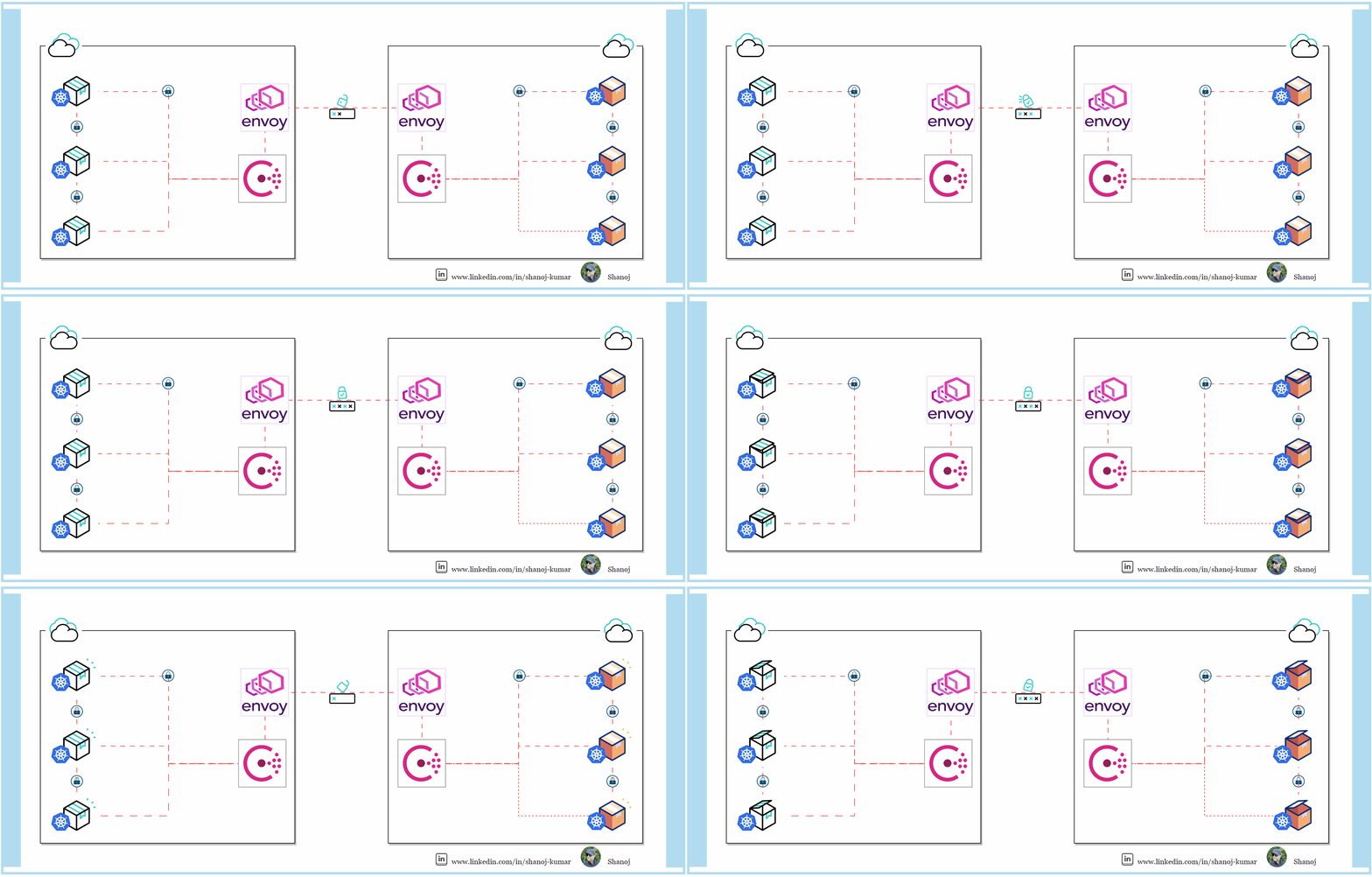
The service mesh relies on two essential components — Consul and Envoy. The consul is responsible for service discovery, which means it keeps track of services, locations, and health status. It ensures that the system can adapt to changes in the environment. On the other hand, Envoy manages proxy services. It’s deployed alongside service instances and handles network communication. Envoy acts as an abstraction layer for traffic management and message routing.
Architectural Overview
The architecture consists of a Public and Private VPC setup, which encloses different clusters. The ‘LEFT_CLUSTER’ in the VPC is dedicated to critical services like logging and monitoring, which provide insights into the system’s operation and manage transactions. On the other hand, the ‘RIGHT_CLUSTER’ in the VPC contains services for Audit and compliance, Dashboards, and Archived Data, ensuring a robust approach to data management and regulatory compliance.

Mesh Gateways and Envoy Proxies
Mesh Gateways are crucial for inter-cluster communication, simplifying connectivity and network configurations. Envoy Proxies are strategically placed within the service mesh, managing the flow of traffic and enhancing the system’s ability to scale dynamically.
Security and User Interaction
The user’s journey begins with the authentication and authorization measures in place to verify and secure user access.
The Role of Consul
Consul’s service discovery capabilities are essential in allowing services like the Bank Interface and the Reconciliation Engine to discover each other and interact seamlessly, bypassing the limitations of static IP addresses.
Operational Efficiency
The service mesh’s contribution to operational efficiency is particularly evident in its integration with the Reconciliation Engine. This ensures that financial data requiring reconciliation is processed efficiently, securely, and directed towards the relevant services.
The Case for Service Mesh Integration
The shift to cloud-native architecture emphasizes the need for service meshes. This blueprint enhances agility, security, and technology, affirming the service mesh as pivotal for modern cloud networking.
In Plain English
Thank you for being a part of our community! Before you go:
- Be sure to clap and follow the writer! 👏
- You can find even more content at PlainEnglish.io 🚀
- Sign up for our free weekly newsletter. 🗞️
- Follow us: Twitter(X), LinkedIn, YouTube, Discord.
- Check out our other platforms: Stackademic, CoFeed, Venture.
 Shanoj