Monthly Archives: January 2024

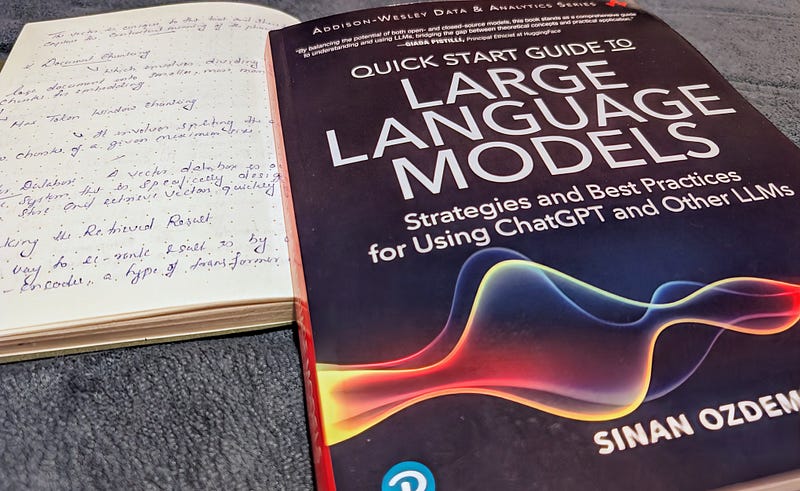
Review of ‘Quick Start Guide to Large Language Models’ by Sinan Ozdemir

This book is a well-structured guide that adeptly bridges the gap between theoretical concepts and their practical application in the field of LLMs, an aspect crucial for professionals like myself.

The initial chapters of the book provide a solid foundation, introducing key concepts of LLMs in a manner that is both thorough and accessible. This sets the stage for deeper exploration into more complex topics.

Key Highlights:

  • Foundation Building: The first chapters offer a comprehensive introduction to LLMs, essential for understanding their fundamental workings and capabilities.
  • Practical Application: The book translates theoretical knowledge into practical scenarios.
  • Advanced Topics Coverage: In-depth exploration of modifying model architectures, embeddings, and next-generation models, providing insights for advanced solution design.
  • Hands-On Examples and Case Studies: Practical examples and real-world case studies enable architects to visualize the application of concepts.
  • Trends and Future Outlook: Discussion on multimodal Transformer architectures and reinforcement learning keeps readers abreast of the latest trends in LLMs.

What stands out in Ozdemir’s book is its comprehensive coverage of topics relevant to LLMs. It dives into essential areas such as semantic search, effective prompt engineering, and the fine-tuning of these models.

The practical guidance provided in the book is its most significant strength. The hands-on examples and case studies are particularly beneficial as they translate theoretical knowledge into actionable insights.

Furthermore, the book’s exploration into more advanced topics, such as modifying model architectures and embeddings and insights into next-generation models, is highly beneficial.

The book is well-organised in terms of content delivery and structure, making it easy to follow and reference. The clarity of explanations helps in demystifying complex topics, making them digestible for professionals who may need a deeper background in machine learning or NLP but are keen to apply these technologies in their projects.
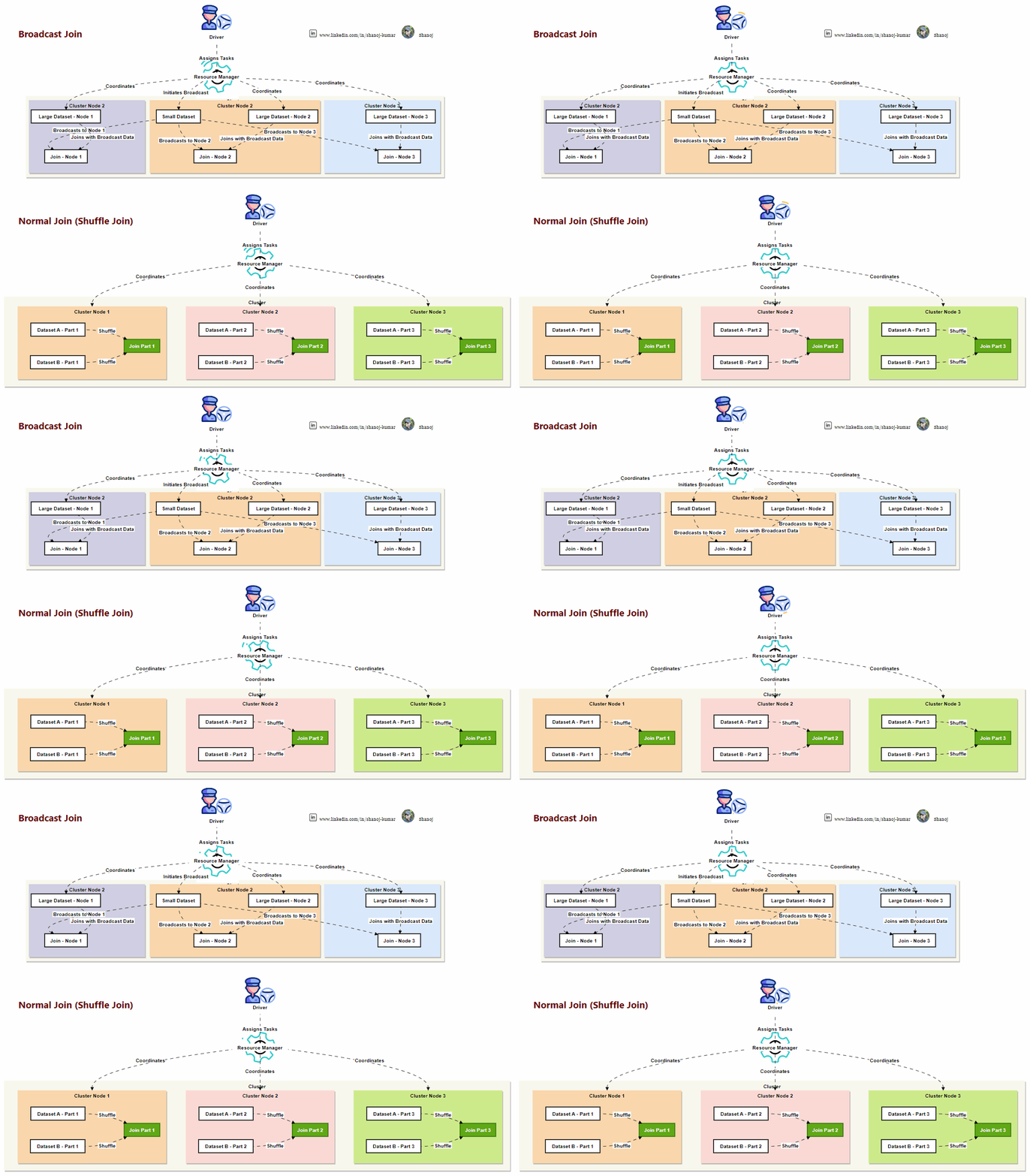
Apache Spark Optimizations: Shuffle Join Vs. Broadcast Joins

Apache Spark is an analytics engine that processes large-scale data in distributed computing environments. It offers various join operations that are essential for handling big data efficiently. In this article, we will take an in-depth look at Spark joins. We will compare normal (shuffle) joins with broadcast joins and explore other available join types.

Understanding Joins in Apache Spark

Joins in Apache Spark are operations that combine rows from two or more datasets based on a common key. The way Spark processes these joins, especially in a distributed setting, significantly impacts the performance and scalability of data processing tasks.

Normal Join (Shuffle Join)

Operation

  • Shuffling: Both data sets are shuffled across the cluster based on the join keys in a regular join. This process involves transferring data across different nodes, which can be network-intensive.

Use Case

  • Large Datasets: Best for large datasets where both sides of the join have substantial data. Typically used when no dataset is small enough to fit in the memory of a single worker node.

Performance Considerations

  • Speed: This can be slower due to extensive data shuffling.
  • Bottlenecks: Network I/O and disk writes during shuffling can become bottlenecks, especially for large datasets.

Scalability

  • Large Data Handling: Scales well with large datasets but can only be efficient if optimized (e.g., by partitioning).

Broadcast Join

Operation

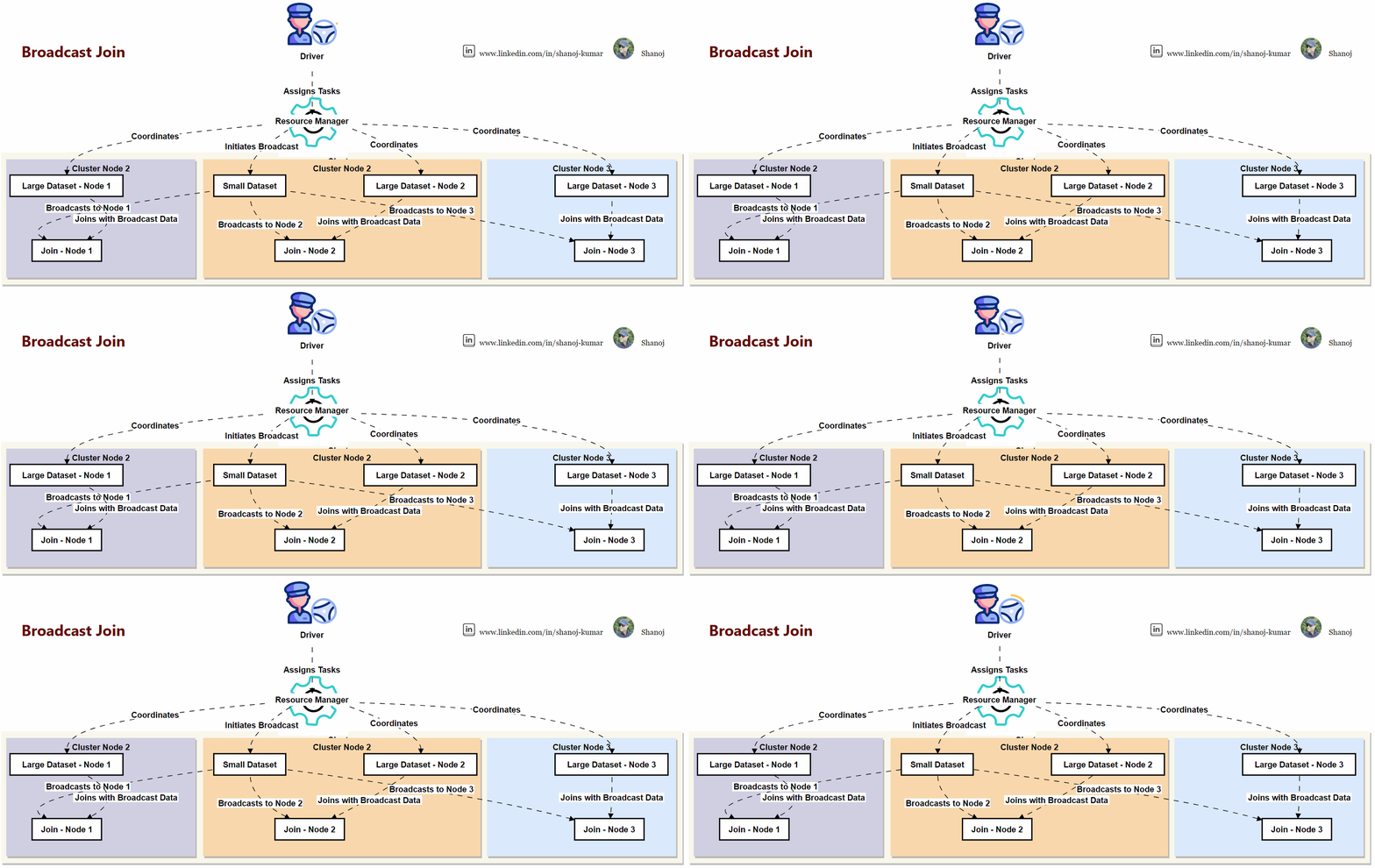
  • Broadcasting: In a broadcast join, the smaller dataset is sent (broadcast) to each node in the cluster, avoiding shuffling the larger dataset.

Use Case

  • Uneven Data Size: Ideal when one dataset is significantly smaller than the other. The smaller dataset should be small enough to fit in the memory of each worker node.

Performance Considerations

  • Speed: Typically faster than normal joins as it minimizes data shuffling.
  • Reduced Overhead: Reduces network I/O and disk write overhead.

Scalability

  • Small Dataset Joins: Works well for joins with small datasets but is not suitable for large to large dataset joins.

Choosing Between Normal and Broadcast Joins

The choice between a normal join and a broadcast join in Apache Spark largely depends on the size of the datasets involved and the resources of your Spark cluster. Here are key factors to consider:

  1. Data Size and Distribution: A broadcast join is usually more efficient if one dataset is small. For two large datasets, a normal join is more suitable.
  2. Cluster Resources: Consider the memory and network resources of your Spark cluster.
  3. Tuning and Optimization: Spark’s ability to optimize queries (e.g., Catalyst optimizer) can sometimes automatically choose the best join strategy.

The configurations that affect broadcast joins in Apache Spark:

spark.sql.autoBroadcastJoinThreshold: Sets the maximum size of a table that can be broadcast. Lowering the threshold can disable broadcast joins for larger tables, while increasing it can enable broadcast joins for bigger tables.

spark.sql.broadcastTimeout: Determines the timeout for the broadcast operation. Spark may fallback to a shuffle join if the broadcast takes longer than this.

spark.driver.memory: Allocates memory to the driver. Since the driver coordinates broadcasting, insufficient memory can hinder the broadcast join operation.


Other Types of Joins in Spark

Apart from normal and broadcast joins, Spark supports several other join types:

  1. Inner Join: Combines rows from both datasets where the join condition is met.
  2. Outer Joins: Includes left outer, right outer, and full outer joins, which retain rows from one or both datasets even when no matching join key is found.
  3. Cross Join (Cartesian Join): Produces a Cartesian product of the rows from both datasets. Every row of the first dataset is joined with every row of the second dataset, often resulting in many rows.
  4. Left Semi Join: This join type returns only the rows from the left dataset for which there is a corresponding row in the right dataset, but the columns from the right dataset are not included in the output.
  5. Left Anti Join: Opposite to the Left Semi Join, this join type returns rows from the left dataset that do not have a corresponding row in the right dataset.
  6. Self Join: This is not a different type of join per se, but rather a technique where a dataset is joined with itself. This can be useful for hierarchical or sequential data analysis.

Considerations for Efficient Use of Joins in Spark

When implementing joins in Spark, several considerations can help optimize performance:

  1. Data Skewness: Imbalanced data distribution can lead to skewed processing across the cluster. Addressing data skewness is crucial for maintaining performance.
  2. Memory Management: Ensuring that the broadcasted dataset fits into memory is crucial for broadcast joins. Out-of-memory errors can significantly impact performance.
  3. Join Conditions: Optimal use of join keys and conditions can reduce the amount of data shuffled across the network.
  4. Partitioning and Clustering: Proper partitioning and clustering of data can enhance join performance by minimizing data movement.
  5. Use of DataFrames and Datasets: Utilizing DataFrames and Datasets API for joins can leverage Spark’s Catalyst Optimizer for better execution plans.

PySpark code for the broadcast join:

from pyspark.sql import SparkSession
from pyspark.sql.functions import broadcast

# Initialize Spark Session
spark = SparkSession.builder \
.appName("BroadcastJoinExample") \
.getOrCreate()

# Sample DataFrames
df_large = spark.createDataFrame([(1, "A"), (2, "B"), (3, "C")], ["id", "value"])
df_small = spark.createDataFrame([(1, "X"), (2, "Y")], ["id", "value2"])

# Perform Broadcast Join
joined_df = df_large.join(broadcast(df_small), "id")

# Show the result
joined_df.show()

# Explain Plan
joined_df.explain()

# Stop the Spark Session
spark.stop()

Stackademic

Thank you for reading until the end. Before you go:

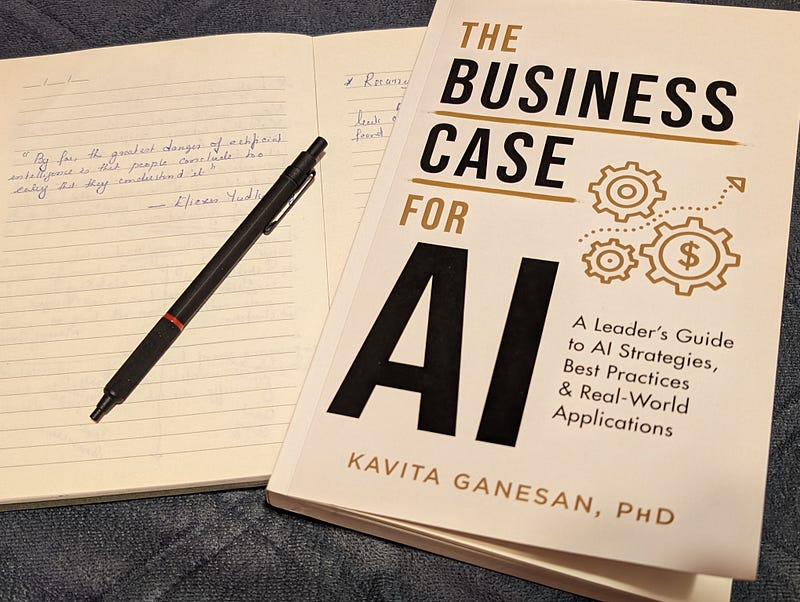
Book Review: ‘The Business Case for AI: A Leader’s Guide to AI Strategies, Best Practices &…

“The Business Case for AI: A Leader’s Guide to AI Strategies, Best Practices & Real-World Applications” is undoubtedly my best read of 2023, and remarkably, it’s a book that can be digested in just a few days. This is largely due to the author, Kavita Ganesan, PhD, who knows precisely what she aims to deliver and does so in a refreshingly straightforward manner. The book is thoughtfully segmented into five parts: Frame Your AI Thinking, Get AI Ideas Flowing, Prepare for AI, Find AI Opportunities, and Bring Your AI Vision to Life.

The book kicks off with a bold and provocative statement:

“Stop using AI. That’s right — I have told several teams to stop and rethink.”

This isn’t just a book that mindlessly champions the use of AI; it’s a critical and thoughtful guide to understanding when, how, and why AI should be incorporated into business strategies.

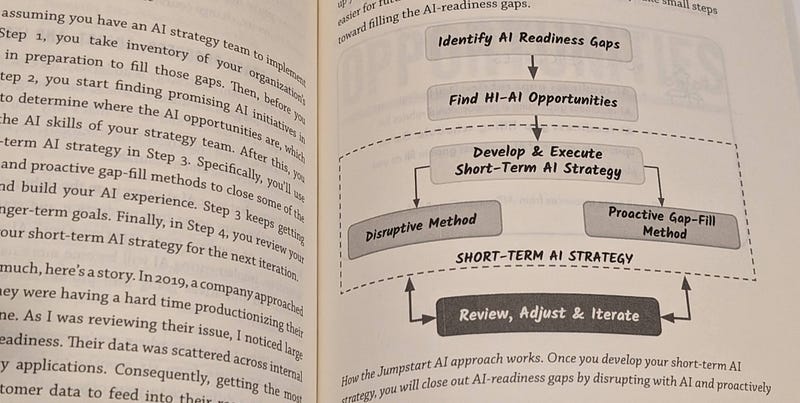
Image courtesy of The Business Case for AI

It’s an invaluable resource for Technology leaders like myself who need to understand AI trends and assess their applicability and potential impact on our operations. The book doesn’t just dive into technical jargon from the get-go; instead, it starts with the basics and gradually builds up to more complex concepts, making it accessible and informative.

The comprehensive cost-benefit analysis provided is particularly useful, offering readers a clear framework for deciding when it’s appropriate to integrate AI into their business strategies.

However, it’s important to note that the fast-paced nature of AI development means some examples might feel slightly outdated, a testament to the field’s rapid evolution. Despite this, the book’s strengths far outweigh its limitations.

This book is an essential read for anyone looking to genuinely understand the strategic implications and applications of AI in business. It’s not just another book on the shelf; it’s a guide, an eye-opener, and a source of valuable insights all rolled into one. If you’re considering AI solutions for your work or wish to learn about the potential of this transformative technology,

Get ready to discover:

  • What’s true, what’s hype, and what’s realistic to expect from AI and machine learning systems
  • Ideas for applying AI in your business to increase revenues, optimize decision-making, and eliminate business process inefficiencies.
  • How to spot lucrative AI opportunities in your organization and capitalize on them in creative ways.
  • Three Pillars of AI success, a systematic framework for testing and evaluating the value of AI initiatives.
  • A blueprint for AI success without statistics, data science, or technical jargon.

I would say this book is essential for anyone looking to understand not just the hype around AI but the real strategic implications and applications for businesses. It’s an eye-opener, a guide, and a thought-provoker all in one, making it a valuable addition to any leader’s bookshelf.

Stackademic

Thank you for reading until the end. Before you go:

  • Please consider clapping and following the writer! 👏
  • Follow us on Twitter(X), LinkedIn, and YouTube.
  • Visit Stackademic.com to find out more about how we are democratizing free programming education around the world.