AWS Glue is a managed and serverless service that assists in data preparation for analytics. It automates the ETL (Extract, Transform, Load) process and provides two primary components for data transformation: the Glue Python Shell for smaller datasets and Apache Spark for larger datasets. Both of these components can interact with data in Amazon S3, the AWS Glue Data Catalog, and various databases or data integration services. AWS Glue simplifies ETL tasks by managing the computing resources required, which are measured in data processing units (DPUs).
Key Takeaway: AWS Glue eliminates the need for server management and is highly scalable, making it an ideal choice for businesses looking to streamline their data transformation and loading processes without deep infrastructure knowledge.
AWS Glue Data Catalog
The AWS Glue Data Catalog acts as a central repository for metadata storage, akin to a Hive metastore, facilitating the management of ETL jobs. It integrates seamlessly with other AWS services like Athena and Amazon EMR, allowing for efficient data queries and analytics. Glue Crawlers automatically discover and catalog data across services, simplifying the process of ETL job design and execution.
Key Takeaway: Utilizing the AWS Glue Data Catalog can significantly reduce the time and effort required to prepare data for analytics, providing an automated, organized approach to data management and integration.
Amazon EMR Overview
Amazon EMR is a cloud big data platform for processing massive amounts of data using open-source tools such as Apache Spark, HBase, Presto, and Hadoop. Unlike AWS Glue’s serverless approach, EMR requires the manual setup of clusters, offering a more customizable environment. EMR supports a broader range of big data tools and frameworks, making it suitable for complex analytical workloads that benefit from specific configurations and optimizations.
Key Takeaway: Amazon EMR is best suited for users with specific requirements for their big data processing tasks that necessitate fine-tuned control over their computing environments, as well as those looking to leverage a broader ecosystem of big data tools.
Glue Workflows for Orchestrating Components
AWS Glue Workflows provides a managed orchestration service for automating the sequencing of ETL jobs. This feature allows users to design complex data processing pipelines triggered by schedule, event, or job completion, ensuring a seamless flow of data transformation and loading tasks.
Key Takeaway: By leveraging AWS Glue Workflows, businesses can efficiently automate their data processing tasks, reducing manual oversight and speeding up the delivery of analytics-ready data.
In Plain English 🚀
Thank you for being a part of the In Plain English community! Before you go:
The critical competencies of an architect are the foundation of their profession. They include a Strategic Mindset, Technical Acumen, Domain Knowledge, and Leadership capabilities. These competencies are not just buzzwords; they are essential attributes that define an architect’s ability to navigate and shape the built environment effectively.
Growth Path
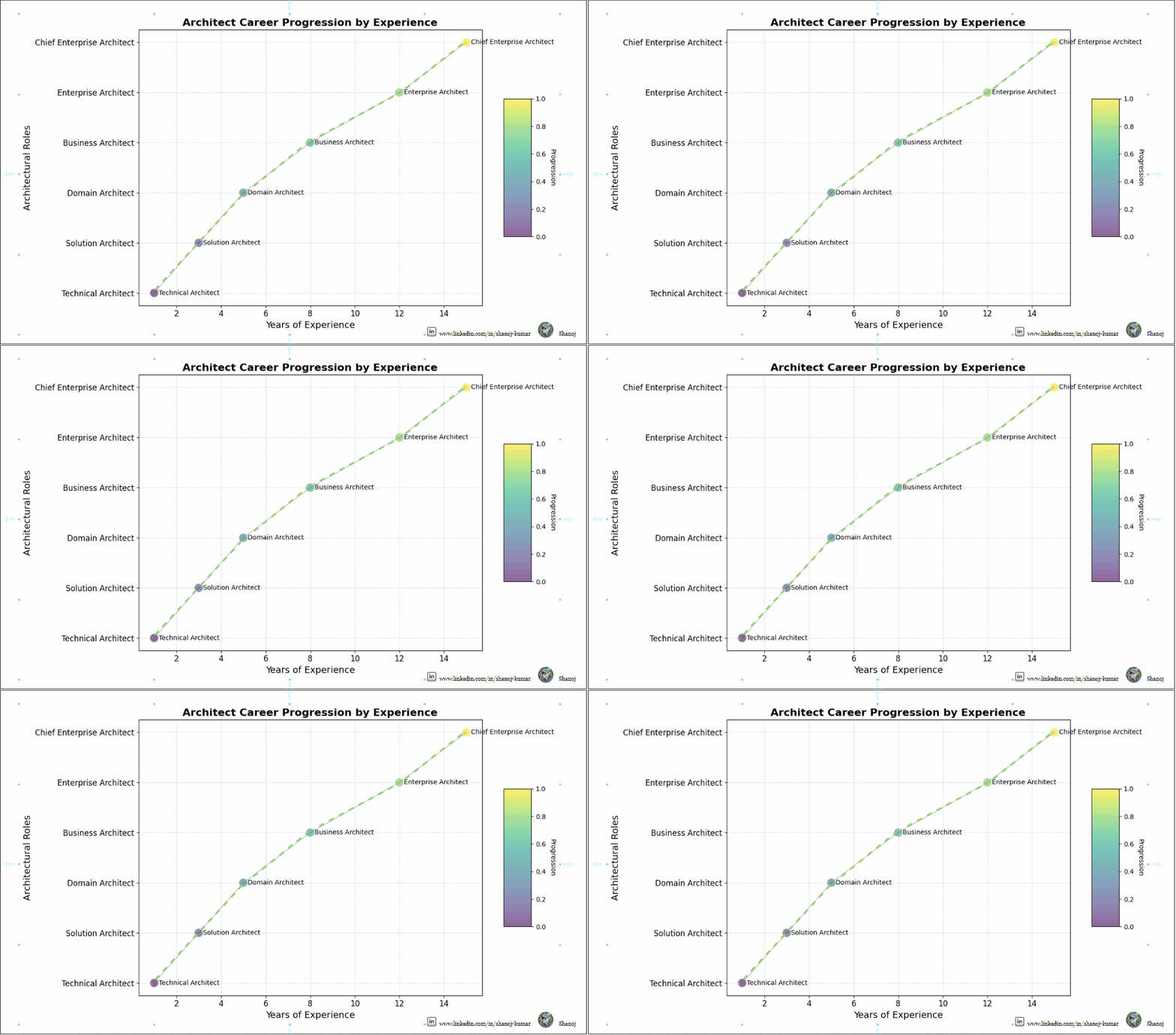
The growth journey of an architect involves evolving expertise, which begins with a technical foundation and gradually expands into domain-specific knowledge before culminating in strategic leadership. This journey progresses through various stages, starting from the role of a Technical Architect, advancing through Solution and Domain Architect, and evolving into a Business Architect. The journey then peaks with the positions of Enterprise Architect and Chief Enterprise Architect. Each stage in this progression requires a deeper understanding and broader vision, reflecting the multifaceted nature of architectural practice.
Qualities of a Software Architect
Visual Thinking: Crucial for software architects, this involves the ability to conceptualize and visualize complex software systems and frameworks. It’s essential for effective communication and the realization of software architectural visions. By considering factors like system scalability, interoperability, and user experience, software architects craft visions that guide development teams and stakeholders, ensuring successful project outcomes.
Foundation in Software Engineering: A robust foundation in software engineering principles is vital for designing and implementing effective software solutions. This includes understanding software development life cycles, agile methodologies, and continuous integration/continuous deployment (CI/CD) practices, enabling software architects to build efficient, scalable, and maintainable systems.
Modelling Techniques: Mastery of software modelling techniques, such as Unified Modeling Language (UML) diagrams, entity-relationship diagrams (ERD), and domain-driven design (DDD), allows software architects to efficiently structure and communicate complexsystems. These techniques facilitate the clear documentation and understanding of software architecture, promoting better team alignment and project execution.
Infrastructure and Cloud Proficiency: Modern infrastructure, including cloud services (AWS, Azure, Google Cloud), containerization technologies (Docker, Kubernetes), and serverless architectures, is essential. This knowledge enables software architects to design systems that are scalable, resilient, and cost-effective, leveraging the latest in cloud computing and DevOps practices.
Security Domain Expertise: A deep understanding of cybersecurity principles, including secure coding practices, encryption, authentication protocols, and compliance standards (e.g., GDPR, HIPAA), is critical. Software architects must ensure the security and privacy of the applications they design, protecting them from vulnerabilities and threats.
Data Management and Analytics: Expertise in data architecture, including relational databases (RDBMS), NoSQL databases, data warehousing, big data technologies, and data streaming platforms, is crucial. Software architects need to design data strategies that support scalability, performance, and real-time analytics, ensuring that data is accessible, secure, and leveraged effectively for decision-making.
Leadership and Vision: Beyond technical expertise, the ability to lead and inspire development teams is paramount. Software architects must possess strong leadership qualities, fostering a culture of innovation, collaboration, and continuous improvement. They play a key role in mentoring developers, guiding architectural decisions, and aligning technology strategies with business objectives.
Critical and Strategic Thinking: Indispensable for navigating the complexities of software development, these skills enable software architects to address technical challenges, evaluate trade-offs, and make informed decisions that balance immediate needs with long-term goals.
Adaptive and Big Thinking: The ability to adapt to rapidly changing technology landscapes and think broadly about solutions is essential. Software architects must maintain a holistic view of their projects, considering not only the technical aspects but also market trends, customer needs, and business strategy. This broad perspective allows them to identify innovative opportunities and drive technological advancement within their organizations.
As software architects advance through their careers, from Technical Architect to Chief Enterprise Architect, they cultivate these essential qualities and competencies. This professional growth enhances their ability to impact projects and organizations significantly, leading teams to deliver innovative, robust, and scalable software solutions.
Stackademic 🎓
Thank you for reading until the end. Before you go:
Please consider clapping and following the writer! 👏
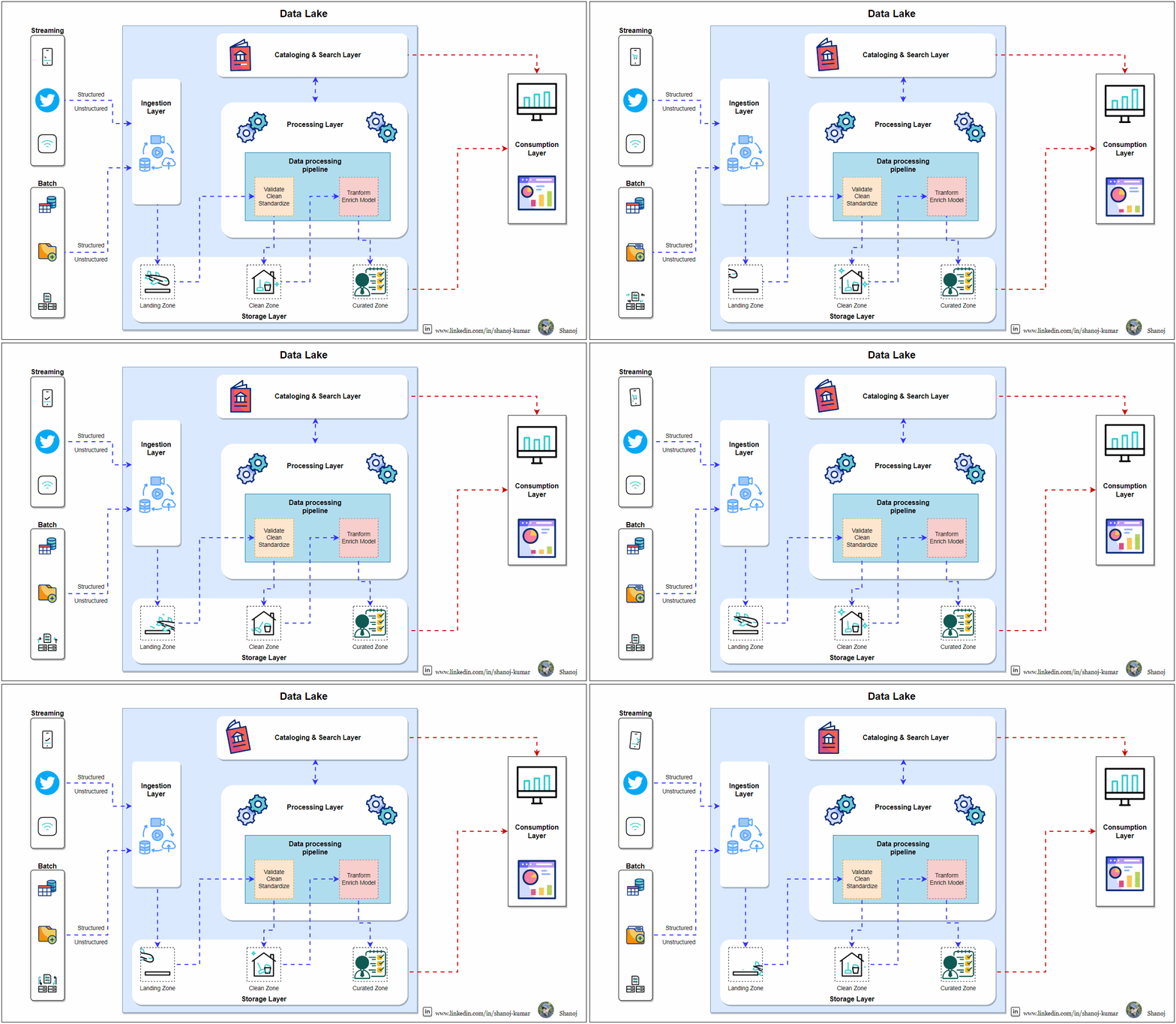
A Data Lake is a centralized location designed to store, process, and protect large amounts of data from various sources in its original format. It is built to manage the scale, versatility, and complexity of big data, which includes structured, semi-structured, and unstructured data. It provides extensive data storage, efficient data management, and advanced analytical processing across different data types. The logical architecture of a Data Lake typically consists of several layers, each with a distinct purpose in the data lifecycle, from data intake to utilization.
Data Delivery Type and Production Cadence
Data within the Data Lake can be delivered in multiple forms, including table rows, data streams, and discrete data files. It supports various production cadences, catering to batch processing and real-time streaming, to meet different operational and analytical needs.
Landing / Raw Zone The Landing or Raw Zone
Is the initial repository for all incoming data, where it is stored in its original, unprocessed form. This area serves as the data’s entry point, maintaining its integrity and ensuring traceability by preserving it immutable.
Clean/Transform Zone
Following the landing zone,data is moved to the Clean/Transform Zone, where it undergoes cleaning, normalization, and transformation. This step prepares the data for analysis by standardizing its format and structure, enhancing data quality and usability.
Cataloguing & Search Layer
The Ingestion Layer manages data entry into the Data Lake, capturing essential metadata and categorizing data appropriately. It supports various data ingestion methods, including batch and real-time streams, facilitating efficient data discovery and management.
Data Structure
The Data Lake accommodates a wide range of data structures, from structured, such as databases and CSV files, to semi-structured, like JSON and XML, and unstructured data, including text documents and multimedia files.
Processing Layer
The Processing Layer is at the heart of the Data Lake, equipped with powerful tools and engines for data manipulation, transformation, and analysis. It facilitates complex data processing tasks, enabling advanced analytics and data science projects.
Curated/Enriched Zone
Data that has been cleaned and transformed is further refined in the Curated/Enriched Zone. It is enriched with additional context or combined with other data sources, making it highly valuable for analytical and business intelligence purposes. This zone hosts data ready for consumption by end-users and applications.
Consumption Layer
Finally, the Consumption Layer provides mechanisms for end-users to access and utilize the data. Through various tools and applications, including business intelligence platforms, data visualization tools, and APIs, users can extract insights and drive decision-making processes based on the data stored in the Data Lake.
AWS Data Lakehouse Architecture
Oversimplified/high-level
An AWS Data Lakehouse is a powerful combination of data lakes and data warehouses, which utilizes Amazon Web Services to establish a centralized data storage solution. This solution caters to both raw data in its primitive form and the precision required for intricate analysis. By breaking down data silos, a Data Lakehouse strengthens data governance and security while simplifying advanced analytics. It offers businesses an opportunity to uncover new insights while preserving the flexibility of data management and analytical capabilities.
Kinesis Firehose
Amazon Kinesis Firehose is a fully managed service provided by Amazon Web Services (AWS) that enables you to easily capture and load streaming data into data stores and analytics tools. With Kinesis Firehose, you can ingest, transform, and deliver data in real time to various destinations such as Amazon S3, Amazon Redshift, and Amazon Elasticsearch Service. The service is designed to scale automatically to handle any amount of streaming data and requires no administration. Kinesis Firehose supports data formats such as JSON, CSV, and Apache Parquet, among others, and provides built-in data transformation capabilities to prepare data for analysis. With Kinesis Firehose, you can focus on your data processing logic and leave the data delivery infrastructure to AWS.
Amazon CloudWatch
Amazon CloudWatch is a monitoring service that helps you keep track of your operational metrics and logs and sends alerts to optimize performance. It enables you to monitor and collect data on various resources like EC2 instances, RDS databases, and Lambda functions, in real-time. With CloudWatch, you can gain insights into your application’s performance and troubleshoot issues quickly.
Amazon S3 for State Backend
The Amazon S3 state backend serves as the backbone of the Data Lakehouse. It acts as a repository for the state of streaming data, eternally preserving it.
Amazon Kinesis Data Analytics
Amazon Kinesis Data Analytics uses SQL and Apache Flink to provide real-time analytics on streaming data with precision.
Amazon S3
Amazon S3 is a secure, scalable, and resilient storage for the Data Lakehouse’s data.
AWS Glue Data Catalog
The AWS Glue Data Catalog is a fully managed metadata repository that enables easy data discovery, organization, and management for streamlined analytics and processing in the Data Lakehouse. It provides a unified view of all data assets, including databases, tables, and partitions, making it easier for data engineers, analysts, and scientists to find and use the data they need. The AWS Glue Data Catalog also supports automatic schema discovery and inference, making it easier to maintain accurate and up-to-date metadata for all data assets. With the AWS Glue Data Catalog, organizations can improve data governance and compliance, reduce data silos, and accelerate time-to-insight.
Amazon Athena
Amazon Athena enables users to query data in Amazon S3 using standard SQL without ETL complexities, thanks to its serverless and interactive architecture.
Amazon Redshift
Amazon Redshift is a highly efficient and scalable data warehouse service that streamlines the process of data analysis. It is designed to enable users to query vast amounts of structured and semi-structured data stored across their data warehouse, operational database, and data lake using standard SQL. With Amazon Redshift, users can gain valuable insights and make data-driven decisions quickly and easily. Additionally, Amazon Redshift is fully managed, allowing users to focus on their data analysis efforts rather than worrying about infrastructure management. Its flexible pricing model, based on usage, makes it a cost-effective solution for businesses of all sizes.
Consumption Layer
The Consumption Layer includes business intelligence tools and applications like Amazon QuickSight. This layer allows end-users to visualize, analyze, and interpret the processed data to derive actionable business insights.
In Plain English 🚀
Thank you for being a part of the In Plain English community! Before you go:



 Shanoj