Tag Archives: Distributed Systems

Distributed Design Pattern: State Machine Replication [IoT System Monitoring Use Case]

The diagram illustrates a distributed state machine replication process for Industrial IoT systems. Sensor data from distributed nodes is ingested into a primary node and propagated to replicas via an event stream (e.g., Kafka). A consensus mechanism ensures consistent state transitions, while a robust error-handling mechanism detects node failures and replays replication logs to maintain system consistency.

Industrial IoT (IIoT) systems depend on accurate, synchronized state management across distributed nodes to ensure seamless monitoring and fault tolerance. The Distributed State Machine Replication pattern ensures consistency in state transitions across all nodes, enabling fault recovery and high availability.

The Problem:

In IIoT environments, state management is critical for monitoring and controlling devices such as factory machinery, sensors, and robotic arms. However, maintaining consistency across distributed systems presents unique challenges:

  1. State Inconsistency: Nodes may fail to apply or propagate updates, leading to diverging states.
  2. Fault Tolerance: System failures must not result in incomplete or incorrect system states.
  3. Scalability: As devices scale across factories, ensuring synchronization becomes increasingly complex.
The diagram illustrates the problem of state inconsistency in IIoT systems due to the lack of synchronized state validation. Sensor Node 1 detects a high temperature alert and sends it to Node A, which initiates an overheating detection and triggers a shutdown. Meanwhile, Sensor Node 2 fails to detect the event, resulting in Node B taking no action. The lack of validation across nodes leads to conflicting actions, delayed system responses, and operational risks, highlighting the need for consistent state synchronization.

Example Problem Scenario:
In a manufacturing plant, a temperature sensor sends an alert indicating that a machine’s temperature has exceeded the safe threshold. If one node processes the alert and another misses it due to a network issue, corrective actions may not be triggered in time, resulting in system failure or downtime.

Distributed State Machine Replication

The Distributed State Machine Replication pattern ensures that all nodes maintain identical states by synchronizing state transitions across the network.

Key Features:

  1. State Machine Abstraction: Each node runs a replicated state machine, processing the same state transitions in the same order.
  2. Consensus Protocol: Protocols like Raft or Paxos ensure that all nodes agree on each state transition.
  3. Log-Based Updates: Updates are logged and replayed on all nodes to maintain a consistent state.
The diagram illustrates how Distributed State Machine Replication ensures consistent state management in IIoT systems. Sensor Nodes send updates to a Primary Node, which coordinates with Replica Nodes (e.g., Node A, Node B, Node C) using a Consensus Protocol to validate and apply state transitions. Upon reaching consensus, updates are logged to the Database and propagated via an Event Stream to downstream systems, ensuring all nodes and systems remain synchronized. In case of failures, the Log Errors & Retry mechanism prevents partial or inconsistent state transitions, while operators are notified, and system states are actively monitored for proactive resolution. This approach ensures reliability, consistency, and fault tolerance across the network.

Implementation Steps

Step 1: State Updates from Sensors

  • Sensors send state updates (e.g., temperature or energy readings) to a primary node.
  • The primary node appends updates to its replication log.

Step 2: Consensus on State Transitions

  • The primary node proposes state transitions to replicas using a consensus protocol.
  • All nodes agree on the transition order before applying the update.

Step 3: Fault Recovery

  • If a node fails, it replays the replication log to recover the current state.
The diagram illustrates the Fault Recovery Process in distributed state machine replication. When a replica node fails, the system detects the failure and replays replication logs to restore data consistency. If consistency is successfully restored, the node is re-synchronized with the cluster, returning the system to normal operation. If the restoration fails, the issue is logged to the event stream, and manual intervention is triggered. This process ensures the system maintains high availability and reliability even during node failures.

Problem Context:

A smart factory monitors machinery health using sensors for temperature, vibration, and energy consumption. When a machine overheats, alerts trigger actions such as slowing or shutting it down.

Solution:

  • State Update: A sensor sends a “High Temperature Alert” to the primary node.
  • Consensus: Nodes agree on the alert’s sequence and validity.
  • State Synchronization: All nodes apply the state transition, triggering machine shutdown.
  • Fault Recovery: A failed node replays the replication log to update its state.

Practical Considerations & Trade-Offs

  1. Latency: Consensus protocols may introduce delays for real-time state transitions.
  2. Complexity: Implementing protocols like Raft adds development overhead.
  3. Resource Usage: Logging and replaying updates require additional storage and compute resources.

The Distributed State Machine Replication pattern provides a reliable and scalable solution for maintaining consistent states in IIoT systems. In a manufacturing context, it ensures synchronized monitoring and fault tolerance, reducing downtime and optimizing operations. For industries where real-time data integrity is crucial, this pattern is indispensable.

Thank you for being a part of the community

Before you go:

Distributed Systems Design Pattern: Write-Through Cache with Coherence — [Real-Time Sports Data…

The diagram illustrates the Write-Through Cache with Coherence pattern for real-time sports data. When a user request is received for live scores, the update is written synchronously to Cache Node A and the Database (ensuring consistent updates). Cache Node A triggers an update propagation to other cache nodes (Cache Node B and Cache Node C) to maintain cache coherence. Acknowledgments confirm the updates, allowing all nodes to serve the latest data to users with minimal latency. This approach ensures fresh and consistent live sports data across all cache nodes.

In real-time sports data broadcasting systems, ensuring that users receive the latest updates with minimal delay is critical. Whether it’s live scores, player statistics, or game events, millions of users rely on accurate and up-to-date information. The Write-Through Cache with Coherence pattern ensures that the cache remains consistent with the underlying data store, reducing latency while delivering the latest data to users.

The Problem: Data Staleness and Latency in Sports Broadcasting

In a sports data broadcasting system, live updates (such as goals scored, fouls, or match times) are ingested, processed, and sent to millions of end-users. To improve response times, this data is cached across multiple distributed nodes. However, two key challenges arise:

  1. Stale Data: If updates are written only to the database and asynchronously propagated to the cache, there is a risk of stale data being served to end users.
  2. Cache Coherence: Maintaining consistent data across all caches is difficult when multiple nodes are involved in serving live requests.
The diagram illustrates the issue of data staleness and delayed updates in a sports broadcasting system. When a sports fan sends the 1st request, Cache Node A responds with a stale score (1–0) due to pending updates. On the 2nd request, Cache Node B responds with the latest score (2–0) after receiving the latest update propagated from the database. The delay in updating Cache Node A highlights the inconsistency caused by asynchronous update propagation.

Example Problem Scenario:
Consider a live soccer match where Node A receives a “Goal Scored” update and writes it to the database but delays propagating the update to its cache. Node B, which serves a user request, still shows the old score because its cache is stale. This inconsistency degrades the user experience and erodes trust in the system.

Write-Through Cache with Coherence

The Write-Through Cache pattern solves the problem of stale data by writing updates simultaneously to both the cache and the underlying data store. Coupled with a coherence mechanism, the system ensures that all cache nodes remain synchronized.

Here’s how it works:

  1. Write-Through Mechanism:
  • When an update (e.g., “Goal Scored”) is received, it is written to the cache and the database in a single operation.
  • The cache always holds the latest version of the data, eliminating the risk of stale reads.

2. Cache Coherence:

  • A coherence protocol propagates updates to all other cache nodes. This ensures that every node serves consistent data.
  • For example, when Node A updates its cache, it notifies Nodes B and C to invalidate or update their caches.

Implementation Steps [High Level]

Step 1: Data Ingestion

  • Real-time updates (e.g., goals, statistics) are received via an event stream (e.g., Kafka).

Step 2: Write-Through Updates

The diagram illustrates the Write-Through Cache Mechanism for live sports updates. When the Live Sports Feed sends a New Goal Update (2–0), the update is synchronously written to the Database and reflected in Cache Node A. The database confirms the update, and an acknowledgment is sent back to the Live Sports Feed to confirm success. This ensures that the cache and database remain consistent, enabling reliable and up-to-date data for users.
  • Updates are written synchronously to both the cache and the database to ensure immediate consistency.

Step 3: Cache Coherence

The diagram illustrates Cache Coherence Propagation across distributed cache nodes. Cache Node A propagates a Goal Update (2–0) to Cache Node B and Cache Node C. Both nodes acknowledge the update, ensuring all cache nodes remain synchronized. This process guarantees cache coherence, enabling consistent and up-to-date data across the distributed system.
  • The cache nodes propagate the update or invalidation signal to all other nodes, ensuring coherence.

Step 4: Serving Requests

The diagram demonstrates serving fresh live scores to users using synchronized cache nodes. A Sports Fan requests the live score from Cache Node A and Cache Node B. Both nodes respond with the fresh score (2–0), ensuring data consistency and synchronization. Notes highlight that the data is up-to-date in Cache Node A and propagated successfully to Cache Node B, showcasing efficient cache coherence.
  • User requests are served from the cache, which now holds the latest data.

Advantages of Write-Through Cache with Coherence

  1. Data Consistency:
    Updates are written to the cache and database simultaneously, ensuring consistent data availability.
  2. Low Latency:
    Users receive live updates directly from the cache without waiting for the database query.
  3. Cache Coherence:
    Updates are propagated to all cache nodes, ensuring that every node serves the latest data.
  4. Scalability:
    The pattern scales well with distributed caches, making it ideal for systems handling high-frequency updates.

Practical Considerations and Trade-Offs

While the Write-Through Cache with Coherence pattern ensures consistency, there are trade-offs:

  • Latency in Writes: Writing updates to both the cache and database synchronously may slightly increase latency for write operations.
  • Network Overhead: Propagating coherence updates to all nodes incurs additional network costs.
  • Write Amplification: Each write operation results in two updates (cache + database).

In real-time sports broadcasting systems, this pattern ensures that live updates, such as goals or player stats, are consistently visible to all users. For example:

  • When a “Goal Scored” update is received, it is written to the cache and database simultaneously.
  • The update propagates to all cache nodes, ensuring that every user sees the latest score within milliseconds.
  • Fans tracking the match receive accurate and timely updates, enhancing their viewing experience.

In sports broadcasting, where every second counts, this pattern ensures that millions of users receive accurate, up-to-date information without delay. By synchronizing updates across cache nodes and the database, this design guarantees an exceptional user experience for live sports enthusiasts.

Thank you for being a part of the community

Before you go:

Distributed Systems Design Pattern: Lease-Based Coordination — [Stock Trading Data Consistency Use…

An overview of the Lease-Based Coordination process: The Lease Coordinator manages the lease lifecycle, allowing one node to perform exclusive updates to the stock price data at a time.

The Lease-Based Coordination pattern offers an efficient mechanism to assign temporary control of a resource, such as stock price updates, to a single node. This approach prevents stale data and ensures that traders and algorithms always operate on consistent, real-time information.

The Problem: Ensuring Consistency and Freshness in Real-Time Trading

The diagram illustrates how uncoordinated updates across nodes lead to inconsistent stock prices ($100 at T1 and $95 at T2). The lack of synchronization results in conflicting values being served to the trader.

In a distributed stock trading environment, stock price data is replicated across multiple nodes to achieve high availability and low latency. However, this replication introduces challenges:

  • Stale Data Reads: Nodes might serve outdated price data to clients if updates are delayed or inconsistent across replicas.
  • Write Conflicts: Multiple nodes may attempt to update the same stock price simultaneously, leading to race conditions and inconsistent data.
  • High Availability Requirements: In trading systems, even a millisecond of downtime can lead to significant financial losses, making traditional locking mechanisms unsuitable due to latency overheads.

Example Problem Scenario:
Consider a stock trading platform where Node A and Node B replicate stock price data for high availability. If Node A updates the price of a stock but Node B serves an outdated value to a trader, it may lead to incorrect trades and financial loss. Additionally, simultaneous updates from multiple nodes can create inconsistencies in the price history, causing a loss of trust in the system.

Lease-Based Coordination

The diagram illustrates the lease-based coordination mechanism, where the Lease Coordinator grants a lease to Node A for exclusive updates. Node A notifies Node B of its ownership, ensuring consistent data updates.

The Lease-Based Coordination pattern addresses these challenges by granting temporary ownership (a lease) to a single node, allowing it to perform updates and serve data exclusively for the lease duration. Here’s how it works:

  1. Lease Assignment: A central coordinator assigns a lease to a node, granting it exclusive rights to update and serve a specific resource (e.g., stock prices) for a predefined time period.
  2. Lease Expiry: The lease has a strict expiration time, ensuring that if the node fails or becomes unresponsive, other nodes can take over after the lease expires.
  3. Renewal Mechanism: The node holding the lease must periodically renew it with the coordinator to maintain ownership. If it fails to renew, the lease is reassigned to another node.

This approach ensures that only the node with the active lease can update and serve data, maintaining consistency across the system.

Implementation: Lease-Based Coordination in Stock Trading

The diagram shows the lifecycle of a lease, starting with its assignment to Node A, renewal requests, and potential reassignment to Node B if Node A fails, ensuring consistent stock price updates.

Step 1: Centralized Lease Coordinator

A centralized service acts as the lease coordinator, managing the assignment and renewal of leases. For example, Node A requests a lease to update stock prices, and the coordinator grants it ownership for 5 seconds.

Step 2: Exclusive Updates

While the lease is active, Node A updates the stock price and serves consistent data to traders. Other nodes are restricted from making updates but can still read the data.

Step 3: Lease Renewal

Before the lease expires, Node A sends a renewal request to the coordinator. If Node A is healthy and responsive, the lease is extended. If not, the coordinator reassigns the lease to another node (e.g., Node B).

Step 4: Reassignment on Failure

If Node A fails or becomes unresponsive, the lease expires. The coordinator assigns a new lease to Node B, ensuring uninterrupted updates and data availability.

Practical Considerations and Trade-Offs

While Lease-Based Coordination provides significant benefits, there are trade-offs:

  • Clock Synchronization: Requires accurate clock synchronization between nodes to avoid premature or delayed lease expiry.
  • Latency Overhead: Frequent lease renewals can add slight latency to the system.
  • Single Point of Failure: A centralized lease coordinator introduces a potential bottleneck, though it can be mitigated with replication.

Stackademic 🎓

Thank you for reading until the end. Before you go:

Distributed Systems Design Pattern: Shard Rebalancing — [Telecom Customer Data Distribution Use…

In distributed telecom systems, customer data is often stored across multiple nodes, with each node responsible for handling a subset, or shard, of the total data. When customer traffic spikes or new customers are added, certain nodes may become overloaded, leading to performance degradation. The Shard Rebalancing pattern addresses this challenge by dynamically redistributing data across nodes, ensuring balanced load and optimal access speeds.

The Problem: Uneven Load Distribution in Telecom Data Systems

Illustration of uneven shard distribution across nodes in a telecom system. Node 1 is overloaded with high-traffic shards, while Node 2 remains underutilized. Redistribution of shards can help balance the load.

Telecom providers handle vast amounts of customer data, including call records, billing information, and service plans. This data is typically partitioned across multiple nodes to support scalability and high availability. However, several challenges can arise:

  • Skewed Data Distribution: Certain shards may contain data for high-traffic regions or customers, causing uneven load distribution across nodes.
  • Dynamic Traffic Patterns: Events such as promotional campaigns or network outages can lead to sudden traffic spikes in specific shards, overwhelming the nodes handling them.
  • Scalability Challenges: As the number of customers grows, adding new nodes or redistributing shards becomes necessary to prevent performance bottlenecks.

Example Problem Scenario:
A telecom provider stores customer data by region, with each shard representing a geographical area. During a popular live-streaming event, customers in one region (e.g., a metropolitan city) generate significantly higher traffic, overwhelming the node responsible for that shard. Customers experience delayed responses for call setup, billing inquiries, and plan updates, degrading the overall user experience.

Shard Rebalancing: Dynamically Redistributing Data

Shard Rebalancing process during load redistribution in a telecom system. Node 1 redistributes Shards 1 and 2 to balance load across Node 2 and a newly joined node, Host 3. This ensures consistent performance across the system.

The Shard Rebalancing pattern solves this problem by dynamically redistributing data across nodes to balance load and ensure consistent performance. Here’s how it works:

  1. Monitoring Load: The system continuously monitors load on each node, identifying hotspots where specific shards are under heavy traffic or processing.
  2. Redistribution Logic: When a node exceeds its load threshold, the system redistributes part of its data to less-utilized nodes. This may involve splitting a shard into smaller pieces or migrating entire shards.
  3. Minimal Downtime: Shard rebalancing is performed with minimal disruption to ensure ongoing data access for customers.

Telecom Customer Data During Peak Events

Problem Context:

A large telecom provider offers video-on-demand services alongside traditional voice and data plans. During peak events, such as the live-streaming of a global sports final, traffic spikes in urban regions with dense populations. The node handling the shard for that region becomes overloaded, causing delays in streaming access and service requests.

Shard Rebalancing in Action:

  1. Load Monitoring: The system detects that the shard representing the urban region has reached 90% of its resource capacity.

2. Dynamic Redistribution:

  • The system splits the shard into smaller sub-shards (e.g., splitting based on city districts or user groups).
  • One sub-shard remains on the original node, while the others are migrated to underutilized nodes in the cluster.

3. Seamless Transition: DNS routing updates ensure customer requests are directed to the new nodes without downtime or manual intervention.

4. Balanced Load: The system achieves an even distribution of traffic, reducing response times for all users.

Shard rebalancing in action during a peak traffic event in an urban region. The Load Monitor detects high utilization of Shard 1 at Node 1, prompting shard splitting and migration to Node 2 and a newly added Node 3, ensuring balanced system performance.

Results:

  • Reduced latency for live-streaming customers in the overloaded region.
  • Improved system resilience during future traffic spikes.
  • Efficient utilization of resources across the entire cluster.

Practical Considerations and Trade-Offs

While Shard Rebalancing provides significant benefits, there are challenges to consider:

  • Data Migration Overheads: Redistributing shards involves data movement, which can temporarily increase network usage.
  • Complex Metadata Management: Tracking shard locations and ensuring seamless access requires robust metadata systems.
  • Latency During Rebalancing: Although designed for minimal disruption, some delay may occur during shard redistribution.

The Shard Rebalancing pattern is crucial for maintaining balanced loads and high performance in distributed telecom systems. By dynamically redistributing data across nodes, it ensures efficient resource utilization and provides optimal user experiences, even during unexpected traffic surges.

Stackademic 🎓

Thank you for reading until the end. Before you go:

Distributed Systems Design Pattern: Temporal Decoupling — [E-commerce Promotions & Order…

In distributed e-commerce systems, managing accurate inventory and pricing data is crucial, especially during dynamic promotional events. The Temporal Decoupling pattern introduces a delay buffer to handle out-of-order events, ensuring updates like promotions, orders, and inventory changes are processed in the correct sequence to maintain data consistency.

The Problem: Out-of-Order Events and Data Inconsistency

In e-commerce systems, events such as promotions, inventory changes, and customer orders often occur independently. This independence can lead to challenges like:

  • Event Arrival Delays: A promotion update might arrive after a customer order due to network latency, leading to incorrect pricing.
  • Concurrency Issues: Inventory updates from different warehouses may be processed in varying orders, causing inaccurate stock levels.
  • Order-Dependent Processing: Applying promotions, discounts, or inventory updates out of order can lead to pricing errors and stock inconsistencies.

For instance, during a flash sale, a promotion starting at 10:00 AM may arrive after an order placed at 10:01 AM due to network delays. This could result in the order being processed without the intended discount, frustrating the customer and leading to operational issues.

Temporal Decoupling: Correcting the Sequence of Events

The Temporal Decoupling pattern resolves these issues by introducing a delay buffer, which holds events temporarily to ensure they are processed in the correct order based on their timestamps. Here’s how it works:

  1. Timestamp Assignment: Each event is tagged with a timestamp at the source, indicating when it was generated.
  2. Delay Buffer: Events are temporarily stored in a delay buffer to allow for dependency resolution and ordering.
  3. Order-Based Processing: Events are processed from the buffer only after their dependencies (e.g., related promotions or inventory updates) have been applied.

By ensuring events are processed in the correct order, this pattern prevents inconsistencies caused by asynchronous updates.

Implementation: Temporal Decoupling in E-commerce Systems

Step 1: Assigning Timestamps to Events

Every event, such as a promotion update or customer order, is assigned a timestamp when generated. For example, a promotion starting at 10:00 AM is tagged with a corresponding timestamp.

Step 2: Storing Events in a Delay Buffer

Incoming events are stored in a delay buffer, which holds them until their dependencies are resolved. For instance, an order placed at 10:01 AM will wait until the promotion tagged at 10:00 AM is applied.

Step 3: Processing Events in Timestamp Order

The system processes events from the buffer based on their timestamps. A promotion update at 10:00 AM is applied before an order at 10:01 AM, ensuring that the order reflects the correct promotional pricing.

Advantages of Temporal Decoupling

  1. Accurate Event Processing: Ensures that promotions, inventory updates, and orders are applied in the correct order, preventing data inconsistencies.
  2. Enhanced Customer Experience: Guarantees that customers receive correct pricing and stock information, even during high-traffic events like flash sales.
  3. Operational Reliability: Handles delayed or out-of-order events caused by network issues without compromising system integrity.

Practical Considerations and Trade-Offs

While the Temporal Decoupling pattern provides clear benefits, there are trade-offs:

  • Latency Overhead: Introducing a delay buffer may add minor delays to event processing.
  • Memory Usage: Storing events temporarily increases memory requirements during peak loads.
  • Complexity: Managing dependencies and resolving out-of-order events adds implementation complexity.

The Temporal Decoupling pattern is a practical solution for managing out-of-order events in distributed e-commerce systems. By introducing a delay buffer, it ensures that updates are processed in the correct sequence, maintaining data accuracy and operational reliability. This approach is essential for high-demand scenarios like flash sales, where consistency and accuracy are paramount.

Stackademic 🎓

Thank you for reading until the end. Before you go:

Distributed Systems Design Pattern: Version Vector for Conflict Resolution — [Supply Chain Use…

In distributed supply chain systems, maintaining accurate inventory data across multiple locations is crucial. When inventory records are updated independently in different warehouses, data conflicts can arise due to network partitions or concurrent updates. The Version Vector pattern addresses these challenges by tracking updates across nodes and reconciling conflicting changes.

The Problem: Concurrent Updates and Data Conflicts in Distributed Inventory Systems

This diagram shows how Node A and Node B independently update the same inventory record, leading to potential conflicts.

In a supply chain environment, inventory records are updated across multiple warehouses, each maintaining a local version of the data. Ensuring that inventory information remains consistent across locations is challenging due to several key issues:

Concurrent Updates: Different warehouses may update inventory levels at the same time. For instance, one location might log an inbound shipment, while another logs an outbound transaction. Without a mechanism to handle these concurrent updates, the system may show conflicting inventory levels.

Network Partitions: Network issues can cause temporary disconnections between nodes, allowing updates to happen independently in different locations. When the network connection is restored, each node may have different versions of the same inventory record, leading to discrepancies.

Data Consistency Requirements: Accurate inventory data is critical to avoid overstocking, stockouts, and operational delays. If inventory levels are inconsistent across nodes, the supply chain can be disrupted, causing missed orders and inaccurate stock predictions.

Imagine a scenario where a supply chain system manages inventory levels for multiple warehouses. Warehouse A logs a received shipment, increasing stock levels, while Warehouse B simultaneously logs a shipment leaving, reducing stock. Without a way to reconcile these changes, the system could show incorrect inventory counts, impacting operations and customer satisfaction.

Version Vector: Tracking Updates for Conflict Resolution

This diagram illustrates a version vector for three nodes, showing how Node A updates the inventory and increments its counter in the version vector.

The Version Vector pattern addresses these issues by assigning a unique version vector to each inventory record, which tracks updates from each node. This version vector allows the system to detect conflicts and reconcile them effectively. Here’s how it works:

Version Vector: Each inventory record is assigned a version vector, an array of counters where each counter represents the number of updates from a specific node. For example, in a system with three nodes, a version vector [2, 1, 0] indicates that Node A has made two updates, Node B has made one update, and Node C has made none.

Conflict Detection: When nodes synchronize, they exchange version vectors. If a node detects that another node has updates it hasn’t seen, it identifies a potential conflict and triggers conflict resolution.

Conflict Resolution: When conflicts are detected, the system applies pre-defined conflict resolution rules to determine the final inventory level. Common strategies include merging updates or prioritizing certain nodes to ensure data consistency.

The Version Vector pattern ensures that each node has an accurate view of inventory data, even when concurrent updates or network partitions occur.

Implementation: Resolving Conflicts with Version Vectors in Inventory Management

In a distributed supply chain with multiple warehouses (e.g., three nodes), here’s how version vectors track and resolve conflicts:

Step 1: Initializing Version Vectors

Each inventory record starts with a version vector initialized to [0, 0, 0] for three nodes (Node A, Node B, and Node C). This vector keeps track of the number of updates each node has applied to the inventory record.

Step 2: Incrementing Version Vectors on Update

When a warehouse updates the inventory, it increments its respective counter in the version vector. For example, if Node A processes an incoming shipment, it updates the version vector to [1, 0, 0], indicating that it has made one update.

Step 3: Conflict Detection and Resolution

This sequence diagram shows the conflict detection process. Node A and Node B exchange version vectors, detect a conflict, and resolve it using predefined rules.

As nodes synchronize periodically, they exchange version vectors. If Node A has a version vector [2, 0, 0] and Node B has [0, 1, 0], both nodes recognize that they have unseen updates from each other, signaling a conflict. The system then applies conflict resolution rules to reconcile these changes and determine the final inventory count.

The diagram below illustrates how version vectors track updates across nodes and detect conflicts in a distributed supply chain. Each node’s version vector reflects its update history, enabling the system to accurately identify and manage conflicting changes.

Consistent Inventory Data Across Warehouses: Advantages of Version Vectors

  1. Accurate Conflict Detection: Version vectors allow the system to detect concurrent updates, minimizing the risk of unnoticed conflicts and data discrepancies.
  2. Effective Conflict Resolution: By tracking updates from each node, the system can apply targeted conflict resolution strategies to ensure inventory data remains accurate.
  3. Fault Tolerance: In case of network partitions, nodes can operate independently. When connectivity is restored, nodes can reconcile updates, maintaining consistency across the entire network.

Practical Considerations and Trade-Offs

While version vectors offer substantial benefits, there are some trade-offs to consider in their implementation:

Vector Size: The version vector’s size grows with the number of nodes, which can increase storage requirements in larger systems.

Complexity of Conflict Resolution: Defining rules for conflict resolution can be complex, especially if nodes make contradictory updates.

Operational Overhead: Synchronizing version vectors across nodes requires extra network communication, which may affect performance in large-scale systems.

Eventual Consistency in Supply Chain Inventory Management

This diagram illustrates how nodes in a distributed supply chain eventually synchronize their inventory records after resolving conflicts, achieving consistency across all warehouses.

The Version Vector pattern supports eventual consistency by allowing each node to update inventory independently. Over time, as nodes exchange version vectors and resolve conflicts, the system converges to a consistent state, ensuring that inventory data across warehouses remains accurate and up-to-date.

The Version Vector for Conflict Resolution pattern effectively manages data consistency in distributed supply chain systems. By using version vectors to track updates, organizations can prevent conflicts and maintain data integrity, ensuring accurate inventory management and synchronization across all locations.

Stackademic 🎓

Thank you for reading until the end. Before you go:

Distributed Systems Design Pattern: Quorum-Based Reads & Writes — [Healthcare Records…

The Quorum-Based Reads and Writes pattern is an essential solution in distributed systems for maintaining data consistency, particularly in situations where accuracy and reliability are vital. In these systems, quorum-based reads and writes ensure that data remains both available and consistent by requiring a majority consensus among nodes before any read or write operations are confirmed. This is especially important in healthcare, where patient records need to be synchronized across multiple locations. By using this pattern, healthcare providers can access the most up-to-date patient information at all times. The following article offers a detailed examination of how quorum-based reads and writes function, with a focus on the synchronization of healthcare records.

The Problem: Challenges of Ensuring Consistency in Distributed Healthcare Data

In a distributed healthcare environment, patient records are stored and accessed across multiple systems and locations, each maintaining its own local copy. Ensuring that patient information is consistent and reliable at all times is a significant challenge for the following reasons:

  • Data Inconsistency: Updates made to a patient record in one clinic may not immediately reflect at another clinic, leading to data discrepancies that can affect patient care.
  • High Availability Requirements: Healthcare providers need real-time access to patient records. A single point of failure must not disrupt data access, as it could compromise critical medical decisions.
  • Concurrency Issues: Patient records are frequently accessed and updated by multiple users and systems. Without a mechanism to handle simultaneous updates, conflicting data may appear.

Consider a patient who visits two different clinics in the same healthcare network within a single day. Each clinic independently updates the patient’s medical history, lab results, and prescriptions. Without a system to ensure these changes synchronize consistently, one clinic may show incomplete or outdated data, potentially leading to treatment errors or delays.

Quorum-Based Reads and Writes: Achieving Consistency with Majority-Based Consensus

This diagram illustrates the quorum requirements for both write (w=3) and read (r=3) operations in a distributed system with 5 replicas. It shows how a quorum-based system requires a minimum number of nodes (3 out of 5) to confirm a write or read operation, ensuring consistency across replicas. The Quorum-Based Reads and Writes pattern solves these consistency issues by requiring a majority-based consensus across nodes in the network before completing read or write operations. This ensures that every clinic accessing a patient’s data sees a consistent view. The key components of this solution include:

  • Quorum Requirements: A quorum is the minimum number of nodes that must confirm a read or write request for it to be considered valid. By configuring quorums for reads and writes, the system creates an overlap that ensures data is always synchronized, even if some nodes are temporarily unavailable.
  • Read and Write Quorums: The pattern introduces two thresholds, read quorum (R) and write quorum (W), which define how many nodes must confirm each operation. These values are chosen to create an intersection between read and write operations, ensuring that even in a distributed environment, any data read or written is consistent.

To maintain this consistency, the following condition must be met:

R + W > N, where N is the total number of nodes.

This condition ensures that any data read will always intersect with the latest write, preventing stale or inconsistent information across nodes. It guarantees that reads and writes always overlap, maintaining synchronized and up-to-date records across the network.

Implementation: Synchronizing Patient Records with a Quorum-Based Mechanism

In a healthcare system with multiple clinics (e.g., 5 nodes), here’s how quorum-based reads and writes are configured and executed:

Step 1: Configuring Quorums

  • Assume a setup with 5 nodes (N = 5). For this network, set the read quorum (R) to 3 and the write quorum (W) to 3. This configuration ensures that any operation (read or write) requires confirmation from at least three nodes, guaranteeing overlap between reads and writes.
Step 2: Write Operation

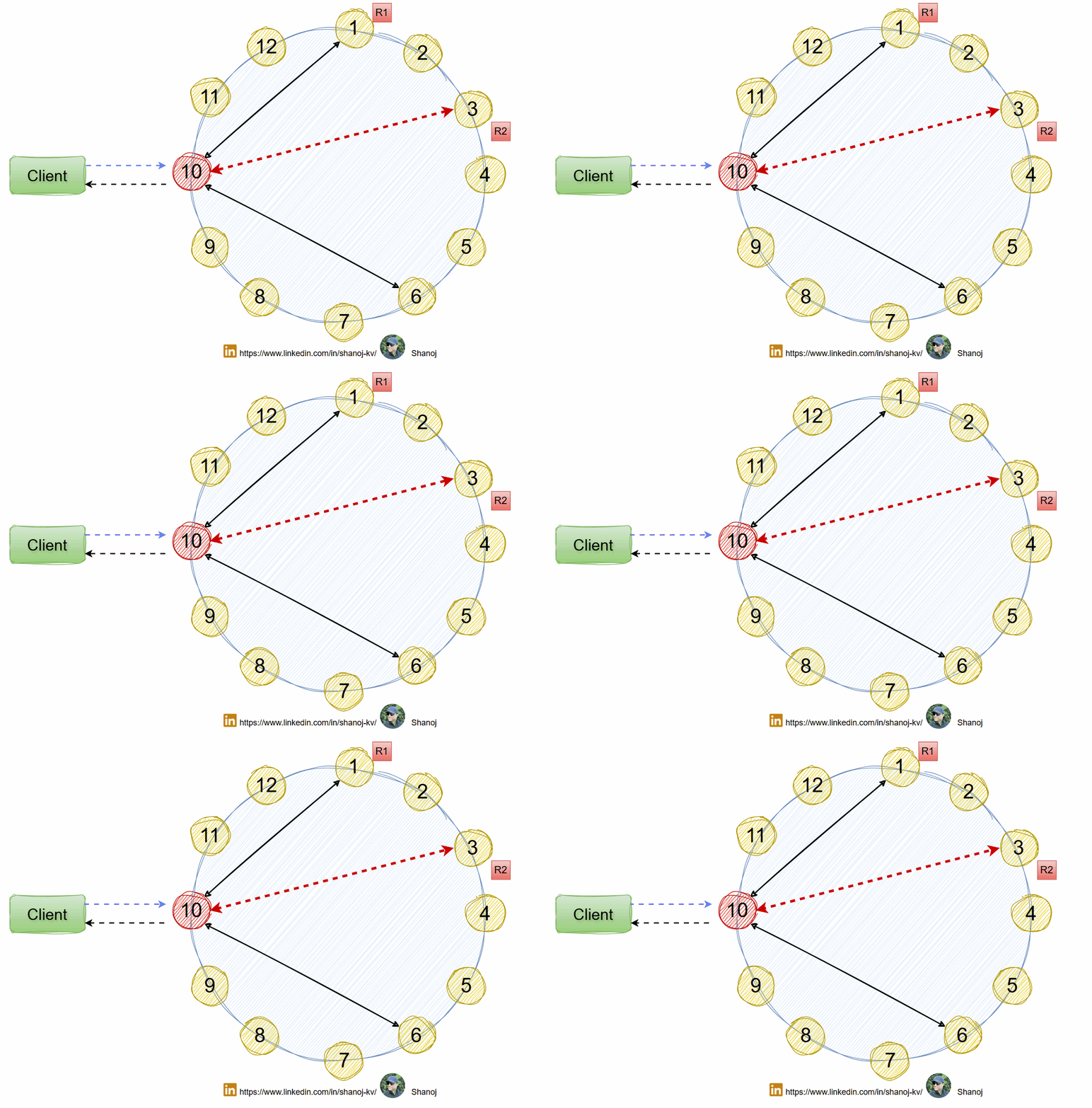
This diagram demonstrates the quorum-based write operation in a distributed healthcare system, where a client (such as a healthcare provider) sends a write request to update a patient’s record. The request is first received by Node 10, which then propagates it to Nodes 1, 3, and 6 to meet the required write quorum. Once these nodes acknowledge the update, Node 10 confirms the write as successful, ensuring the record is consistent across the network. This approach provides high availability and reliability, crucial for maintaining synchronized healthcare data.
  • When a healthcare provider updates a patient’s record at one clinic, the system sends the update to all 5 nodes, but only needs confirmation from a quorum of 3 to commit the change. This allows the system to proceed with the update even if up to 2 nodes are unavailable, ensuring high availability and resilience.

Step 3: Read Operation

This diagram illustrates the quorum-based read operation process. When Clinic B (Node 2) requests a patient’s record, it sends a read request to a quorum of nodes, including Nodes 1, 3, and 4. Each of these nodes responds with a confirmed record. Once the read quorum (R=3) is met, Clinic B displays a consistent and synchronized patient record to the user. This visual effectively demonstrates the quorum confirmation needed for consistent reads across a distributed network of healthcare clinics.
  • When a clinic requests a patient record, it retrieves data from a quorum of 3 nodes. If there are any discrepancies between nodes, the system reconciles differences and provides the most recent data. This guarantees that the clinic sees an accurate and synchronized patient record, even if some nodes lag slightly behind.

Quorum-Based Synchronization Across Clinics

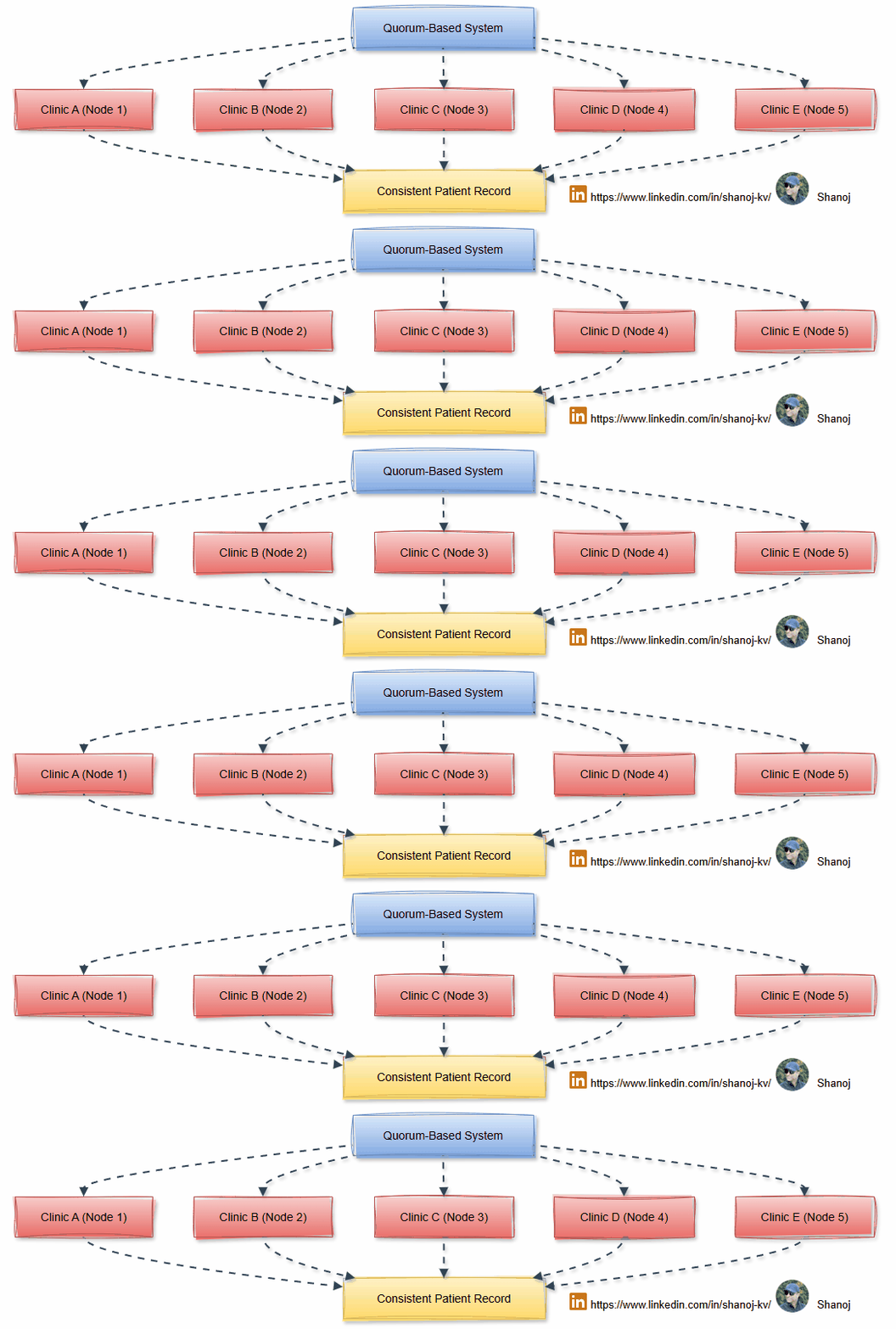
This diagram provides an overview of the quorum-based system in a distributed healthcare environment. It shows how multiple clinics (Nodes 1 through 5) interact with the quorum-based system to maintain a consistent patient record across locations.

Advantages of Quorum-Based Reads and Writes

  1. Consistent Patient Records: By configuring a quorum that intersects read and write operations, patient data remains synchronized across all locations. This avoids discrepancies and ensures that every healthcare provider accesses the most recent data.
  2. Fault Tolerance: Since the system requires only a quorum of nodes to confirm each operation, it can continue functioning even if a few nodes fail or are temporarily unreachable. This redundancy is crucial for systems where data access cannot be interrupted.
  3. Optimized Performance: By allowing reads and writes to complete once a quorum is met (rather than waiting for all nodes), the system improves responsiveness without compromising data accuracy.

Practical Considerations and Trade-Offs

While quorum-based reads and writes offer significant benefits, some trade-offs are inherent to the approach:

  • Latency Impacts: Larger quorums may introduce slight delays, as more nodes must confirm each read and write.
  • Staleness Risk: If a read quorum doesn’t intersect with the latest write quorum, there’s a minor chance of reading outdated data.
  • Operational Complexity: Configuring optimal quorum values (R and W) for a system’s specific requirements can be challenging, especially when balancing high availability and low latency.

Eventual Consistency and Quorum-Based Synchronization

Quorum-based reads and writes support eventual consistency by ensuring that all updates eventually propagate to every node. This means that even if there’s a temporary delay, patient data will be consistent across all nodes within a short period. For healthcare systems spanning multiple regions, this approach maintains high availability while ensuring accuracy across all locations.


The Quorum-Based Reads and Writes pattern is a powerful approach to ensuring data consistency in distributed systems. For healthcare networks, this pattern provides a practical way to synchronize patient records across multiple locations, delivering accurate, reliable, and readily available information. By configuring read and write quorums, healthcare organizations can maintain data integrity and consistency, supporting better patient care and enhanced decision-making across their network.

Stackademic 🎓

Thank you for reading until the end. Before you go:

Distributed Systems Design Pattern: Fixed Partitions [Retail Banking’s Account Management &…

In retail banking, where high-frequency activities like customer account management and transaction processing are essential, maintaining data consistency and ensuring efficient access are paramount. A robust approach to achieve this involves the Fixed Partitions design pattern, which stabilizes data distribution across nodes, allowing the system to scale effectively without impacting performance. Here’s how this pattern enhances retail banking by ensuring reliable access to customer account data and transactions.

Problem:

As banking systems grow, they face the challenge of managing more customer data, transaction histories, and real-time requests across a larger infrastructure. Efficient data handling in such distributed systems requires:

  1. Even Data Distribution: Data must be evenly spread across nodes to prevent any single server from becoming a bottleneck.
  2. Predictable Mapping: There should be a way to determine the location of data for quick access without repeatedly querying multiple nodes.

Consider a system where each customer account is identified by an ID and mapped to a node through hashing. If we start with a cluster of three nodes, the initial assignment might look like this:

As the customer base grows, the bank may need to add more nodes. When new nodes are introduced, the data mapping would normally change for almost every account due to the recalculated node index, requiring extensive data movement across servers. With a new cluster size of five nodes, the mapping would look like this:

Such reshuffling not only disrupts data consistency but also impacts the system’s performance.


Solution: Fixed Partitions with Logical Partitioning

The Fixed Partitions approach addresses these challenges by establishing a predefined number of logical partitions. These partitions remain constant even as physical servers are added or removed, thus ensuring data stability and consistent performance. Here’s how it works:

  1. Establishing Fixed Logical Partitions:
    The system is initialized with a fixed number of logical partitions, such as 8 partitions. These partitions remain constant, ensuring that the mapping of data does not change. Each account or transaction is mapped to one of these partitions using a hashing algorithm, making data-to-partition assignments permanent.
  2. Stabilized Data Mapping:
    Since each account ID is mapped to a specific partition that does not change, the system maintains stable data mapping. This stability prevents large-scale data reshuffling, even as nodes are added, allowing each customer’s data to remain easily accessible.
  3. Adjustable Partition Distribution Across Servers:
    When the bank’s infrastructure scales by adding new nodes, only the assignment of partitions to servers changes. This means the data itself doesn’t move, only the server responsible for managing each partition. As new nodes are added, they inherit portions of the existing partitions, reducing the amount of data that needs to migrate.
  4. Balanced Load Distribution:
    By distributing partitions evenly, the load is balanced across nodes. As additional nodes are introduced, only certain partitions are reassigned, which prevents overloading any single node, maintaining consistent performance across the system.

Example of Fixed Partitions:

Here’s a demonstration of how Fixed Partitions can be applied in a retail banking context, showing the stability of data mapping even as nodes are scaled.

Explanation of Each Column:

  • Account ID: Represents individual customer accounts, each with a unique ID.
  • Assigned Partition (Fixed): Each account ID is permanently mapped to a logical partition, which remains fixed regardless of changes in the cluster size.
  • Initial Server Assignment: Partitions are initially distributed across the original three nodes (Node A, Node B, Node C).
  • Server Assignment After Scaling: When two new nodes (Node D and Node E) are added, the system simply reassigns certain partitions to these new nodes. Importantly, the account-to-partition mapping remains unchanged, so data movement is minimized.

This setup illustrates that, by fixing partitions, the system can expand without redistributing the actual data, ensuring stable access and efficient performance.

Stackademic 🎓

Thank you for reading until the end. Before you go:

Distributed Systems Design Pattern: Consistent Core [Insurance Use Case]

In the insurance industry, managing large volumes of data and critical operations such as policy management, claims processing, and premium adjustments requires high consistency, fault tolerance, and performance. When dealing with distributed systems, ensuring that data remains consistent across nodes can be challenging, especially when operations must be fault-tolerant. As these systems grow, maintaining strong consistency becomes increasingly complex. This is where the Consistent Core design pattern becomes essential.

Problem: Managing Consistency in Large Insurance Data Clusters

As insurance companies scale, they need to handle more customer data, policy updates, and claims across distributed systems. Larger clusters of servers are necessary to manage the massive amounts of data, but these clusters also need to handle critical operations that require strong consistency and fault tolerance, such as processing claims, updating policies, and managing premium adjustments.

Problem Example:

Take the example of an insurance company, InsureX, which handles thousands of claims, policies, and customer data across a large distributed system. Let’s say a customer submits a claim:

  • The claim is submitted to the system, and it must be replicated across several nodes responsible for policyholder data, claims processing, and financial information.
  • The system relies on quorum-based algorithms to ensure all nodes have consistent information before processing the claim. However, as the system grows and the number of nodes increases, the performance degrades due to the time it takes for all nodes to reach consensus.
  • As a result, InsureX experiences slower performance in claims processing, delays in policy updates, and overall dissatisfaction among policyholders.

In larger systems, quorum-based algorithms introduce delays, especially when a majority of nodes must agree before an operation is completed. This makes the system inefficient when dealing with high transaction volumes, as seen in large insurance data clusters. So, how do we ensure strong consistency and maintain high performance as the system scales?

Solution: Implementing a Consistent Core

The Consistent Core design pattern solves this problem by creating a smaller cluster (usually 3 to 5 nodes) that handles key tasks requiring strong consistency. This smaller cluster is responsible for ensuring consistency in operations such as policy updates, claims processing, and premium adjustments, while the larger cluster handles bulk data processing.

Solution Example:

In the InsureX example, the company implements a small, consistent core to handle the critical tasks, separating the heavy data processing load from the operations that require strong consistency. Here’s how it works:

Consistent Core for Metadata Management:

  • The small consistent core handles tasks like claims updates, policyholder data, and premium adjustments. This cluster ensures that operations needing strong consistency (such as policy renewals) are processed without waiting for the entire cluster to reach consensus.

Separation of Data and Metadata:

  • The large cluster continues to handle the bulk of data processing, including the storage of customer records, claims history, and financial transactions. The consistent core ensures that metadata-related tasks, like updating claims status or policyholder information, are consistent across the system.

Fault Tolerance:

  • The consistent core uses quorum-based algorithms to ensure that even if one or two nodes fail, the system can continue to process critical tasks such as claims approvals or policy renewals.

By offloading these critical consistency tasks to a smaller cluster, InsureX ensures that policy updates, claims processing, and premium calculations are completed reliably and efficiently, without relying on the performance-degrading quorum consensus across the entire system.

Using Quorum-Based Algorithms in Claims Processing

One key area where the Consistent Core pattern shines is in claims processing. When a customer files a claim, the system must ensure the information is replicated accurately across nodes responsible for financial calculations, policyholder data, and claim approvals.

Example:

Let’s say a customer submits an accident claim. The system processes this claim by sending it to multiple nodes, and a majority quorum must confirm the claim before it is approved. The system tracks how many nodes confirm the claim and waits until at least two of the three relevant nodes agree.

  • Node 1 (Financial Calculations) agrees on the claim.
  • Node 2 (Policyholder Data) agrees on the claim.
  • Node 3 (Claims Approval) delays its response.

Once a quorum is reached, the claim is processed and approved.

This ensures that claims are processed efficiently and consistently, even if some nodes are delayed or experiencing issues. The Consistent Core ensures that these critical tasks are handled without compromising performance.

Using Leases for Premium Adjustments

Another practical application of the Consistent Core pattern is in premium adjustments and policy renewals. The system can use leases to temporarily manage premium adjustment operations across the distributed system.

Example:

When a large-scale premium adjustment is needed, the Consistent Core temporarily “holds a lease” over the operation. This allows the core to coordinate premium adjustments, ensuring that all related operations are synchronized across the system. Once the adjustment is completed, the lease is released.

The lease mechanism ensures that complex operations like premium adjustments are handled smoothly, without requiring quorum-based decisions across the entire cluster. This reduces operational delays and ensures consistency.


In a distributed insurance system where handling vast amounts of data efficiently and consistently is essential, the Consistent Core pattern provides an ideal solution. By separating the management of critical metadata and operations from the bulk data processing, the insurance company can ensure that operations such as policy updates, claims processing, and premium adjustments are completed quickly, accurately, and consistently.

Stackademic 🎓

Thank you for reading until the end. Before you go:

Distributed Systems Design Pattern: Request Waiting List [Capital Markets Use Case]

Problem Statement:

In a distributed capital markets system, client requests like trade executions, settlement confirmations, and clearing operations must be replicated across multiple nodes for consistency and fault tolerance. Finalizing any operation requires confirmation from all nodes or a Majority Quorum.

For instance, when a trade is executed, multiple nodes (such as trading engines, clearing systems, and settlement systems) must confirm the transaction’s key details — such as the trade price, volume, and counterparty information. This multi-node confirmation ensures that the trade is valid and can proceed. These confirmations are critical to maintaining consistency across the distributed system, helping to prevent discrepancies that could result in financial risks, errors, or regulatory non-compliance.

However, asynchronous communication between nodes means responses arrive at different times, complicating the process of tracking requests and waiting for a quorum before proceeding with the operation.

“The following diagram illustrates the problem scenario, where client trade requests are propagated asynchronously across multiple nodes. Each node processes the request at different times, and the system must wait for a majority quorum of responses to proceed with the trade confirmation.”

Solution: Request Waiting List Distributed Design Pattern

The Request Waiting List pattern addresses the challenge of tracking client requests that require responses from multiple nodes asynchronously. It maintains a list of pending requests, with each request linked to a specific condition that must be met before the system responds to the client.

Definition:

The Request Waiting List pattern is a distributed system design pattern used to track client requests that require responses from multiple nodes asynchronously. It maintains a queue of pending requests, each associated with a condition or callback that triggers when the required criteria (such as a majority quorum of responses or a specific confirmation) are met. This ensures that operations are finalized consistently and efficiently, even in systems with asynchronous communication between nodes.

Application in Capital Markets Use Case:

“The flowchart illustrates the process of handling a trade request in a distributed capital markets system using the Request Waiting List pattern. The system tracks each request and waits for a majority quorum of responses before fulfilling the client’s trade request, ensuring consistency across nodes.”

1. Asynchronous Communication in Trade Execution:

  • When a client initiates a trade, the system replicates the trade details across multiple nodes (e.g., order matching systems, clearing systems, settlement systems).
  • These nodes communicate asynchronously, meaning that responses confirming trade details or executing the order may arrive at different times.

2. Tracking with a Request Waiting List:

  • The system keeps a waiting list that maps each trade request to a unique identifier, such as a trade ID or correlation ID.
  • Each request has an associated callback function that checks if the necessary conditions are fulfilled to proceed. For example, the callback may be triggered when confirmation is received from a specific node (such as the clearing system) or when a majority of nodes have confirmed the trade.

3. Majority Quorum for Trade Confirmation:

  • The system waits until a majority quorum of confirmations is received (e.g., more than half of the relevant nodes) before proceeding with the next step, such as executing the trade or notifying the client of the outcome.

4. Callback and High-Water Mark in Settlement:

  • In the case of settlement, the High-Water Mark represents the total number of confirmations required from settlement nodes before marking the transaction as complete.
  • Once the necessary conditions — such as price match and volume confirmation — are satisfied, the callback is invoked. The system then informs the client that the trade has been successfully executed or settled.

This approach ensures that client requests in capital markets systems are efficiently tracked and processed, even in the face of asynchronous communication. By leveraging a waiting list and majority quorum, the system ensures that critical operations like trade execution and settlement are handled accurately and consistently.

Stackademic 🎓

Thank you for reading until the end. Before you go: