Tag Archives: Programming

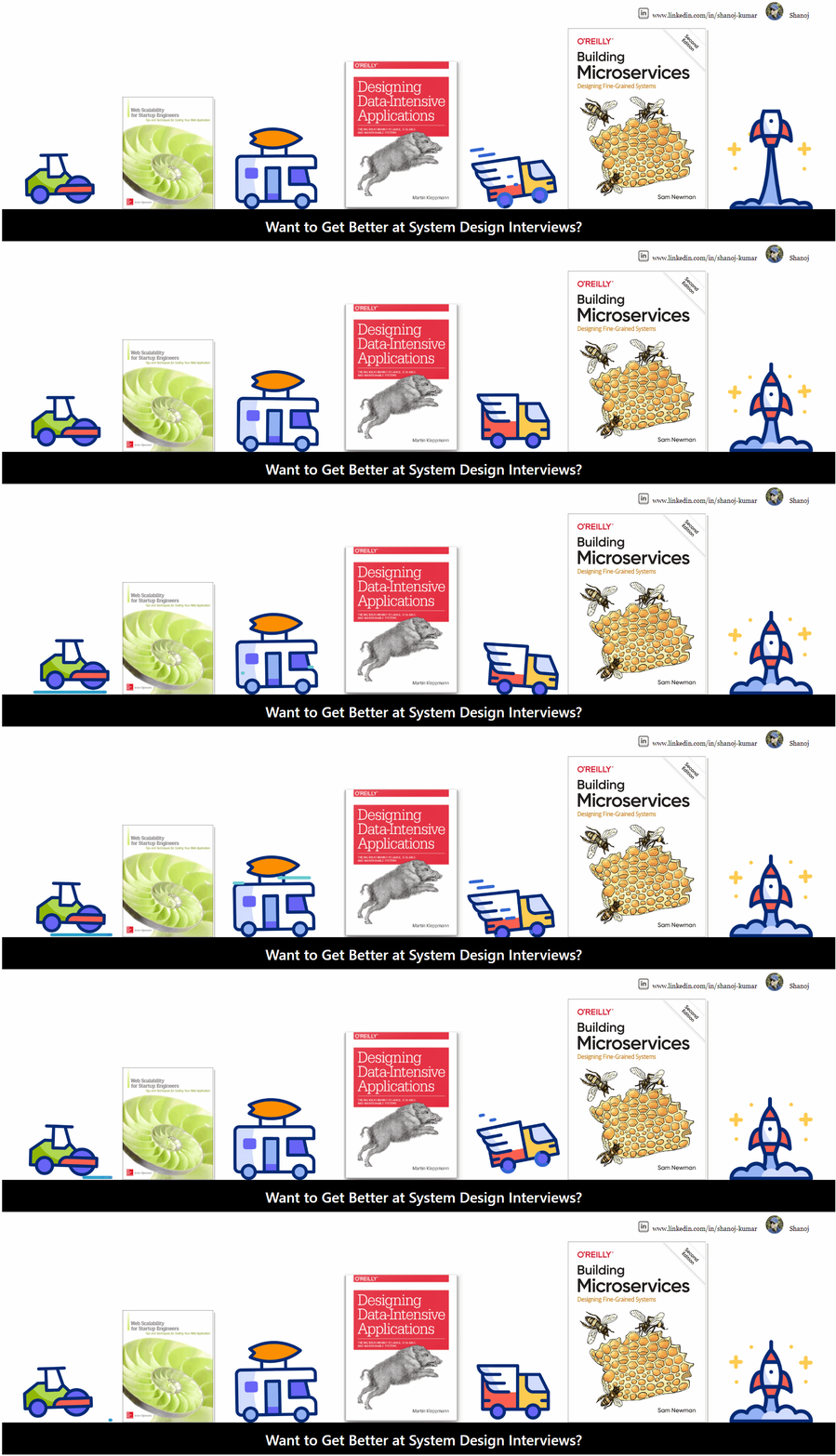
Want to Get Better at System Design Interviews? Here’s How to Prepare

System design interviews can be daunting due to their complexity and the vast knowledge required to excel. Whether you’re a recent graduate or a seasoned engineer, preparing for these interviews necessitates a well-thought-out strategy and access to the right resources. In this article, I’ll guide you to navigate the system design landscape and equip you to succeed in your upcoming interviews.

Start with the Basics

“Web Scalability for Startup Engineers” by Artur Ejsmont — This book is recommended as a starting point for beginners in system design.

“Designing Data-Intensive Applications” by Martin Kleppmann is described as a more in-depth resource for those with a basic understanding of system design.

It’s essential to establish a strong foundation before delving too deep into a subject. For beginners, “Web Scalability for Startup Engineers” is an excellent resource. It covers the basics and prepares you for more advanced concepts. After mastering the fundamentals, “Designing Data-Intensive Applications” by Martin Kleppmann will guide you further into data systems.

Microservices and Domain-Driven Design

“Building Microservices” by Sam Newman — Focuses on microservices architecture and its implications in system design.

Once you are familiar with the fundamentals, the next step is to explore the intricacies of the microservices architectural style through “Building Microservices.” To gain a deeper understanding of practical patterns and design principles, “Microservices Patterns and Best Practices” is an excellent resource. Lastly, for those who wish to understand the philosophy behind system architecture, “Domain-Driven Design” is a valuable read.

API Design and gRPC

“RESTful Web APIs” by Leonard Richardson, Mike Amundsen, and Sam Ruby provides a comprehensive guide to developing web-based APIs that adhere to the REST architectural style.

In the present world, APIs serve as the main connecting point of the internet. If you intend to design effective APIs, a good starting point would be to refer to “RESTful Web APIs” by Leonard Richardson and his colleagues. Moreover, if you are exploring the Remote Procedure Call (RPC) genre, particularly gRPC, then “gRPC: Up and Running” is a comprehensive guide.

Preparing for the Interview

“System Design Interview — An Insider’s Guide” by Alex Xu is an essential book for those preparing for challenging system design interviews.

It offers a comprehensive look at the strategies and thought processes required to navigate these complex discussions. Although it is one of many resources candidates will need, the book is tailored to equip them with the means to dissect and approach real interview questions. The book blends technical knowledge with the all-important communicative skills, preparing candidates to think on their feet and articulate clear and effective system design solutions. Xu’s guide demystifies the interview experience, providing a rich set of examples and insights to help candidates prepare for the interview process.

Domain-Specific Knowledge

Enhance your knowledge in your domain with books such as “Kafka: The Definitive Guide” for Distributed Messaging and “Cassandra: The Definitive Guide” for understanding wide-column stores. “Designing Event-Driven Systems” is crucial for grasping event sourcing and services using Kafka.

General Product Design

Pay attention to product design in system design. Books like “The Design of Everyday Things” and “Hooked: How to Build Habit-Forming Products” teach user-centric design principles, which are increasingly crucial in system design.

Online Resources

The internet is a goldmine of information. You can watch tech conference talks, follow YouTube channels such as Gaurav Sen’s System Design Interview and read engineering blogs from companies like Uber, Netflix, and LinkedIn.


System design is an iterative learning process that blends knowledge, curiosity, and experience. The resources provided here are a roadmap to guide you through this journey. With the help of these books and resources, along with practice and reflection, you will be well on your way to mastering system design interviews. Remember, it’s not just about understanding system design but also about thinking like a system designer.

Stackademic

Thank you for reading until the end. Before you go:

  • Please consider clapping and following the writer! 👏
  • Follow us on Twitter(X), LinkedIn, and YouTube.
  • Visit Stackademic.com to find out more about how we are democratizing free programming education around the world.
API 101: Understanding Different Types of APIs

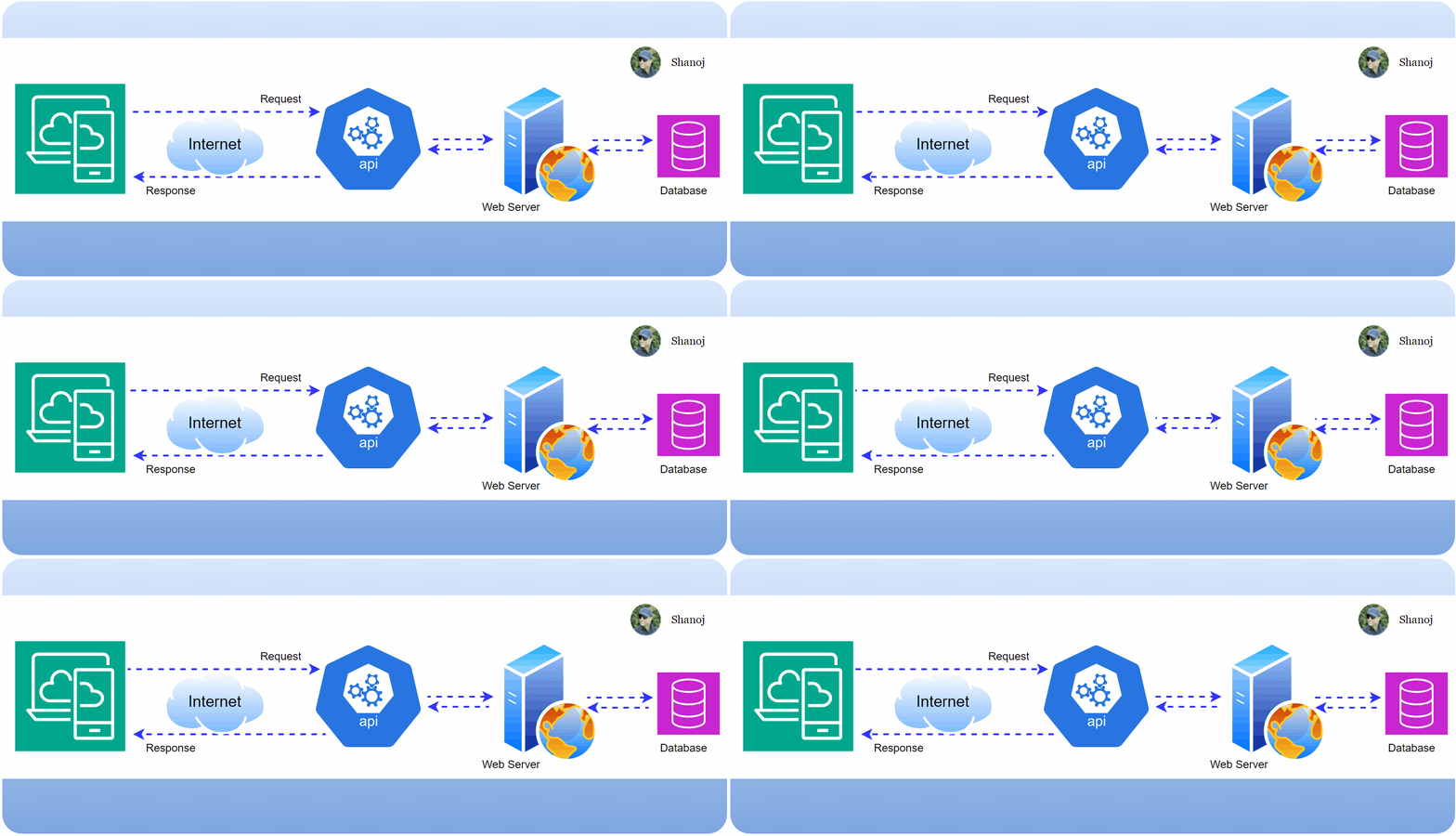
API, short for Application Programming Interface, is a fundamental concept in software development. It establishes well-defined methods for communication between software components, enabling seamless interaction. APIs define how software components communicate effectively.

Key Concepts in APIs:

  • Interface vs. Implementation: An API defines an interface through which one software piece can interact with another, just like a user interface allows users to interact with software.
  • APIs are for Software Components: APIs primarily enable communication between software components or applications, providing a standardized way to send and receive data.
  • API Address: An API often has an address or URL to identify its location, which is crucial for other software to locate and communicate with it. In web APIs, this address is typically a URL.
  • Exposing an API: When a software component makes its API available, it “exposes” the API. Exposed APIs allow other software components to interact by sending requests and receiving responses.

Different Types of APIs:

Let’s explore the four main types of APIs: Operating System API, Library API, Remote API, and Web API.

Operating System API

An Operating System API enables applications to interact with the underlying operating system. It allows applications to access essential OS services and functionalities.

Use Cases:

  • File Access: Applications often require file system access for reading, writing, or managing files. The Operating System API facilitates this interaction.
  • Network Communication: To establish network connections for data exchange, applications rely on the OS’s network-related services.
  • User Interface Elements: Interaction with user interface elements like windows, buttons, and dialogues is possible through the Operating System API.

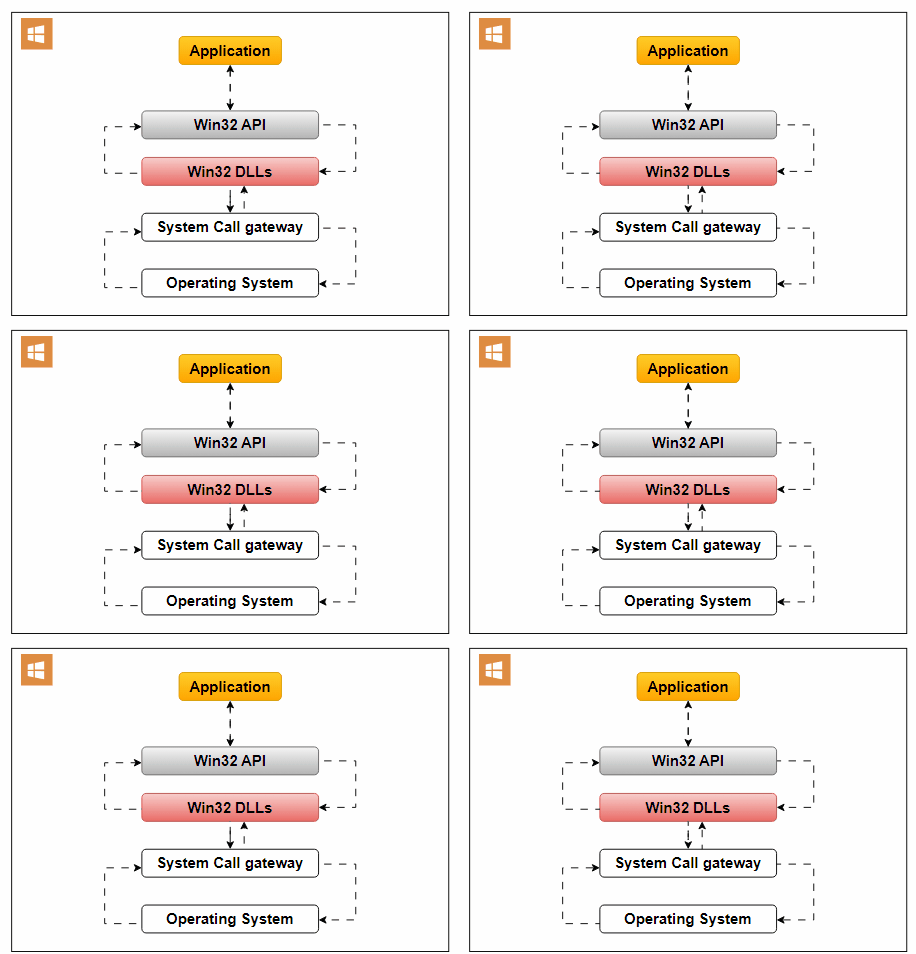
An example of an Operating System API is the Win32 API, designed for Windows applications. It offers functions for handling user interfaces, file operations, and system settings.

Library API

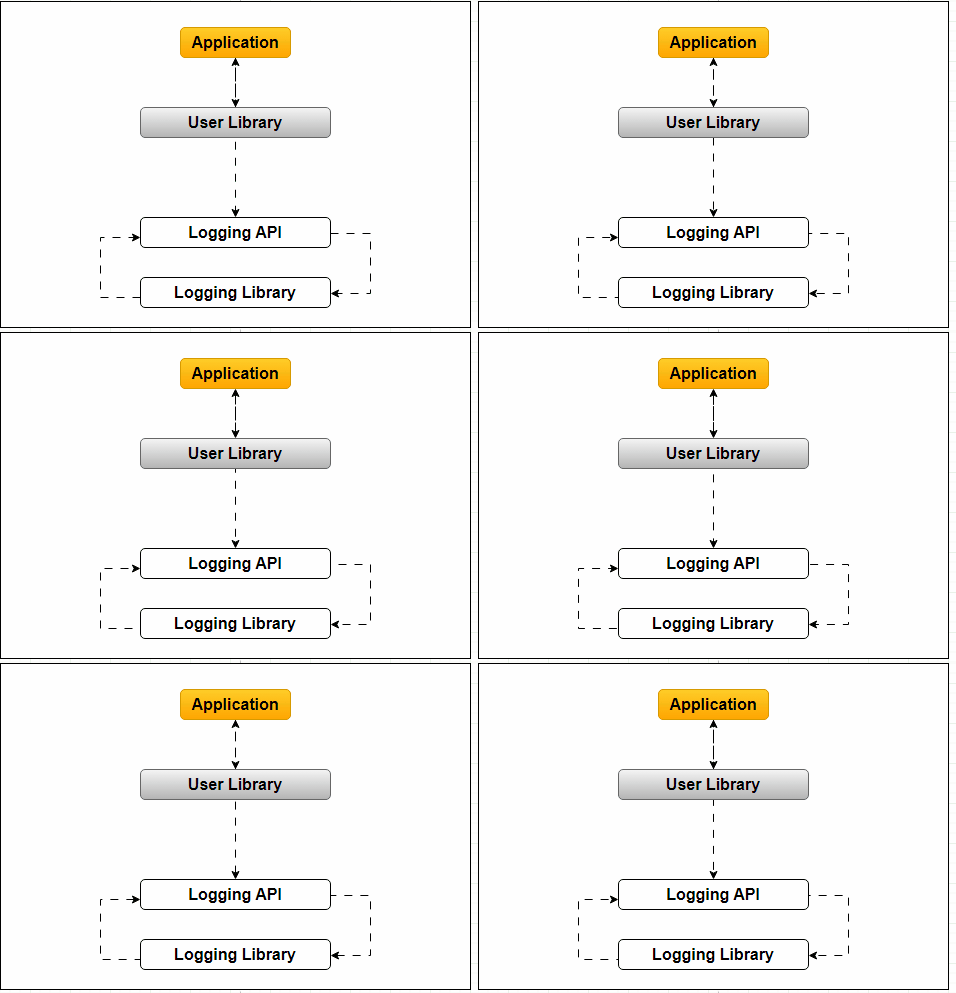
Library APIs allow applications to utilize external libraries or modules simultaneously. These libraries provide additional functionalities, enhancing applications.

Use Cases:

  • Extending Functionality: Applications often require specialized functionalities beyond their core logic. Library APIs enable the inclusion of these functionalities.
  • Code Reusability: Developers can reuse pre-built code components by using libraries, saving time and effort.
  • Modularity: Library APIs promote modularity in software development by separating core functionality from auxiliary features.

For example, an application with a User library may incorporate logging capabilities through a Logging library’s API.

Remote API

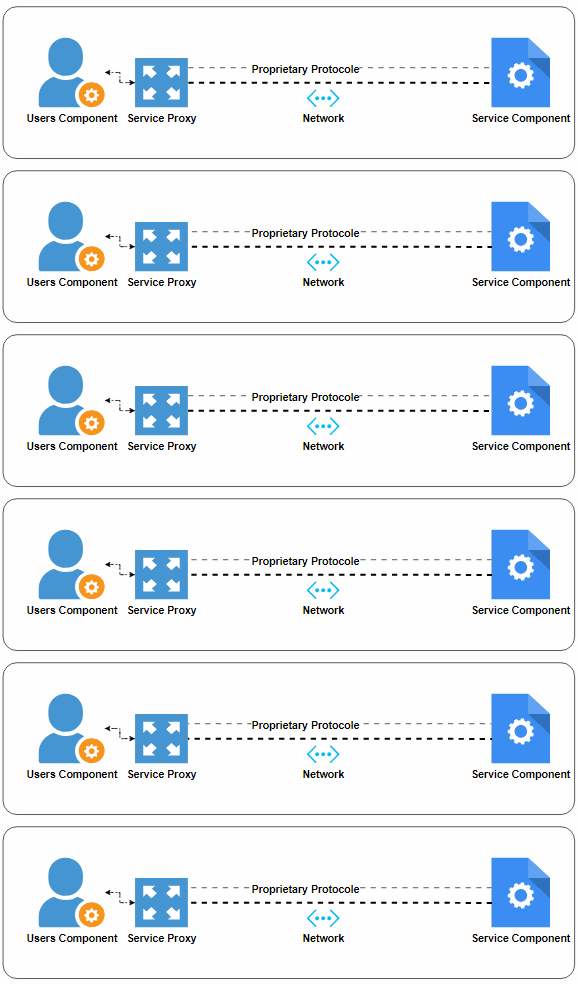
Remote APIs enable communication between software components or applications distributed over a network. These components may not run in the same process or server.

Key Features:

  • Network Communication: Remote APIs facilitate communication between software components on different machines or servers.
  • Remote Proxy: One component creates a proxy (often called a Remote Proxy) to communicate with the remote component. This proxy handles network protocols, addressing, method signatures, and authentication.
  • Platform Consistency: Client and server components using a Remote API must often be developed using the same platform or technology stack.

Examples of Remote APIs include DCOM, .NET Remoting, and Java RMI (Remote Method Invocation).

Web API

Web APIs allow web applications to communicate over the Internet based on standard protocols, making them interoperable across platforms, OSs, and programming languages.

Key Features:

  • Internet Communication: Web APIs enable web apps to interact with remote web services and exchange data over the Internet.
  • Platform-Agnostic: Web APIs support web apps developed using various technologies, promoting seamless interaction.
  • Widespread Popularity: Web APIs are vital in modern web development and integration.

Use Cases:

  • Data Retrieval: Web apps can access Web APIs to retrieve data from remote services, such as weather information or stock prices.
  • Action Execution: Web APIs allow web apps to perform actions on remote services, like posting a tweet on Twitter or updating a user’s profile on social media.

Types of Web APIs

Now, let’s explore four popular approaches for building Web APIs: SOAP, REST, GraphQL, and gRPC.

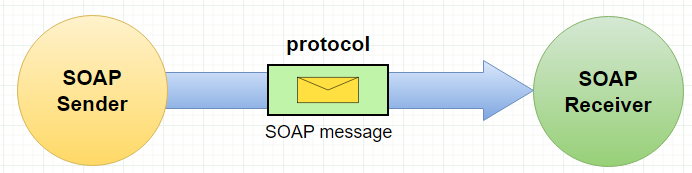
  • SOAP (Simple Object Access Protocol): Is a protocol for exchanging structured information to implement web services, relying on XML as its message format. Known for strict standards and reliability, it is suitable for enterprise-level applications requiring ACID-compliant transactions.
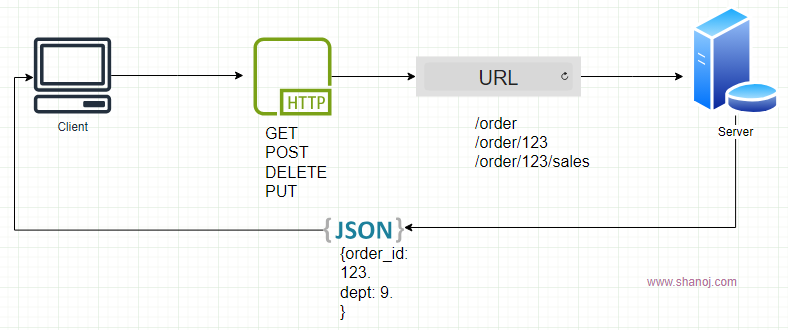
  • REST (Representational State Transfer): This architectural style uses URLs and data formats like JSON and XML for message exchange. It is simple, stateless, and widely used in web and mobile applications, emphasizing simplicity and scalability.
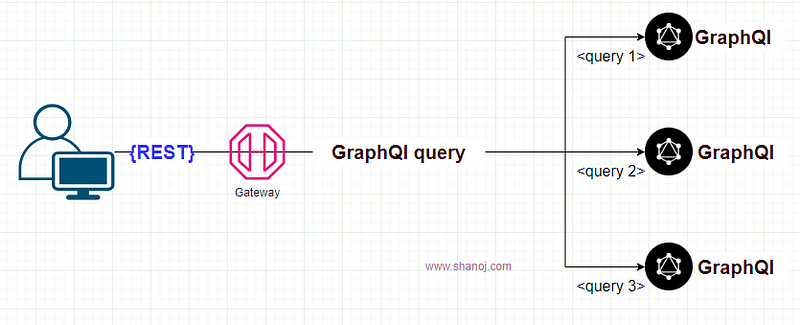
  • GraphQL: Developed by Facebook, GraphQL provides flexibility in querying and updating data. Clients can specify the fields they want to retrieve, reducing over-fetching and enabling real-time updates.
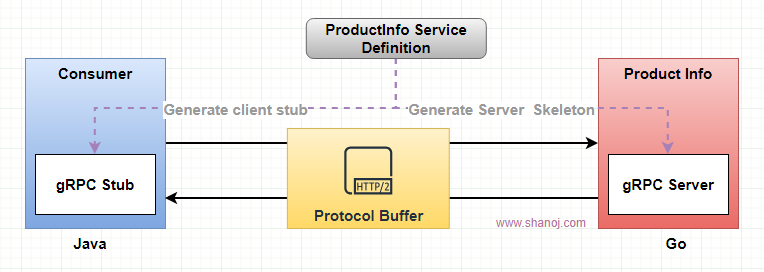
  • gRPC (Google Remote Procedure Call): Developed by Google, gRPC is based on HTTP/2 and Protocol Buffers (protobuf). It excels in microservices architectures and scenarios involving streaming or bidirectional communication.

Real-World Use Cases:

  • Operating System API: An image editing software accesses the file system for image manipulation.
  • Library API: A web application leverages the ‘TensorFlow’ library API to integrate advanced machine learning capabilities for sentiment analysis of user-generated content.
  • Remote API: A ride-sharing service connects distributed passenger and driver apps.
  • Web API: An e-commerce site provides real-time stock availability information.
  • SOAP: A banking app that handles secure financial transactions.
  • REST: A social media platform exposes a RESTful API for third-party developers.
  • GraphQL: A news content management system that enables flexible article queries.
  • gRPC: An online gaming platform that maintains real-time player-server communication.

APIs are vital for effective software development, enabling various types of communication between software components. The choice of API type depends on specific project requirements and use cases. Understanding these different API types empowers developers to choose the right tool for the job.


If you enjoyed reading this and would like to explore similar content, please refer to the following link:

REST vs. GraphQL: Tale of Two Hotel Waiters” by Shanoj Kumar V

Stackademic

Thank you for reading until the end. Before you go:

  • Please consider clapping and following the writer! 👏
  • Follow us on Twitter(X), LinkedIn, and YouTube.
  • Visit Stackademic.com to find out more about how we are democratizing free programming education around the world.