The Saga pattern is an architectural pattern utilized for managing distributed transactions in microservices architectures. It ensures data consistency across multiple services without relying on distributed transactions, which can be complex and inefficient in a microservices environment.
Key Concepts of the Saga Pattern
In the Saga pattern, a business process is broken down into a series of local transactions. Each local transaction updates the database and publishes an event or message to trigger the next transaction in the sequence. This approach helps maintain data consistency across services by ensuring that each step is completed before moving to the next one.
Types of Saga Patterns
There are several variations of the Saga pattern, each suited to different scenarios:
Choreography-based Saga: Each service listens for events and decides whether to proceed with the next step based on the events it receives. This decentralized approach is useful for loosely coupled services.
Orchestration-based Saga: A central coordinator, known as the orchestrator, manages the sequence of actions. This approach provides a higher level of control and is beneficial when precise coordination is required.
State-based Saga: Uses a shared state or state machine to track the progress of a transaction. Microservices update this state as they execute their actions, guiding subsequent steps.
Reverse Choreography Saga: An extension of the Choreography-based Saga where services explicitly communicate about how to compensate for failed actions.
Event-based Saga: Microservices react to events generated by changes in the system, performing necessary actions or compensations asynchronously.
Challenges Addressed by the Saga Pattern
The Saga pattern solves the problem of maintaining data consistency across multiple microservices in distributed transactions. It addresses several key challenges that arise in microservices architectures:
Distributed Transactions: In a microservices environment, a single business transaction often spans multiple services, each with its own database. Traditional ACID transactions don’t work well in this distributed context.
Data Consistency: Ensuring data consistency across different services and their databases is challenging when you can’t use a single, atomic transaction.
Scalability and Performance: Two-phase commit (2PC) protocols, which are often used for distributed transactions, can lead to performance issues and reduced scalability in microservices architectures.
Solutions Provided by the Saga Pattern
The Saga pattern solves these problems by:
Breaking down distributed transactions into a sequence of local transactions, each handled by a single service.
Using compensating transactions to undo changes if a step in the sequence fails, ensuring eventual consistency.
Flexibility in transaction management, allowing services to be added, modified, or removed without significantly impacting the overall transactional flow.
Better scalability by allowing each service to manage its own local transaction independently.
Improving fault tolerance by providing mechanisms to handle and recover from failures in the transaction sequence.
Visibility into the transaction process, which aids in debugging, auditing, and compliance.
Implementation Approaches
Choreography-Based Sagas
Decentralized Control: Each service involved in the saga listens for events and reacts to them independently, without a central controller.
Event-Driven Communication: Services communicate by publishing and subscribing to events.
Autonomy and Flexibility: Services can be added, removed, or modified without significantly impacting the overall system.
Scalability: Choreography can handle complex and frequent interactions more flexibly, making it suitable for highly scalable systems.
Orchestration-Based Sagas
Centralized Control: A central orchestrator manages the sequence of transactions, directing each service on what to do and when.
Command-Driven Communication: The orchestrator sends commands to services to perform specific actions.
Visibility and Control: The orchestrator has a global view of the saga, making it easier to manage and troubleshoot.
Choosing Between Choreography and Orchestration
When to Use Choreography
When you want to avoid creating a single point of failure.
When services need to be highly autonomous and independent.
When adding or removing services without disrupting the overall flow is a priority.
When to Use Orchestration
When you need to guarantee a specific order of execution.
When centralized control and visibility are crucial for managing complex workflows.
When you need to manage the lifecycle of microservices execution centrally.
Hybrid Approach
In some cases, a combination of both approaches can be beneficial. Choreography can be used for parts of the saga that require high flexibility and autonomy, while orchestration can manage parts that need strict control and coordination.
Challenges and Considerations
Complexity: Implementing SAGA can be more complex than traditional transactions.
Lack of Isolation: Intermediate states are visible, which can lead to consistency issues.
Error Handling: Designing and implementing compensating transactions can be tricky.
Testing: Thorough testing of all possible scenarios is crucial but can be challenging.
The Saga pattern is powerful for managing distributed transactions in microservices architectures, offering a balance between consistency, scalability, and resilience. By carefully selecting the appropriate implementation approach, organizations can effectively address the challenges of distributed transactions and maintain data consistency across their services.
Stackademic 🎓
Thank you for reading until the end. Before you go:
Please consider clapping and following the writer! 👏
This article is an outcome of a discussion with a fellow solution architect. We were discussing the different approaches or schools of thought a solution architect might follow. If there is some disagreement, we kindly ask that you respect our point of view, and we are open to any kind of healthy discussion on this topic.
“Good architecture is like a great novel: it gets better with every reading.” — Robert C. Martin
In the field of solution architecture, there are several approaches one might take. Among them are the Problem-First Approach, Design-First Approach, Domain-Driven Design (DDD), and Agile Architecture. Each has its own focus and methodology, and the choice of approach depends on the context and specific needs of the project.
“The goal of software architecture is to minimize the human resources required to build and maintain the required system.” — Robert C. Martin
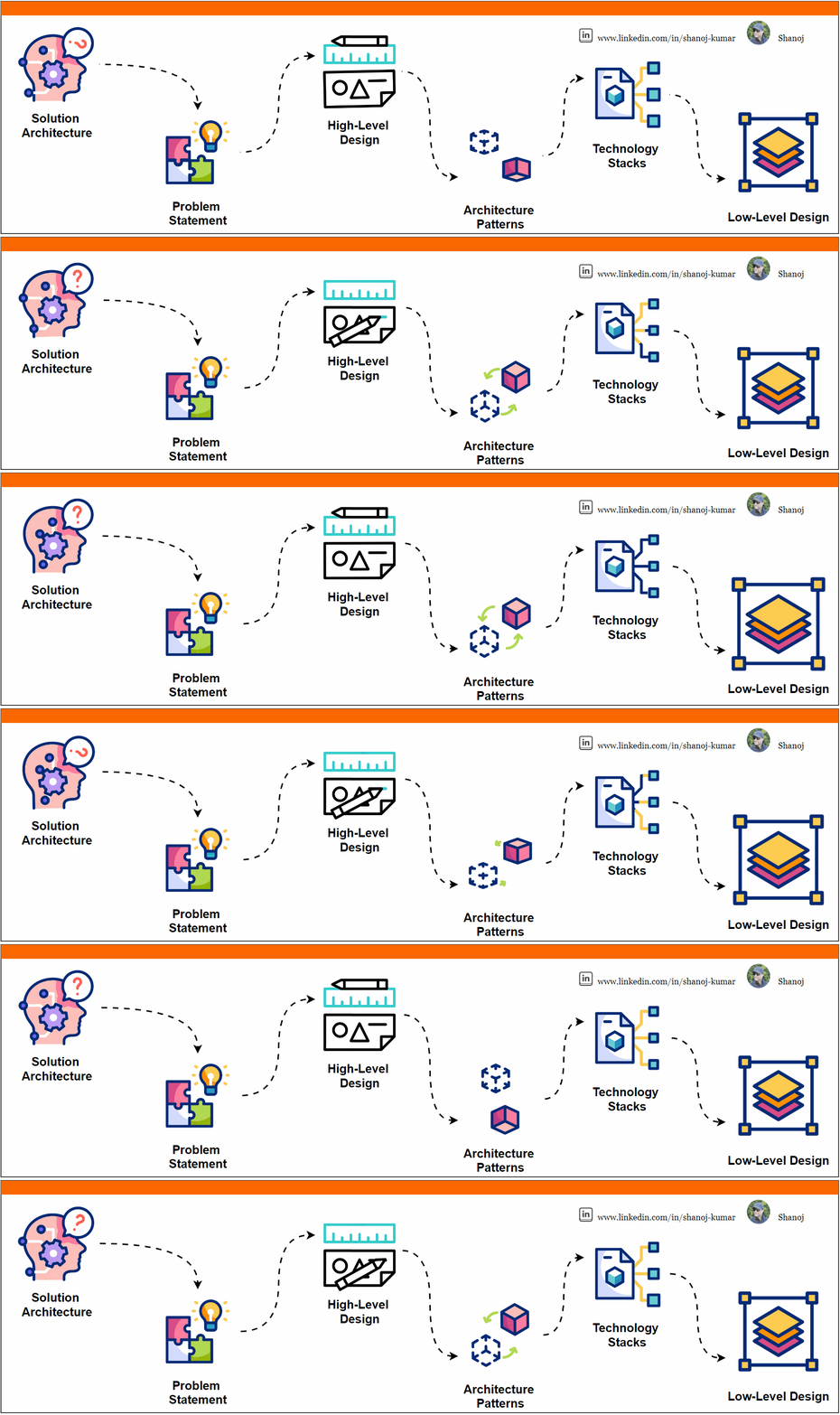
Based on the various approaches discussed, we propose a common and effective order for a solution architect to follow:
1. Problem Statement
Define and Understand the Problem: Begin by clearly defining the problem that needs to be solved. This involves gathering requirements, understanding business needs, objectives, constraints, and identifying any specific challenges. This foundational step ensures that all subsequent efforts are aligned with solving the correct issue.
“In software, the most beautiful code, the most beautiful functions, and the most beautiful programs are sometimes not there at all.” — Jon Bentley
2. High-Level Design
Develop a Conceptual Framework: Create a high-level design that outlines the overall structure of the solution. Identify major components, their interactions, data flow, and the overall system architecture. This step provides a bird’s-eye view of the solution, ensuring that all stakeholders have a common understanding of the proposed system.
“The most important single aspect of software development is to be clear about what you are trying to build.” — Bjarne Stroustrup
3. Architecture Patterns
Select Suitable Patterns: Identify and choose appropriate architecture patterns that fit the high-level design and problem context. Patterns such as microservices, layered architecture, and event-driven architecture help ensure the solution is robust, scalable, and maintainable. Selecting the right pattern is crucial for addressing the specific needs and constraints of the project.
“A pattern is a solution to a problem in a context.” — Christopher Alexander
4. Technology Stacks
Choose Technologies: Select the technology stacks that will be used to implement the solution. This includes programming languages, frameworks, databases, cloud services, and other tools that align with the architecture patterns and high-level design. Consider factors like team expertise, performance, scalability, and maintainability. The choice of technology stack has a significant impact on the implementation and long-term success of the project.
“Any sufficiently advanced technology is indistinguishable from magic.” — Arthur C. Clarke
5. Low-Level Design
Detail Each Component: Create detailed, low-level designs for each component identified in the high-level design. Specify internal structures, interfaces, data models, algorithms, and detailed workflows. This step ensures that each component is well-defined and can be effectively implemented by development teams. Detailed design documents help in minimizing ambiguities and ensuring a smooth development process.
“Good design adds value faster than it adds cost.” — Thomas C. Gale
Summary of Order:
Practical Considerations:
Iterative Feedback and Validation: Incorporate iterative feedback and validation throughout the process. Regularly review designs with stakeholders and development teams to ensure alignment with business goals and to address any emerging issues. This iterative process helps in refining the solution and addressing any unforeseen challenges.
“You can’t improve what you don’t measure.” — Peter Drucker
Documentation: Maintain comprehensive documentation at each stage to ensure clarity and facilitate communication among stakeholders. Good documentation practices help in maintaining a record of decisions and the rationale behind them, which is useful for future reference and troubleshooting.
Flexibility: Be prepared to adapt and refine designs as new insights and requirements emerge. This approach allows for continuous improvement and alignment with evolving business needs. Flexibility is key to responding effectively to changing business landscapes and technological advancements.
“The measure of intelligence is the ability to change.” — Albert Einstein
Guidelines for Selecting an Approach
Here are some general guidelines for selecting an approach:
Problem-First Approach: This approach is suitable when the problem domain is well-understood, and the focus is on finding the best solution to address the problem. It works well for projects with clear requirements and constraints.
Design-First Approach: This approach is beneficial when the system’s architecture and design are critical, and upfront planning is necessary to ensure the system meets its quality attributes and non-functional requirements.
Domain-Driven Design (DDD): DDD is a good fit for complex domains with intricate business logic and evolving requirements. It promotes a deep understanding of the domain and helps in creating a maintainable and extensible system.
Agile Architecture: An agile approach is suitable when requirements are likely to change frequently, and the team needs to adapt quickly. It works well for projects with a high degree of uncertainty or rapidly changing business needs.
Ultimately, the choice of approach should be based on a careful evaluation of the project’s specific context, requirements, and constraints, as well as the team’s expertise and the organization’s culture and processes. It’s also common to combine elements from different approaches or tailor them to the project’s needs.
“The best way to predict the future is to invent it.” — Alan Kay
Real-Life Use Case: Netflix Microservices Architecture
A notable real-life example of following a structured approach in solution architecture is Netflix’s transition to a microservices architecture. Here’s how Netflix applied a similar order in their architectural approach:
1. Problem Statement
Netflix faced significant challenges with their existing monolithic architecture, including scalability issues, difficulty in deploying new features, and handling increasing loads as their user base grew globally. The problem was clearly defined: the need for a scalable, resilient, and rapidly deployable architecture to support their expanding services.
“If you define the problem correctly, you almost have the solution.” — Steve Jobs
2. High-Level Design
Netflix designed a high-level architecture that focused on breaking down their monolithic application into smaller, independent services. This conceptual framework provided a clear vision of how different components would interact and be managed. They aimed to achieve a highly decoupled system where services could be developed and deployed independently.
3. Architecture Patterns
Netflix chose a combination of several architectural patterns to meet their specific needs:
Microservices Architecture: This pattern allowed Netflix to create independent services that could be developed, deployed, and scaled individually. Each microservice handled a specific business capability and communicated with others through well-defined APIs. This pattern provided the robustness and scalability needed to handle millions of global users.
Event-Driven Architecture: Netflix implemented an event-driven architecture to handle asynchronous communication between services. This pattern was essential for maintaining responsiveness and reliability in a highly distributed system. Services are communicated via events, allowing the system to remain loosely coupled and scalable.
Circuit Breaker Pattern: Using tools like Hystrix, Netflix adopted the circuit breaker pattern to prevent cascading failures and to manage service failures gracefully. This pattern improved the resilience and fault tolerance of their architecture.
Service Discovery Pattern: Netflix utilized Eureka for service discovery. This pattern ensured that services could dynamically locate and communicate with each other, facilitating load balancing and failover strategies.
API Gateway Pattern: Zuul was employed as an API gateway, providing a single entry point for all client requests. This pattern helped manage and route requests to the appropriate microservices, improving security and performance.
4. Technology Stacks
Netflix selected a technology stack that included:
Java: For developing the core services due to its maturity, scalability, and extensive ecosystem.
Cassandra: For data storage, providing high availability and scalability across multiple data centers.
AWS: For cloud infrastructure, offering scalability, reliability, and a wide range of managed services.
Netflix also implemented additional tools and technologies to support their architecture patterns:
Hystrix: For implementing the circuit breaker pattern.
Eureka: For service discovery and registration.
Zuul: For API gateway and request routing.
Kafka: For event-driven messaging and real-time data processing.
Spinnaker: For continuous delivery and deployment automation.
5. Low-Level Design
Detailed designs for each microservice were created, specifying how they would interact with each other, handle data, and manage failures. This included defining:
APIs: Well-defined interfaces for communication between services.
Data Models: Schemas and structures for data storage and exchange.
Communication Protocols: RESTful APIs, gRPC, and event-based messaging.
Internal Structures: Detailed workflows, algorithms, and internal component interactions.
Each microservice was developed with clear boundaries and responsibilities, ensuring a well-structured implementation. Teams were organized around microservices, allowing for autonomous development and deployment cycles.
“The details are not the details. They make the design.” — Charles Eames
Practical Considerations
Netflix continuously incorporated iterative feedback and validation through extensive testing and monitoring. They maintained comprehensive documentation for their microservices, facilitating communication and understanding among teams. Flexibility was a core principle, allowing Netflix to adapt and refine their services based on real-time performance data and user feedback.
Iterative Feedback and Validation: Netflix used canary releases, A/B testing, and real-time monitoring to gather feedback and validate changes incrementally. This allowed them to make informed decisions and continuously improve their services.
Documentation: Detailed documentation was maintained for each microservice, including API specifications, architectural decisions, and operational guidelines. This documentation was essential for onboarding new team members and ensuring consistency across the organization.
Flexibility: The architecture was designed to be adaptable, allowing Netflix to quickly respond to changing requirements and scale services as needed. Continuous integration and continuous deployment (CI/CD) practices enabled rapid iteration and deployment.
“Flexibility requires an open mind and a welcoming of new alternatives.” — Deborah Day
By adopting a combination of architecture patterns and leveraging a robust technology stack, Netflix successfully transformed their monolithic application into a scalable, resilient, and rapidly deployable microservices architecture. This transition not only addressed their immediate challenges but also positioned them for future growth and innovation.
The approach a solution architect takes can significantly impact the success of a project. By following a structured process that starts with understanding the problem, moving through high-level and low-level design, and incorporating feedback and flexibility, a solution architect can create robust, scalable, and effective solutions. This methodology not only addresses immediate business needs but also lays a strong foundation for future growth and adaptability. The case of Netflix demonstrates how applying these principles can lead to successful, scalable, and resilient architectures that support business objectives and user demands.
Stackademic 🎓
Thank you for reading until the end. Before you go:
Please consider clapping and following the writer! 👏
Back in the 2020s, a project requirement came my way that was both challenging and interesting. My manager and I were very new to the company, so the success of this project was crucial for us. Although the technical stack of this project was relatively simple, it holds a special place in my heart for many reasons. In this article, I aim to share my experience and journey with it. This article is not about the how-to steps; rather, I want to share about mindset and culture on a personal level and as a team.
“The only way to do great work is to love what you do.” — Steve Jobs
The challenges were manifold: there was no budget or only a minimal budget available, a shortage of technical team members, and a need to deliver in a very short timeframe. Sounds interesting, right? I was thrilled by the requirement.
“Start where you are. Use what you have. Do what you can.” — Arthur Ashe
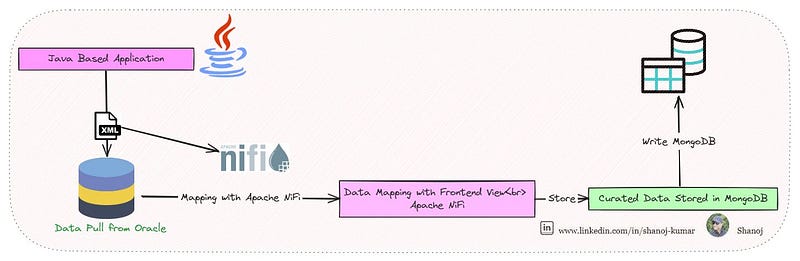
The high-level project details are as follows: From an upstream application to an Oracle-based application, we needed to transfer data downstream in JSON format. The backend-to-frontend relationship of the upstream application is one-to-many, meaning the backend Oracle data has multiple frontend views to represent the data based on business use or objects. Therefore, the data pipeline needed the capacity to transform Oracle-based data into many front-end views, necessitating mapping the data with XML configuration for the front end. The daily transaction volume was not too large, but a decent amount of 3 million records.
Oversimplified/high-level
“It always seems impossible until it’s done.” — Nelson Mandela
Since we had no budget or resource strength, I decided to explore open-source and no-code or low-code solutions. After a day or two of research, I decided to use Apache NiFi and MongoDB. The idea was to reverse-engineer the current upstream application using NiFi, which means NiFi would read data from Oracle and simultaneously map those data according to the frontend configuration stored in XML for the frontend application.
“Teamwork is the ability to work together toward a common vision. The ability to direct individual accomplishments toward organizational objectives. It is the fuel that allows common people to attain uncommon results.” — Andrew Carnegie
When I first presented this solution to the team and management, the initial response was not very positive. Except for my manager, most stakeholders expressed doubts, which is understandable since most of them were hearing about Apache NiFi for the first time, and their experience lay primarily in Oracle and Java. MongoDB was also new to them. Normally, people think about “how” first, but I was focused on “why” and “what” before “how.”
After several rounds of discussion, including visual flowcharts and small prototypes, everyone agreed on the tech stack and the solution.
This led to the next challenge: the team we assembled had never worked with these tech stacks. To move forward, we needed to build a production-grade platform. I started by reading books and devised infrastructure build steps for both NiFi and MongoDB clusters. It was challenging, and there were extensive troubleshooting sessions, but we finally built our platform.
“Data Engineering with Python: Work with massive datasets to design data models and automate data pipelines using Python” by Paul Crickard. Even though we use Groovy for scripting and not Python, this book helped us understand Apache NiFi in greater detail. I remember those days; I used to carry this book with me everywhere I went, even to the park and while waiting for signals on the road. Thanks to the author, Paul Crickard.
“Don’t watch the clock; do what it does. Keep going.” — Sam Levenson
The team was very small, comprising two Java developers and two Linux developers, all new to these tech stacks. Once the platform was ready, my next task was to train our developers to bring them up to speed. Fortunately, I found a book that helped me with Apache NiFi, and for MongoDB, I took a MongoDB University course. I filtered the required information for my team to learn. There were also challenges, as my team was in China and I was in the North American timezone, requiring me to work mostly at night to help my team.
Another challenge that later became an advantage was communication. My Chinese team was not very comfortable with verbal explanations, so I decided to share knowledge through visual aids like flowcharts and diagrams, along with developing small prototypes for them to try and walk through. This approach helped a lot later on, as I learned how to represent complex topics in simple diagrams, a skill I use in my articles today.
“What you get by achieving your goals is not as important as what you become by achieving your goals.” — Zig Ziglar
The lucky factor was that my team was extremely hardworking and quick learners. They adapted to the new tech stack in minimal time. In three months, we built the first end-to-end MVP and presented a full demo to the business, which was a huge success. Three months later, we scaled the application to production-grade and delivered our first release. Today, this team is the fastest in the release cycle and operates independently.
“It is not mandatory for a Solution Architect to be an SME in any specific tool or technology. Instead, he or she should be a strategic thinker, putting “why” and “what” first and adapting quickly to take advantage of opportunities where we can add value to the business or end user despite all limitations and trade-offs.” — Shanoj Kumar V
“Success is not the key to happiness. Happiness is the key to success. If you love what you are doing, you will be successful.” — Albert Schweitzer
Stackademic 🎓
Thank you for reading until the end. Before you go:
Please consider clapping and following the writer! 👏
The critical competencies of an architect are the foundation of their profession. They include a Strategic Mindset, Technical Acumen, Domain Knowledge, and Leadership capabilities. These competencies are not just buzzwords; they are essential attributes that define an architect’s ability to navigate and shape the built environment effectively.
Growth Path
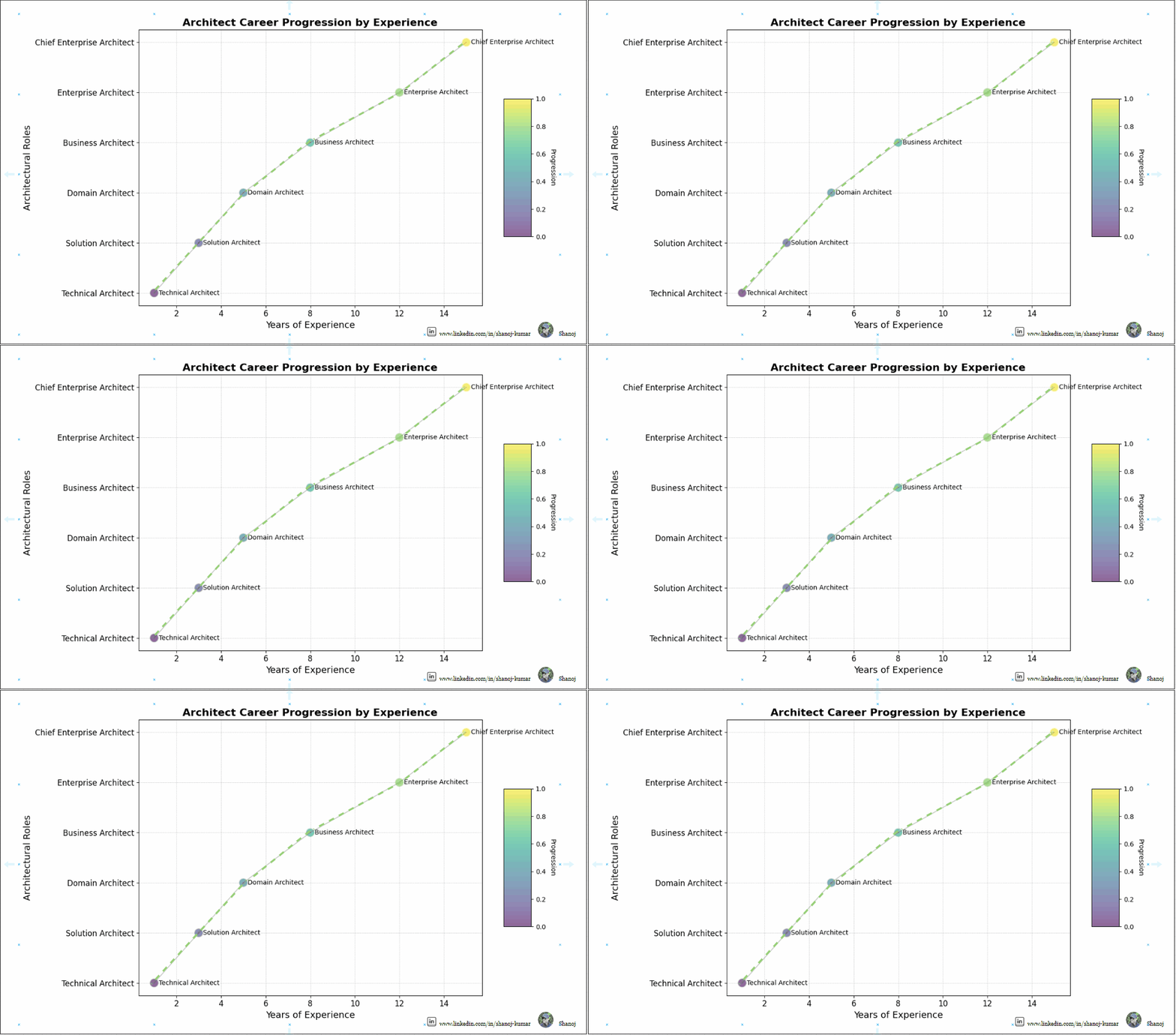
The growth journey of an architect involves evolving expertise, which begins with a technical foundation and gradually expands into domain-specific knowledge before culminating in strategic leadership. This journey progresses through various stages, starting from the role of a Technical Architect, advancing through Solution and Domain Architect, and evolving into a Business Architect. The journey then peaks with the positions of Enterprise Architect and Chief Enterprise Architect. Each stage in this progression requires a deeper understanding and broader vision, reflecting the multifaceted nature of architectural practice.
Qualities of a Software Architect
Visual Thinking: Crucial for software architects, this involves the ability to conceptualize and visualize complex software systems and frameworks. It’s essential for effective communication and the realization of software architectural visions. By considering factors like system scalability, interoperability, and user experience, software architects craft visions that guide development teams and stakeholders, ensuring successful project outcomes.
Foundation in Software Engineering: A robust foundation in software engineering principles is vital for designing and implementing effective software solutions. This includes understanding software development life cycles, agile methodologies, and continuous integration/continuous deployment (CI/CD) practices, enabling software architects to build efficient, scalable, and maintainable systems.
Modelling Techniques: Mastery of software modelling techniques, such as Unified Modeling Language (UML) diagrams, entity-relationship diagrams (ERD), and domain-driven design (DDD), allows software architects to efficiently structure and communicate complexsystems. These techniques facilitate the clear documentation and understanding of software architecture, promoting better team alignment and project execution.
Infrastructure and Cloud Proficiency: Modern infrastructure, including cloud services (AWS, Azure, Google Cloud), containerization technologies (Docker, Kubernetes), and serverless architectures, is essential. This knowledge enables software architects to design systems that are scalable, resilient, and cost-effective, leveraging the latest in cloud computing and DevOps practices.
Security Domain Expertise: A deep understanding of cybersecurity principles, including secure coding practices, encryption, authentication protocols, and compliance standards (e.g., GDPR, HIPAA), is critical. Software architects must ensure the security and privacy of the applications they design, protecting them from vulnerabilities and threats.
Data Management and Analytics: Expertise in data architecture, including relational databases (RDBMS), NoSQL databases, data warehousing, big data technologies, and data streaming platforms, is crucial. Software architects need to design data strategies that support scalability, performance, and real-time analytics, ensuring that data is accessible, secure, and leveraged effectively for decision-making.
Leadership and Vision: Beyond technical expertise, the ability to lead and inspire development teams is paramount. Software architects must possess strong leadership qualities, fostering a culture of innovation, collaboration, and continuous improvement. They play a key role in mentoring developers, guiding architectural decisions, and aligning technology strategies with business objectives.
Critical and Strategic Thinking: Indispensable for navigating the complexities of software development, these skills enable software architects to address technical challenges, evaluate trade-offs, and make informed decisions that balance immediate needs with long-term goals.
Adaptive and Big Thinking: The ability to adapt to rapidly changing technology landscapes and think broadly about solutions is essential. Software architects must maintain a holistic view of their projects, considering not only the technical aspects but also market trends, customer needs, and business strategy. This broad perspective allows them to identify innovative opportunities and drive technological advancement within their organizations.
As software architects advance through their careers, from Technical Architect to Chief Enterprise Architect, they cultivate these essential qualities and competencies. This professional growth enhances their ability to impact projects and organizations significantly, leading teams to deliver innovative, robust, and scalable software solutions.
Stackademic 🎓
Thank you for reading until the end. Before you go:
Please consider clapping and following the writer! 👏
API, short for Application Programming Interface, is a fundamental concept in software development. It establishes well-defined methods for communication between software components, enabling seamless interaction. APIs define how software components communicate effectively.
Key Concepts in APIs:
Interface vs. Implementation: An API defines an interface through which one software piece can interact with another, just like a user interface allows users to interact with software.
APIs are for Software Components: APIs primarily enable communication between software components or applications, providing a standardized way to send and receive data.
API Address: An API often has an address or URL to identify its location, which is crucial for other software to locate and communicate with it. In web APIs, this address is typically a URL.
Exposing an API: When a software component makes its API available, it “exposes” the API. Exposed APIs allow other software components to interact by sending requests and receiving responses.
Different Types of APIs:
Let’s explore the four main types of APIs: Operating System API, Library API, Remote API, and Web API.
Operating System API
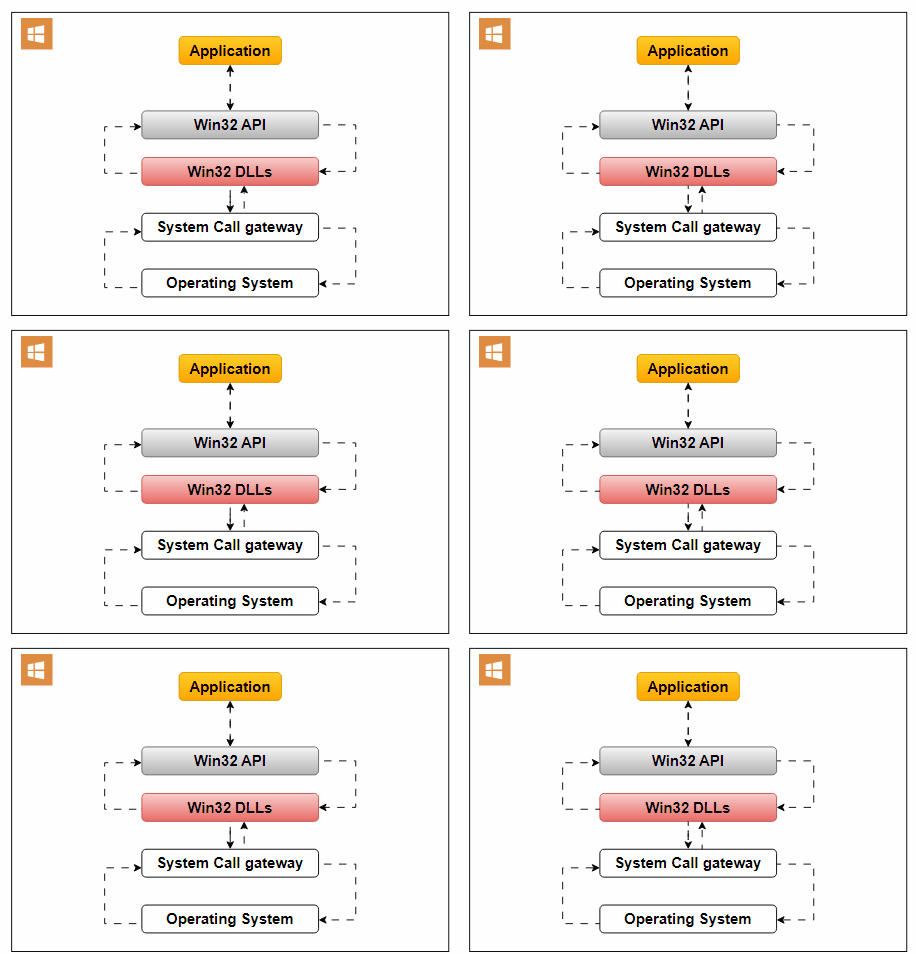
An Operating System API enables applications to interact with the underlying operating system. It allows applications to access essential OS services and functionalities.
Use Cases:
File Access:Applications often require file system access for reading, writing, or managing files. The Operating System API facilitates this interaction.
Network Communication:To establish network connections for data exchange, applications rely on the OS’s network-related services.
User Interface Elements:Interaction with user interface elements like windows, buttons, and dialogues is possible through the Operating System API.
An example of an Operating System API is the Win32 API, designed for Windows applications. It offers functions for handling user interfaces, file operations, and system settings.
Library API
Library APIs allow applications to utilize external libraries or modules simultaneously. These libraries provide additional functionalities, enhancing applications.
Use Cases:
Extending Functionality: Applications often require specialized functionalities beyond their core logic. Library APIs enable the inclusion of these functionalities.
Code Reusability:Developers can reuse pre-built code components by using libraries, saving time and effort.
Modularity: Library APIs promote modularity in software development by separating core functionality from auxiliary features.
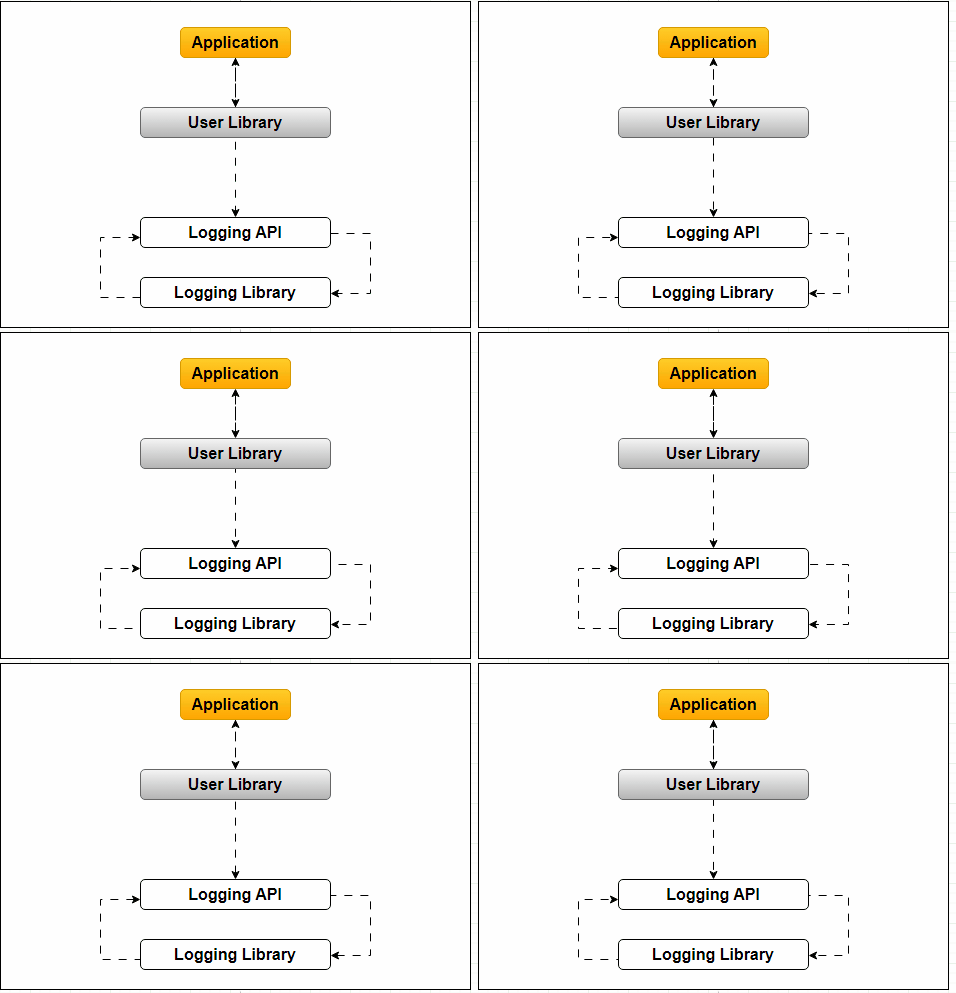
For example, an application with a User library may incorporate logging capabilities through a Logging library’s API.
Remote API
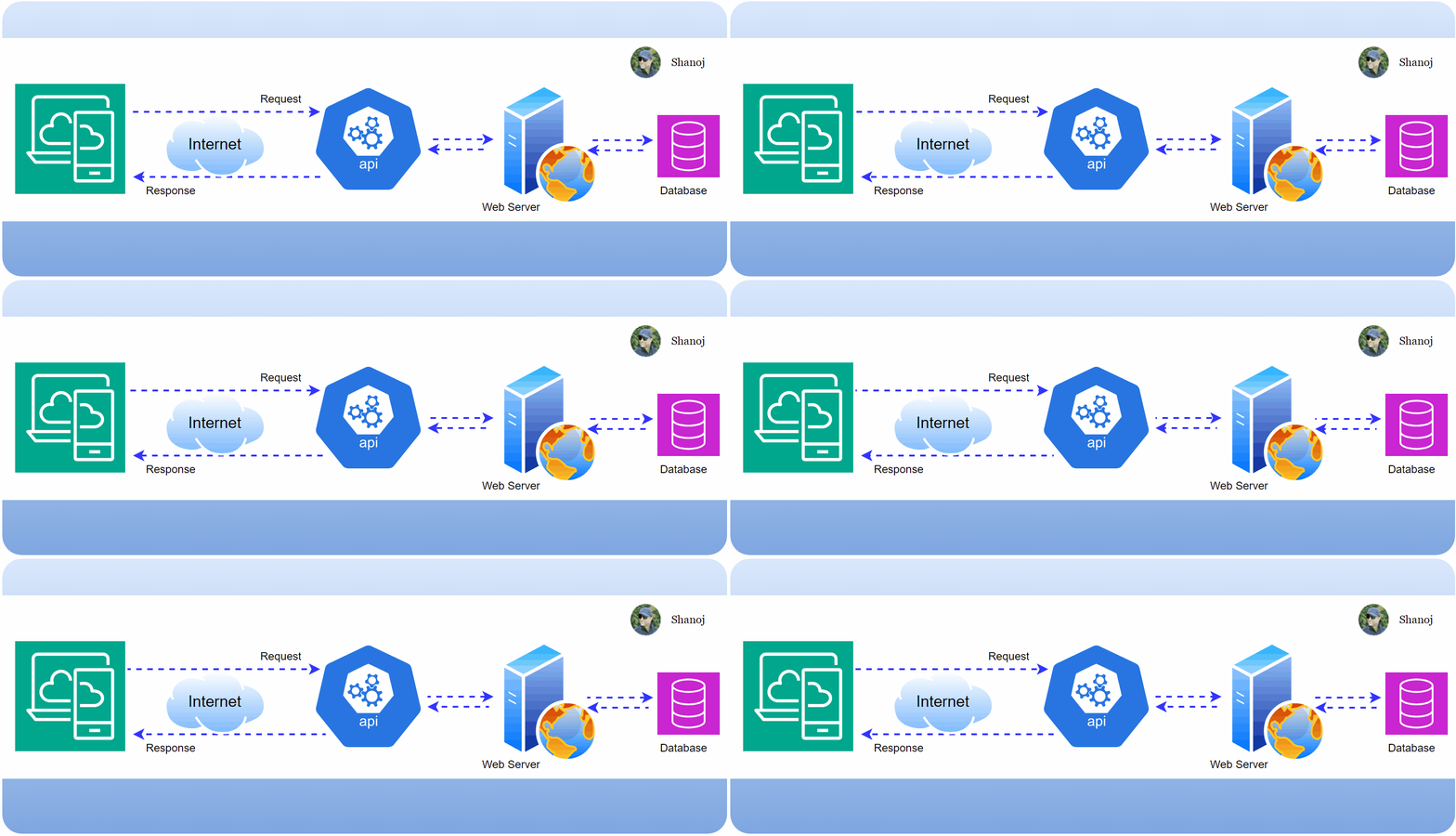
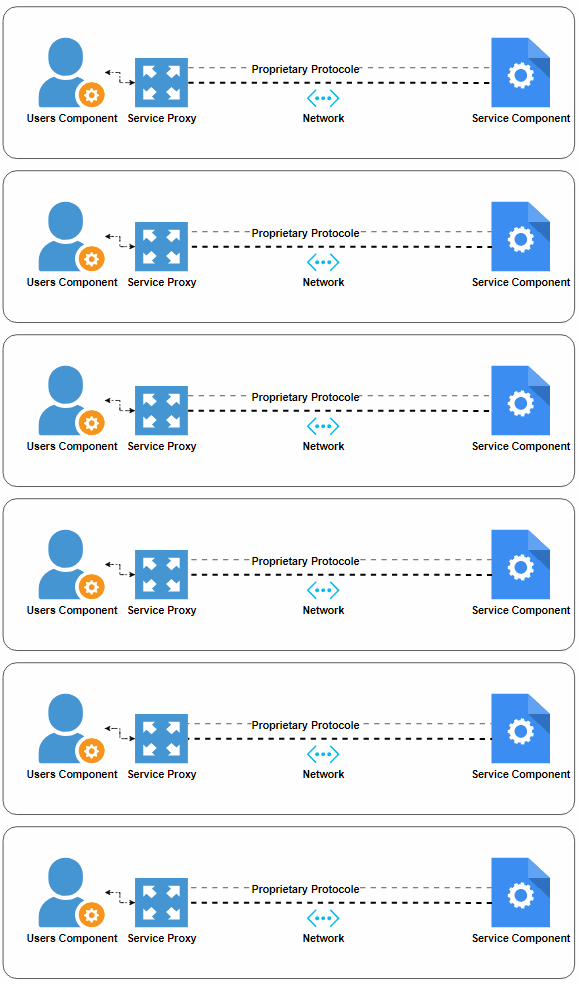
Remote APIs enable communication between software components or applications distributed over a network. These components may not run in the same process or server.
Key Features:
Network Communication: Remote APIs facilitate communication between software components on different machines or servers.
Remote Proxy:One component creates a proxy (often called a Remote Proxy) to communicate with the remote component. This proxy handles network protocols, addressing, method signatures, and authentication.
Platform Consistency: Client and server components using a Remote API must often be developed using the same platform or technology stack.
Examples of Remote APIs include DCOM, .NET Remoting, and Java RMI (Remote Method Invocation).
Web API
Web APIs allow web applications to communicate over the Internet based on standard protocols, making them interoperable across platforms, OSs, and programming languages.
Key Features:
Internet Communication: Web APIs enable web apps to interact with remote web services and exchange data over the Internet.
Platform-Agnostic: Web APIs support web apps developed using various technologies, promoting seamless interaction.
Widespread Popularity: Web APIs are vital in modern web development and integration.
Use Cases:
Data Retrieval: Web apps can access Web APIs to retrieve data from remote services, such as weather information or stock prices.
Action Execution: Web APIs allow web apps to perform actions on remote services, like posting a tweet on Twitter or updating a user’s profile on social media.
Types of Web APIs
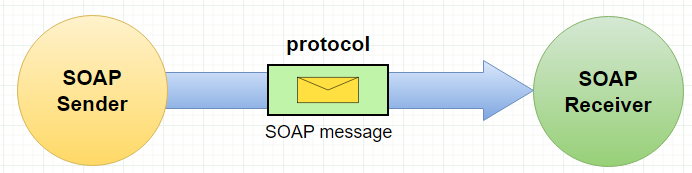
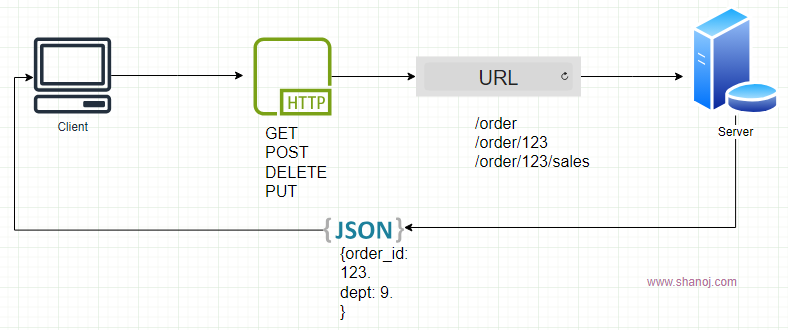
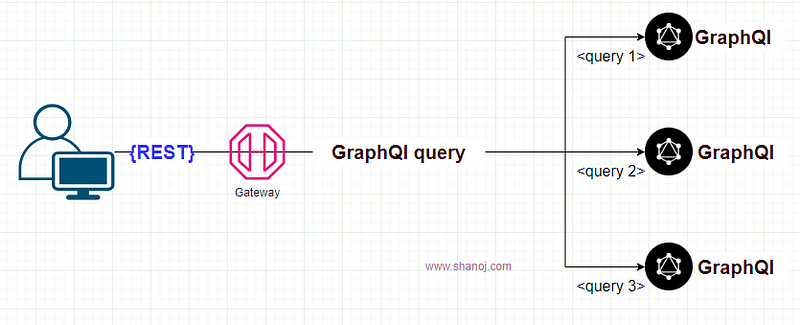
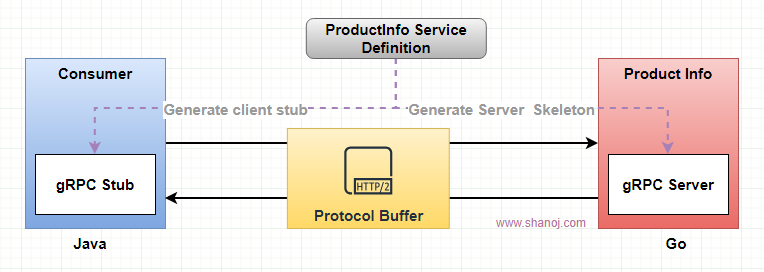
Now, let’s explore four popular approaches for building Web APIs: SOAP, REST, GraphQL, and gRPC.
SOAP (Simple Object Access Protocol): Is a protocol for exchanging structured information to implement web services, relying on XML as its message format. Known for strict standards and reliability, it is suitable for enterprise-level applications requiring ACID-compliant transactions.
REST (Representational State Transfer): This architectural style uses URLs and data formats like JSON and XML for message exchange. It is simple, stateless, and widely used in web and mobile applications, emphasizing simplicity and scalability.
GraphQL: Developed by Facebook, GraphQL provides flexibility in querying and updating data. Clients can specify the fields they want to retrieve, reducing over-fetching and enabling real-time updates.
gRPC (Google Remote Procedure Call): Developed by Google, gRPC is based on HTTP/2 and Protocol Buffers (protobuf). It excels in microservices architectures and scenarios involving streaming or bidirectional communication.
Real-World Use Cases:
Operating System API: An image editing software accesses the file system for image manipulation.
Library API: A web application leverages the ‘TensorFlow’ library API to integrate advanced machine learning capabilities for sentiment analysis of user-generated content.
Remote API: A ride-sharing service connects distributed passenger and driver apps.
Web API: An e-commerce site provides real-time stock availability information.
SOAP: A banking app that handles secure financial transactions.
REST: A social media platform exposes a RESTful API for third-party developers.
GraphQL: A news content management system that enables flexible article queries.
gRPC: An online gaming platform that maintains real-time player-server communication.
APIs are vital for effective software development, enabling various types of communication between software components. The choice of API type depends on specific project requirements and use cases. Understanding these different API types empowers developers to choose the right tool for the job.
If you enjoyed reading this and would like to explore similar content, please refer to the following link:
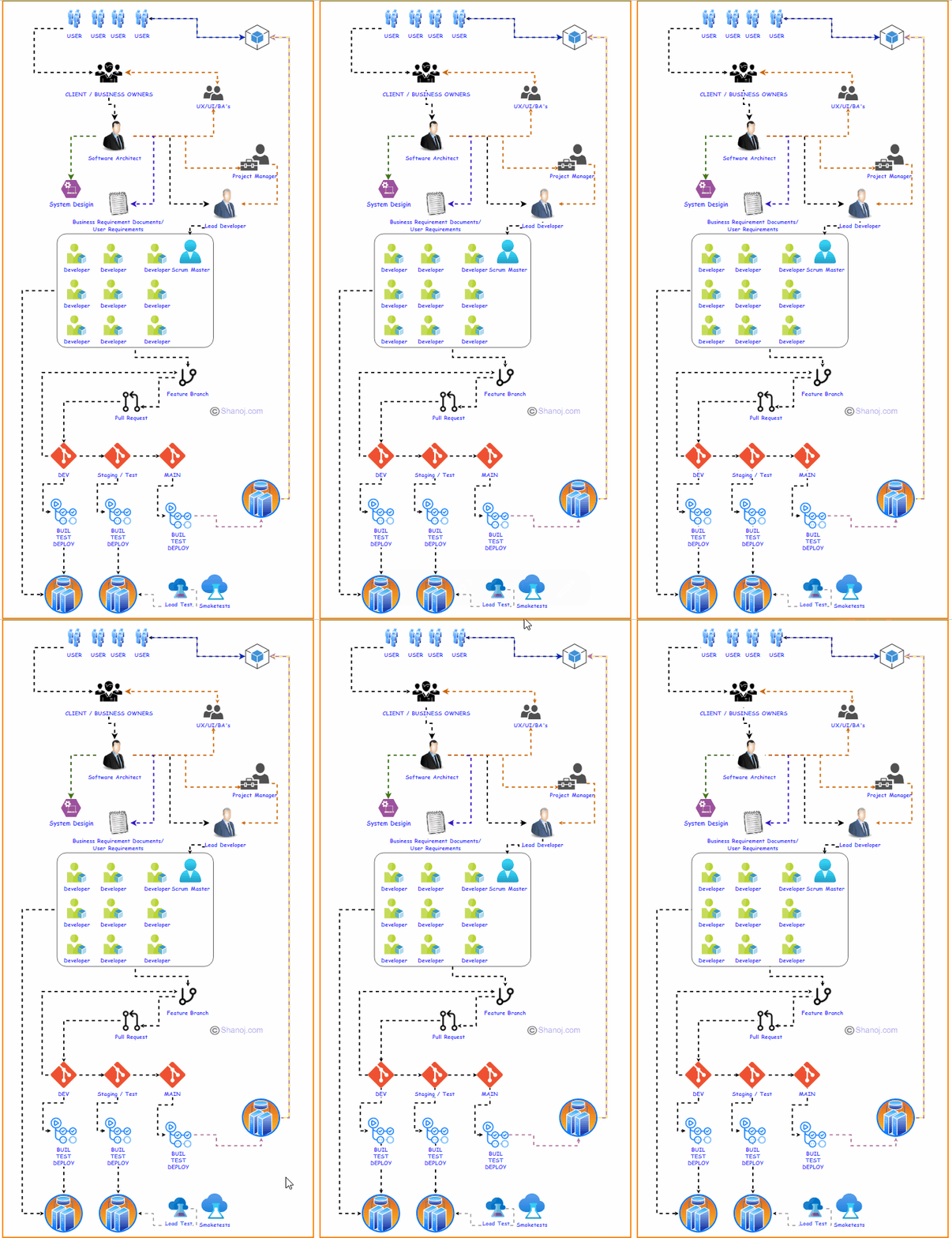
Enterprise software development is a dynamic and intricate field at the heart of modern business operations. This comprehensive guide explores the various aspects of enterprise software development, offering insights into how development teams collaborate, code, integrate, build, test, and deploy applications. Whether you’re an experienced developer or new to this domain, understanding the nuances of enterprise software development is crucial for achieving success.
1. The Team Structure
Team Composition: A typical development team comprises developers, a Scrum Master (if using Agile methodology), a project manager, software architects, and often, designers or UX/UI experts.
Software Architect Role: Software architects are crucial in designing the software’s high-level structure, ensuring scalability and adherence to best practices.
Client Engagement: The client is the vital link between end-users and developers, pivotal in defining project requirements.
Scaling Up: Larger projects may involve intricate team structures with multiple teams focusing on different software aspects, while core principles of collaboration, communication, and goal alignment remain steadfast.
2. Defining the Scope
Project Inception: Every enterprise software development project begins with defining the scope.
Client’s Vision: The client, often the product owner, communicates their vision and requirements, initiating the process of understanding what needs to be built and how it serves end-users.
Clear Communication: At this stage, clear communication and documentation are indispensable to prevent misunderstandings and ensure precise alignment with project objectives.
3. Feature Development Workflow
Feature Implementation: Developers implement features and functionalities outlined in the project scope.
Efficient Development: Teams frequently adopt a feature branch workflow, where each feature or task is assigned to a team of developers who work collaboratively on feature branches derived from the main codebase.
Code Review: Completing a feature triggers a pull request and code review, maintaining code quality, functionality, and adherence to coding standards.
4. Continuous Integration and Deployment
Modern Core: The heart of contemporary software development lies in continuous integration and deployment (CI/CD).
Seamless Integration: Developers merge feature branches into a development or main branch, initiating automated CI/CD pipelines that build, test, and deploy code to various environments.
Automation Benefits: Automation is pivotal in the deployment process to minimize human errors and ensure consistency across diverse environments.
5. Environment Management
Testing Grounds: Enterprise software often necessitates diverse testing and validation environments resembling the production environment.
Infrastructure as Code: Teams leverage tools like Terraform or AWS CloudFormation for infrastructure as code (IaC) to maintain consistency across environments.
6. Testing and Quality Assurance
Critical Testing: Testing is a critical phase in enterprise software development, encompassing unit tests, integration tests, end-to-end tests, performance tests, security tests, and user acceptance testing (UAT).
Robust Product: These tests ensure the delivery of a robust and reliable product.
7. Staging and User Feedback
Final Validation: A staging environment serves as a final validation platform before deploying new features.
User Engagement: Clients and end-users actively engage with the software, providing valuable feedback.
8. Release Management
Strategic Rollout: When stakeholders are content, a release is planned.
Feature Control: Feature flags or toggles enable controlled rollouts and easy rollbacks if issues arise.
9. Scaling and High Availability
Scalability Focus: Enterprise software often caters to large user bases and high traffic.
Deployment Strategies: Deployments in multiple regions, load balancing, and redundancy ensure scalability and high availability.
10. Bug Tracking and Maintenance
Ongoing Vigilance: Even after a successful release, software necessitates ongoing maintenance.
Issue Resolution: Bug tracking systems identify and address issues promptly as new features and improvements continue to evolve.
Behavior-Driven Development (BDD) is an approach to software development that centres around effective communication and understanding. It thrives on collaboration among developers, testers, and business stakeholders to ensure everyone is aligned with the project’s objectives.
The BDD Process: Discover, Formulate, Automate, Validate
BDD follows a four-step process:
Discover: This phase involves delving into user stories, requirements, and relevant documentation to identify desired software behaviours.
Formulate: Once we understand these behaviours, we shape them into tangible, testable scenarios. Gherkin, our language of choice, plays a pivotal role in this process.
Automate: Scenarios are automated using specialized BDD testing tools like Cucumber or SpecFlow. Automation ensures that scenarios can be run repeatedly, aiding in regression testing and maintaining software quality.
Validate: The final stage involves running the automated scenarios to confirm that the software behaves as intended. Any deviations or issues are identified and addressed, contributing to a robust application.
What is Gherkin?
At the heart of BDD lies Gherkin, a plain-text, human-readable language that empowers teams to define software behaviours without getting bogged down in technical details. Gherkin serves as a common language, facilitating effective communication among developers, testers, and business stakeholders.
Gherkin: Features, Scenarios, Steps, and More
In the world of Gherkin, scenarios take center stage. They reside within feature files, providing a high-level overview of the functionality under scrutiny. Each scenario consists of steps elegantly framed in a Given-When-Then structure:
Given: Sets the initial context or setup for the scenario.
When: Describes the action or event to be tested.
Then: States the expected outcome or result.
Gherkin scenarios are known for their clarity, focus, and exceptional readability, making them accessible to every team member.
Rules for Writing Good Gherkin
When crafting Gherkin scenarios, adhering to certain rules ensures they remain effective and useful. Here are three essential rules:
The Golden Rule: Keep scenarios simple and understandable by everyone, regardless of their technical background. Avoid unnecessary technical jargon or implementation details.
Example:
Scenario: User logs in successfully
Given the user is on the login page
  When they enter valid credentials
  Then they should be redirected to the dashboard
The Cardinal Rule: Each scenario should precisely cover one independent behaviour. Avoid cramming multiple behaviours into a single scenario.
Example:
Scenario: Adding products to the cart
  Given the user is on the product page
  When they add a product to the cart
  And they add another product to the cart
  Then the cart should display both products
The Unique Example Rule: Scenarios should provide unique and meaningful examples. Avoid repetition or unnecessary duplication of scenarios.
Example:
Scenario: User selects multiple items from a list
  Given the user is viewing a list of items
  When they select multiple items
  Then the selected items should be highlighted
These rules help maintain your Gherkin scenarios’ clarity, effectiveness, and maintainability. They also foster better collaboration among team members by ensuring that scenarios are easily understood.
Gherkin Scenarios:
To better understand the strength of Gherkin scenarios, let’s explore a few more examples:
Example 1: User Registration
Feature: User Registration Scenario: New users can register on the website Given the user ison the registration page When they provide valid registration details And they click the 'Submit' button Then they should be successfully registered
Example 2: Search Functionality
Feature: Search Functionality Scenario: Users can searchfor products Given the userison the homepage When they enter 'smartphone'in the search bar And they click the 'Search' button Then they should see a list of smartphone-related products
These examples showcase how Gherkin scenarios bridge the gap between technical and non-technical team members, promoting clear communication and ensuring software development aligns seamlessly with business goals.
Stackademic
Thank you for reading until the end. Before you go:
Please consider clapping and following the writer! 👏
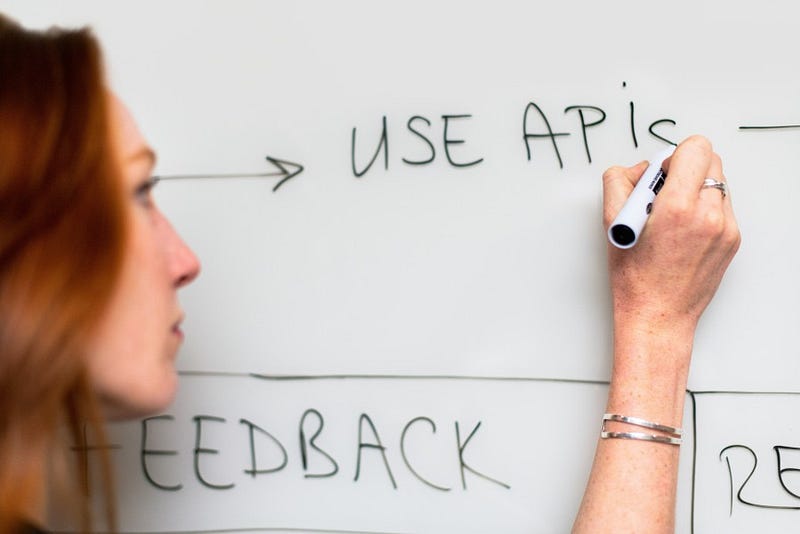
In the fast-paced world of software development, organizations are constantly seeking innovative approaches to enhance their agility, scalability, and interoperability. One such approach that has gained significant attention is API-first software development. Recently, I stumbled upon an enlightening article by Joyce Lin titled “API-First Software Development for Modern Organizations,” it struck a chord with my perception of this transformative methodology.
API-first development prioritizes APIs in software design to create strong interconnected systems. It’s a game-changer for modern organizations and Lin explains the principles well.
The concept of separation of concerns particularly resonated with me. By decoupling backend services and frontend/client applications, API-first development enables teams to work independently and in parallel. This separation liberates developers to focus on their specific areas of expertise, allowing for faster development cycles and empowering collaboration across teams. The API acts as the bridge, the bond that seamlessly connects these disparate components into a cohesive whole.
Moreover, Lin emphasizes the scalability and reusability inherent in API-first development. APIs inherently promote modularity, providing clear boundaries and well-defined contracts. This modularity not only facilitates code reuse within a project but also fosters reusability across different projects or even beyond organizational boundaries. It’s a concept that aligns perfectly with my belief in the power of building on solid foundations and maximizing efficiency through code reuse.
Another crucial aspect Lin highlights is the flexibility and innovation that API-first development brings to the table. By designing APIs as the primary concern, organizations open the doors to experimentation, enabling teams to explore new technologies, frameworks, and languages on either side of the API spectrum. This adaptability empowers modern organizations to stay at the forefront of technological advancements and fuel their drive for continuous innovation.
After reading Lin’s article, I firmly believe that API-first development is not just a passing trend but a revolutionary approach that unleashes the full potential of modern organizations. The importance of API-first design, teamwork, flexibility, and compatibility aligns with my personal experiences and goals. This methodology drives organizations towards increased agility, scalability, and efficiency, empowering them to succeed in the constantly changing digital world.
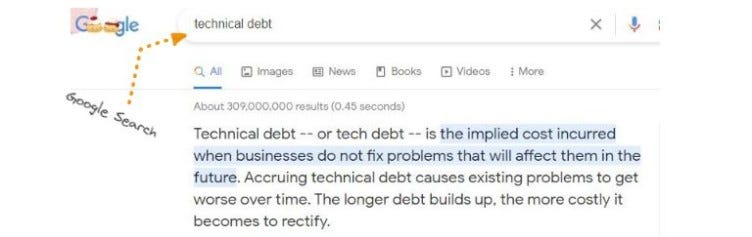
When faced with the discovery of technical debt within a team, there are three possible approaches to consider:
To effectively manage technical debt, it is crucial to strike a balance between speed and quality. This involves allocating sufficient time for proper planning, design, and testing of software, ensuring its long-term maintainability and scalability.
If you’d like to explore this topic further, the following resources can provide more insights:
“Technical Debt Quadrant” — A thoughtful essay by Martin Fowler discussing the different types of technical debt and what it truly represents.
“How to Manage Technical Debt” — A comprehensive article by 🌀 Luca Rossi that outlines a practical process for managing technical debt, providing visibility and facilitating easier management of the issue.









 Shanoj