Tag Archives: System Design Concepts

Distributed Design Pattern: Data Federation for Real-Time Querying

[Financial Portfolio Management Use Case]

In modern financial institutions, data is increasingly distributed across various internal systems, third-party services, and cloud environments. For senior architects designing scalable systems, ensuring real-time, consistent access to financial data is a challenge that can’t be underestimated. Consider the complexity of querying diverse data sources — from live market data feeds to internal portfolio databases and client analytics systems — and presenting it as a unified view.

Problem Context:

As the financial sector moves towards more distributed architectures, especially in cloud-native environments, systems need to ensure that data across all sources is up-to-date and consistent in real-time. This means avoiding stale data reads, which could result in misinformed trades or investment decisions.

For example, a stock trading platform queries live price data from multiple sources. If one of the sources returns outdated prices, a trade might be executed based on inaccurate information, leading to financial losses. This problem is particularly evident in environments like real-time portfolio management, where every millisecond of data staleness can impact trading outcomes.

The Federated Query Processing Solution

Federated Query Processing offers a powerful way to solve these issues by enabling seamless, real-time access to data from multiple distributed sources. Instead of consolidating data into a single repository (which introduces replication and synchronization overhead), federated querying allows data to remain in its source system. The query processing engine handles the aggregation of results from these diverse sources, offering real-time, accurate data without requiring extensive data movement.

How Federated Querying Works

  1. Query Management Layer:
    This layer sits at the front-end of the system, serving as the interface for querying different data sources. It’s responsible for directing the query to the right sources based on predefined criteria and ensuring the appropriate data is retrieved for any given request. As part of this layer, a query optimization strategy is essential to ensure the most efficient retrieval of data from distributed systems.
  2. Data Source Layer:
    In real-world applications, data is spread across various databases, APIs, internal repositories, and cloud storage. Federated queries are designed to traverse these diverse sources without duplicating or syncing data. Each of these data sources remains autonomous and independently managed, but queries are handled cohesively.
  3. Query Execution and Aggregation:
    Once the queries are dispatched to the relevant sources, the results are aggregated by the federated query engine. The aggregation process ensures that users or systems get a seamless, real-time view of data, regardless of its origin. This architecture enables data autonomy, where each source retains control over its data, yet data can be queried as if it were in a single unified repository.

Architectural Considerations for Federated Querying

As a senior architect, implementing federated query processing involves several architectural considerations:

Data Source Independence:
Federated query systems thrive in environments where data sources must remain independently managed and decentralized. Systems like this often need to work with heterogeneous data formats and data models across systems. Ensuring that each source can remain updated without disrupting the overall query response time is critical.

Optimization and Scalability:
Query optimization plays a key role. A sophisticated optimization strategy needs to be in place to handle:

  • Source Selection: The federated query engine should intelligently decide where to pull data from based on query complexity and data freshness requirements.
  • Parallel Query Execution: Given that data is distributed, executing multiple queries in parallel across nodes helps optimize response times.
  • Cache Mechanisms: Using cache for frequently requested data or complex queries can greatly improve performance.

Consistency and Latency:

Real-time querying across distributed systems brings challenges of data consistency and latency. A robust mechanism should be in place to ensure that queries to multiple sources return consistent data. Considerations such as eventual consistency and data synchronization strategies are key to implementing federated queries successfully in real-time systems.

Failover Mechanisms:

Given the distributed nature of data, ensuring that the system can handle failures gracefully is crucial. Federated systems must have failover mechanisms to redirect queries when a data source fails and continue serving queries without significant delay.

Real-World Performance Considerations

When federated query processing is implemented effectively, significant performance improvements can be realized:

  1. Reduction in Network Overhead:
    Instead of moving large volumes of data into a central repository, federated queries only retrieve the necessary data, significantly reducing network traffic and latency.
  2. Scalability:
    As the number of data sources grows, federated query engines can scale by adding more nodes to the query execution infrastructure, ensuring the system can handle larger data volumes without performance degradation.
  3. Improved User Experience:
    In financial systems, low-latency data retrieval is paramount. By optimizing the query process and ensuring the freshness of data, users can access real-time market data seamlessly, leading to more accurate and timely decision-making.

Federated query processing is a powerful approach that enables organizations to handle large-scale, distributed data systems efficiently. For senior architects, understanding how to implement federated query systems effectively will be critical to building systems that can seamlessly scale, improve performance, and adapt to changing data requirements. By embracing these patterns, organizations can create flexible, high-performing systems capable of delivering real-time insights with minimal latency — crucial for sectors like financial portfolio management.

Thank you for being a part of the community

Before you go:

Distributed Systems Design Pattern: Clock-Bound Wait with Banking Use Case

The following diagram provides a complete overview of how the Clock-Bound Wait pattern ensures consistent transaction processing across nodes. Node A processes a transaction and waits for 20 milliseconds to account for clock skew before committing the transaction. Node B, which receives a read request, waits for its clock to catch up before reading and returning the updated value.

In distributed banking systems, ensuring data consistency across multiple nodes is critical, especially when transactions are processed across geographically dispersed regions. One major challenge is that system clocks on different nodes may not always be synchronized, leading to inconsistent data when updates are propagated at different times. The Clock-Bound Wait pattern addresses these clock discrepancies and ensures that data is consistently ordered across all nodes.

The Problem: Time Discrepancies and Data Inconsistency

In a distributed banking system, when customer transactions such as deposits and withdrawals are processed, the local node handling the transaction uses its system clock to timestamp the operation. If the system clocks of different nodes are not perfectly aligned, it may result in inconsistencies when reading or writing data. For instance, Node A may process a transaction at 10:00 AM, but Node B, whose clock is lagging, could still show the old account balance because it hasn’t yet caught up to Node A’s time. This can lead to confusion and inaccuracies in customer-facing data.

As seen in the diagram below, the clocks of various nodes in a distributed system may not be perfectly synchronized. Even a small time difference, known as clock skew, can cause nodes to process transactions at different times, resulting in data inconsistency.

Clock-Bound Wait: Ensuring Correct Ordering of Transactions

To solve this problem, the Clock-Bound Wait pattern introduces a brief waiting period when processing transactions to ensure that all nodes have advanced past the timestamp of the transaction being written or read. Here’s how it works:

Maximum Clock Offset: The system first calculates the maximum time difference, or offset, between the fastest and slowest clocks across all nodes. For example, if the maximum offset is 20 milliseconds, this value is used as the buffer for synchronizing data.

Waiting to Guarantee Synchronization: When Node A processes a transaction, it waits for a period (based on the maximum clock offset) to ensure that all other nodes have moved beyond the transaction’s timestamp before committing the change. For example, if Node A processes a transaction at 10:00 AM, it will wait for 20 milliseconds to ensure that all nodes’ clocks are past 10:00 AM before confirming the transaction.

The diagram illustrates how a transaction is processed at Node A, with a controlled wait for 20 milliseconds to allow other nodes (Node B and Node C) to synchronize their clocks before the transaction is committed across all nodes. This ensures that no node processes outdated or incorrectly ordered transactions.

Consistent Reads and Writes: The same waiting mechanism is applied when reading data. If a node receives a read request but its clock is behind the latest transaction timestamp, it waits for its clock to synchronize before returning the correct, updated data.

The diagram illustrates how a customer request for an account balance is handled. Node B, with a clock lagging behind Node A, must wait for its clock to synchronize before returning the updated balance, ensuring that the customer sees the most accurate data.

Eventual Consistency Without Significant Delays: Although the system introduces a brief wait period to account for clock discrepancies, the Clock-Bound Wait pattern allows the system to remain eventually consistent without significant delays in transaction processing. This ensures that customers experience up-to-date information without noticeable latency.

The diagram below demonstrates how regional nodes in different locations (North America, Europe, and Asia) wait for clock synchronization to ensure that transaction updates are consistent across the entire system. Once the clocks are in sync, final consistency is achieved across all regions.

Application in Banking Systems

In a distributed banking system, the Clock-Bound Wait pattern ensures that account balances and transaction histories remain consistent across all nodes. When a customer performs a transaction, the system guarantees that the updated balance is visible across all nodes after a brief wait period, regardless of clock discrepancies. This prevents situations where one node shows an outdated balance while another node shows the updated balance.


The Clock-Bound Wait pattern is a practical solution for managing clock discrepancies in distributed banking systems. By introducing a brief wait to synchronize clocks across nodes, the pattern ensures that transactions are consistently ordered and visible, maintaining data accuracy without significant performance overhead. This approach is particularly valuable in high-stakes industries like banking, where consistency and reliability are paramount.

Stackademic 🎓

Thank you for reading until the end. Before you go:

System Design 101: Design a Twitter-Like Platform

In this article, I talk about how to build a system like Twitter. I focus on the problems that come up when very famous people, like Elon Musk, tweet and many people see it at once. I’ll share the basic steps, common issues, and how to keep everything running smoothly. My goal is to give you a simple guide on how to make and run such a system.

System Requirements

Functional Requirements:

  • User Management: Includes registration, login, and profile management.
  • Tweeting: Enables users to broadcast short messages.
  • Retweeting: This lets users share others’ content.
  • Timeline: Showcases tweets from the user and those they follow.

Non-functional Requirements:

  • Scalability: Must accommodate millions of users.
  • Availability: High uptime is the goal, achieved through multi-regional deployments.
  • Latency: Prioritizes real-time data retrieval and instantaneous content updates.
  • Security: Ensures protection against unauthorized breaches and data attacks.

Architecture Overview

This diagram outlines a microservices-based social media platform design. The user’s request flows through a CDN, then a load balancer to distribute the load among web servers. Core services and data storage solutions like DynamoDB, Blob Storage, and Amazon RDS are defined. An intermediary cache ensures fast data retrieval, and the Amazon Elasticsearch Service provides advanced search capabilities. Asynchronous tasks are managed through SQS, and specialized services for trending topics, direct messaging, and DDoS mitigation are included for a holistic approach to user experience and security.

Scalability

  • Load Balancer: Directs traffic to multiple servers to balance the load.
  • Microservices: Functional divisions ensure scalability without interference.
  • Auto Scaling: Adjusts resources based on the current demand.

High Availability

  • Multi-Region Deployment: Geographic redundancy ensures uptime.
  • Data Replication: Databases like DynamoDB replicate data across different locations.
  • CDN: Content Delivery Networks ensure swift asset delivery, minimizing latency.

Security

  • Authentication: OAuth 2.0 for stringent user validation.
  • Authorization: Role-Based Access Control (RBAC) defines user permissions.
  • Encryption: SSL/TLS for data during transit; AWS KMS for data at rest.
  • DDoS Protection: AWS Shield protects against volumetric attacks.

Data Design (NoSQL, e.g., DynamoDB)

User Table

Tweets Table

Timeline Table

Multimedia Content Storage (Blob Storage)

In the multimedia age, platforms akin to Twitter necessitate a system adept at managing images, GIFs, and videos. Blob storage, tailored for unstructured data, is ideal for efficiently storing and retrieving multimedia content, ensuring scalable, secure, and prompt access.

Backup Databases

In the dynamic world of microblogging, maintaining data integrity is imperative. Backup databases offer redundant data copies, shielding against losses from hardware mishaps, software anomalies, or malicious intents. Strategically positioned backup databases bolster quick recovery, promoting high availability.

Queue Service

The real-time interaction essence of platforms like Twitter underscores the importance of the Queue Service. This service is indispensable when managing asynchronous tasks and coping with sudden traffic influxes, especially with high-profile tweets. This queuing system:

  • Handles requests in an orderly fashion, preventing server inundations.
  • Decouples system components, safeguarding against cascading failures.
  • Preserves system responsiveness during high-traffic episodes.

Workflow Design

Standard Workflow

  • Tweeting: User submits a tweet → Handled by the Tweet Microservice → Authentication & Authorization → Stored in the database → Updated on the user’s timeline and followers’ timelines.
  • Retweeting: User shares another’s tweet → Retweet Microservice handles the action → Authentication & Authorization → The retweet is stored and updated on timelines.
  • Timeline Management: A user’s timeline combines tweets, retweets, and tweets from users they follow. Caching mechanisms like Redis can enhance timeline retrieval speed for frequently accessed ones.

Enhanced Workflow Design

Tweeting by High-Profile Users (high retrieval rate):

  • Tweet Submission: Elon Musk (or any high-profile user) submits a tweet.
  • Tweet Microservice Handling: The tweet is directed to the Tweet Microservice via the Load Balancer. Authentication and Authorization checks are executed.
  • Database Update: Once approved, the tweet is stored in the Tweets Table.
  • Deferred Update for Followers: High-profile tweets can be efficiently disseminated without overloading the system using a publish/subscribe (Pub/Sub) mechanism.
  • Caching: Popular tweets, due to their high retrieval rate, benefit from caching mechanisms and CDN deployments.
  • Notifications: A selective notification system prioritizes active or frequent interaction followers for immediate notifications.
  • Monitoring and Auto-scaling: Resources are adjusted based on real-time monitoring to handle activity surges post high-profile tweets.

Advanced Features and Considerations

Though the bedrock components of a Twitter-esque system are pivotal, integrating advanced features can significantly boost user experience and overall performance.

Trending Topics and Analytics

A hallmark of platforms like Twitter is real-time trend spotting. An ever-watchful service can analyze tweets for patterns, hashtags, or mentions, displaying live trends. Combined with analytics, this offers insights into user patterns and preferences, peak tweeting times, and favoured content.

Direct Messaging

Given the inherently public nature of tweets, a direct messaging system serves as a private communication channel. This feature necessitates additional storage, retrieval mechanisms, and advanced encryption measures to preserve the sanctity of private interactions.

Push Notifications

To foster user engagement, real-time push notifications can be implemented. These alerts can inform users about new tweets, direct messages, mentions, or other salient account activities, ensuring the user stays connected and engaged.

Search Functionality

With the exponential growth in tweets and users, a sophisticated search mechanism becomes indispensable. An advanced search service, backed by technologies like ElasticSearch, can render the task of content discovery effortless and precise.

Monetization Strategies

Integrating monetisation mechanisms is paramount to ensure the platform’s sustainability and profitability. This includes display advertisements, promoted tweets, business collaborations, and more. However, striking a balance is crucial, ensuring these monetization strategies don’t intrude on the user experience.


To make a site like Twitter, you need a good system, strong safety, and features people like. Basic things like balancing traffic, organizing data, and keeping it safe are a must. But what really makes a site stand out are the new and advanced features. By thinking carefully about all these things, you can build a site that’s big and safe, but also fun and easy for people to use.


If you enjoyed reading this and would like to explore similar content, please refer to the following link:

System Design 101: Adapting & Evolving Design Patterns in Software Development

Enterprise Software Development 101: Navigating the Basics

Designing an AWS-Based Notification System

System Design Interview: Serverless Web Crawler using AWS

AWS-Based URL Shortener: Design, Logic, and Scalability

In Plain English

Thank you for being a part of our community! Before you go:

System Design 101: Adapting & Evolving Design Patterns in Software Development

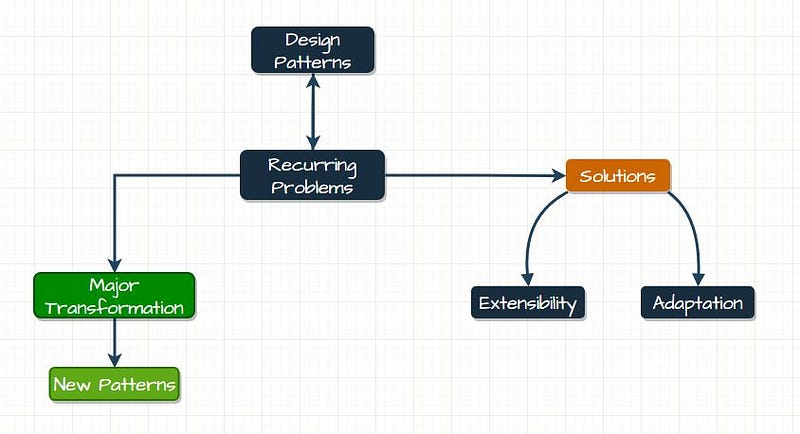
Think of 𝐝𝐞𝐬𝐢𝐠𝐧 𝐩𝐚𝐭𝐭𝐞𝐫𝐧𝐬 as solutions to recurring problems. 𝑻𝒉𝒆𝒚’𝒓𝒆 𝒍𝒊𝒌𝒆 𝒕𝒊𝒎𝒆-𝒕𝒆𝒔𝒕𝒆𝒅 𝒓𝒆𝒄𝒊𝒑𝒆𝒔 𝒇𝒐𝒓 𝒄𝒐𝒎𝒎𝒐𝒏 𝒊𝒔𝒔𝒖𝒆𝒔 𝒊𝒏 𝒔𝒐𝒇𝒕𝒘𝒂𝒓𝒆 𝒅𝒆𝒗𝒆𝒍𝒐𝒑𝒎𝒆𝒏𝒕. But what if the problem you’re dealing with isn’t the same as the one a particular pattern addresses? Here’s the cool part: you can often adapt existing patterns. It’s like 𝐭𝐰𝐞𝐚𝐤𝐢𝐧𝐠 a recipe to suit your taste.

However, there’s a catch. When implementing a pattern, you should always consider ‘𝐞𝐱𝐭𝐞𝐧𝐬𝐢𝐛𝐢𝐥𝐢𝐭𝐲’. This means building in a bit of 𝐟𝐥𝐞𝐱𝐢𝐛𝐢𝐥𝐢𝐭𝐲. Think of it as future-proofing. You’re saying, ‘Hey, this solution might need to change a little down the road when new ingredients become available.’

But what if the problem undergoes a 𝐦𝐚𝐣𝐨𝐫 𝐭𝐫𝐚𝐧𝐬𝐟𝐨𝐫𝐦𝐚𝐭𝐢𝐨𝐧? Imagine your favourite recipe changes from baking a cake to grilling a steak. That’s when you realize the old recipe won’t work anymore. It’s time to introduce a new pattern — a new recipe perfect for the 𝐫𝐞𝐯𝐚𝐦𝐩𝐞𝐝 𝐩𝐫𝐨𝐛𝐥𝐞𝐦.

In a nutshell, updating a design pattern depends on how the problem it tackles changes. If it’s just a 𝐦𝐢𝐧𝐨𝐫 𝐭𝐰𝐞𝐚𝐤, you can often tweak the pattern. But if the problem takes an entirely 𝐝𝐢𝐟𝐟𝐞𝐫𝐞𝐧𝐭 𝐝𝐢𝐫𝐞𝐜𝐭𝐢𝐨𝐧, it’s time to welcome a new pattern into the kitchen. The key is to keep your solutions 𝐞𝐟𝐟𝐞𝐜𝐭𝐢𝐯𝐞 𝐚𝐧𝐝 𝐮𝐩-𝐭𝐨-𝐝𝐚𝐭𝐞 as the world evolves.

System Design 101: The token-bucket algorithm

The token bucket algorithm is a technique for managing the frequency of system events. It keeps track of a bucket of tokens continuously added to at a set rate. These tokens can be viewed as units of capacity or permission that can be used to regulate the frequency at which events take place.

  • The token bucket algorithm limits the number of tokens that can be in the bucket at any given time, representing the maximum capacity or permission available to the system.
  • Tokens are added to the bucket at a fixed rate over time, starting with an empty bucket.
  • When an event occurs, it requests a token from the bucket.
  • If a token is available, it is removed from the bucket, allowing the event to occur.
  • If no tokens are available, the event is blocked or delayed until a token becomes available.
  • After each event, the algorithm checks whether the bucket has exceeded its capacity, and if so, additional tokens are discarded.
  • This ensures that the bucket is not too full and the system remains controlled.